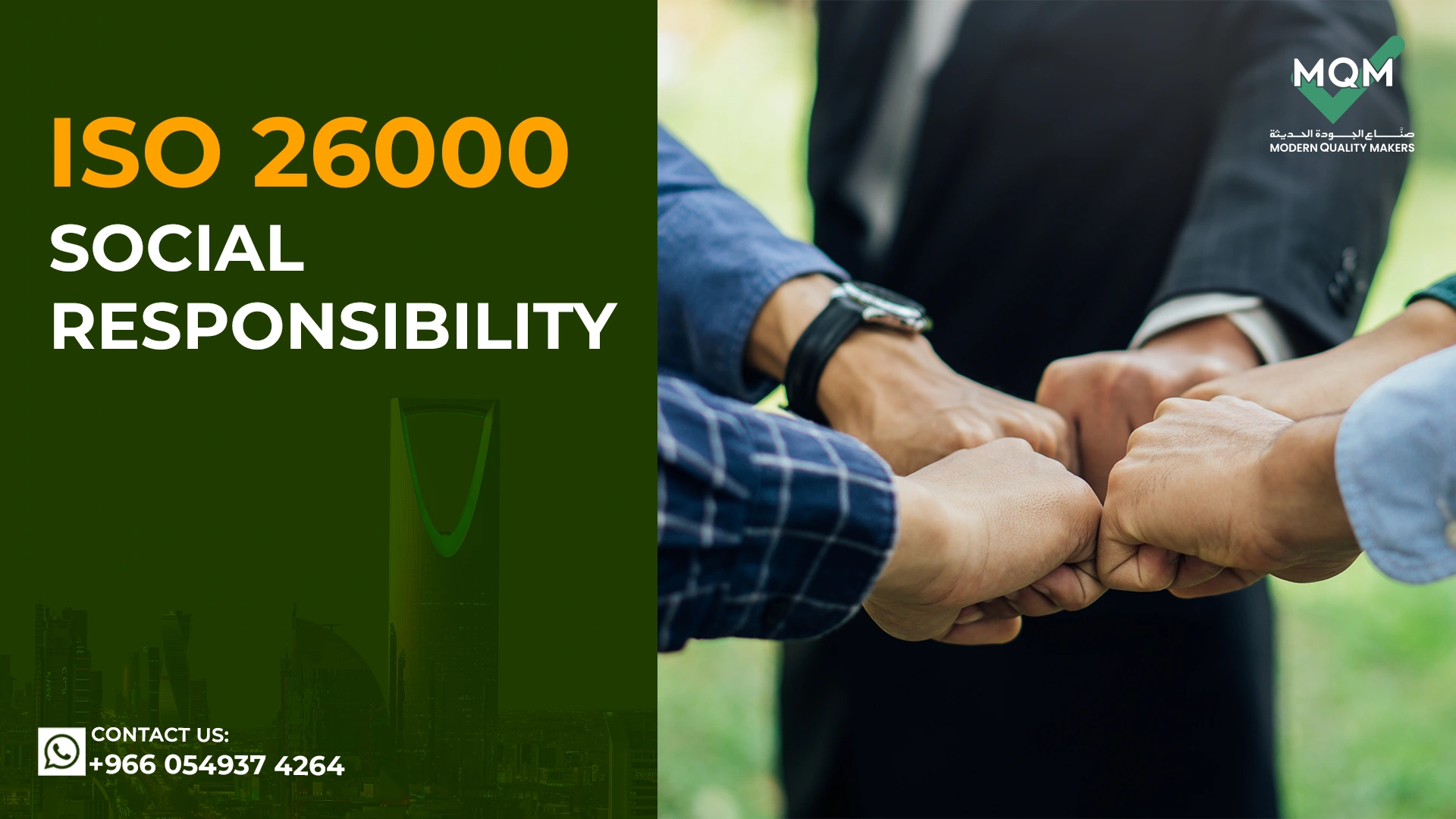

The concept of social responsibility has become an essential element in the success and sustainability of institutions, and is no longer limited to charitable work only, but has extended to include ethics, human rights, environmental protection, and fair labor practices, which has strengthened the importance of ISO 26000 7 core subjects, which is the most important international reference for understanding and applying social responsibility within institutions.
Discovering what ISO 26000 is?
ISO 26000 is an international standard launched by the ISO in 2010 to provide clear guidance on corporate social responsibility for institutions of all kinds, whether they are private companies, government agencies, or non-profit organizations. It is characterized as being advisory and not subject to accreditation or certification, meaning that it is not granted as an official certificate like ISO 9001 or ISO 14001, but rather is used as a practical guide to adopting best practices in sustainability and corporate social responsibility.
What are the iso 26000 7 core subjects?
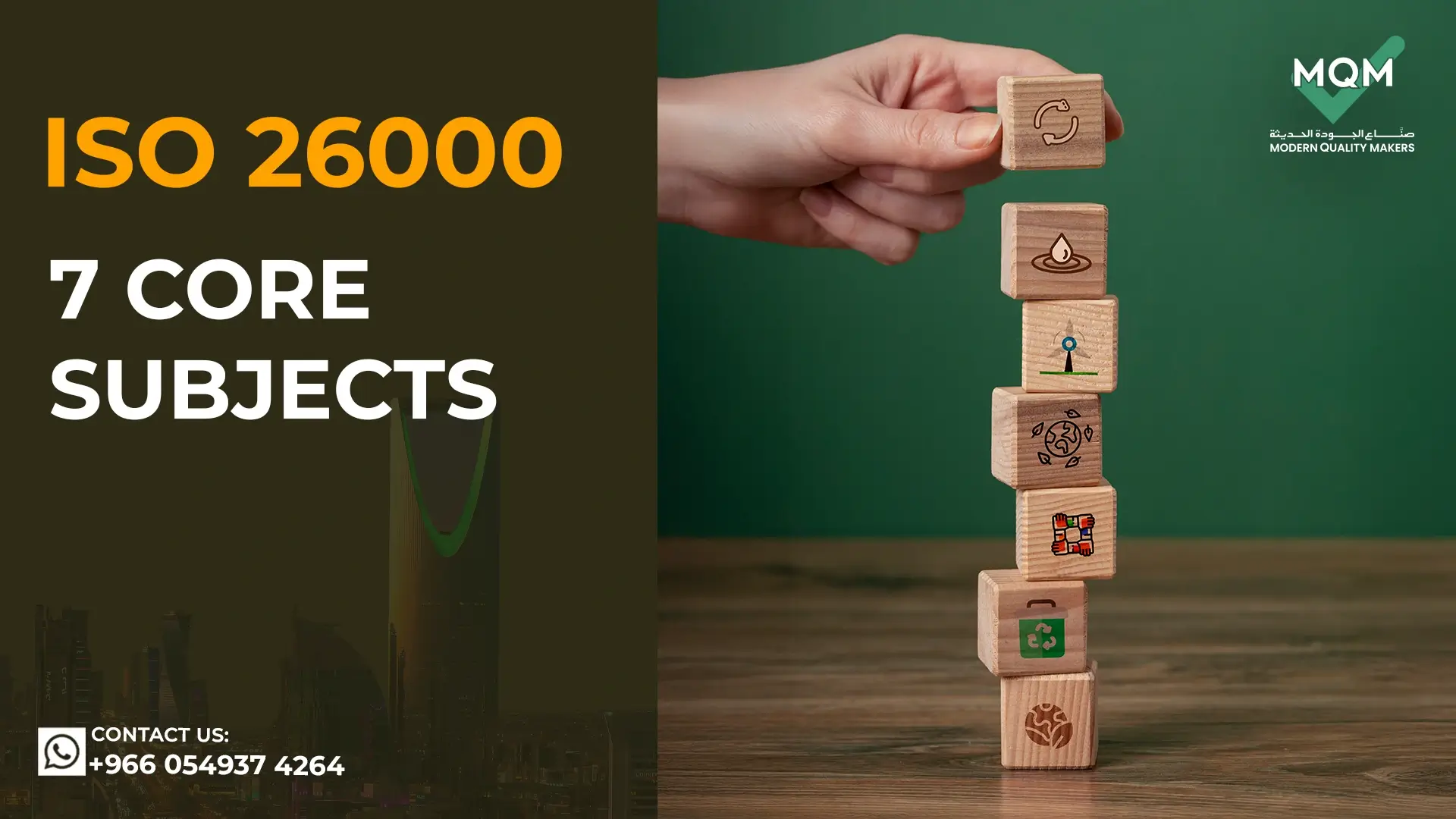
ISO 26000 7 core subjects refer to seven fundamental themes that represent the core of corporate social responsibility (CSR) that any organization should consider when planning its activities and making decisions. They cover ethical, social, environmental, and economic aspects, including:
Organizational Governance
Organizational governance concerns how an organization makes and implements its decisions ethically and transparently, such as establishing structures and policies that ensure the integration of business objectives with corporate social responsibility values, and involving stakeholders in the decision-making process.
Effective governance also encourages accountability and transparency within the organization, helping to create a fair working environment and build trust with the community and customers. In particular, when governance is strong, the organization can clearly define its priorities and implement corporate social responsibility standards in an integrated manner.
Human Rights
One of the predominant ISO 26000 7 core subjects that is concerned with protecting and respecting fundamental human rights in all the institution’s activities, such as ensuring non-discrimination and equality, respecting freedom of expression, the right to work, education, and social security. It also emphasizes the need to conduct due diligence to identify potential human rights risks and implement mechanisms to address them, including non-participation in rights violations and handling complaints fairly.
Labour Practices
This core relates to the organization’s policies and procedures that affect employees, such as recruitment, training, promotion, working conditions, and occupational health and safety. It encourages organizations to provide a safe and fair work environment, including combating child labor and forced labor, ensuring fair wages, developing employee skills, and generally adhering to all fair labor practices.
The Environment
It guides institutions to reduce their environmental impact by minimizing pollution and carbon footprint, conserving natural resources, and rationalizing energy and water consumption, and emphasizes the need to include environmental impact in planning processes and work strategies.
Fair Operating Practices
It focuses on ethical conduct in relationships between the organization and other parties, such as suppliers, customers, partners, and competitors, and includes combating corruption, respecting intellectual property, and fair competition, aiming to ensure that the organization deals in a way that promotes integrity and transparency, and raises the level of trust in the business environment.
Consumer Issues
Among iso 26000 7 core subjects, Consumer Issues core focuses on the relationship between the organization and consumers, and includes providing safe products and services, providing accurate and transparent information, protecting data and privacy, meeting the needs of vulnerable consumer groups, and also includes fair handling of customer complaints and effective dispute resolution.
Community Involvement and Development
The last subject of ISO 26000 7 core subjects focuses on the role of the organization in supporting the local community and contributing to its development, such as supporting education and training, creating local job opportunities, supporting social initiatives, and investing in community development, especially since organizations that contribute to the development of their communities gain the trust of the community and achieve long-term sustainability.
Explore More: ISO 26000 latest version
How can organizations begin implementing ISO 26000 7 Core Subjects?
Organizations can begin implementing this guiding principle for social responsibility through a few simple steps, including:
- Thoroughly study and analyze the organization, assessing its current corporate social responsibility (CSR) status.
- Identifying the social responsibility subjects that most significantly impact its activities
- Ensuring to involve stakeholders and all related parties in developing the organization’s corporate social responsibility vision
- Developing clear, effective, and productive policies and implementation plans for the organization’s corporate social responsibility (CSR) initiatives.
- Ensuring continuous monitoring and improvement of the organization’s corporate social responsibility plans and practices.
Finally, no doubt that requesting experts specializing in the ISO 26000 standard, such as modern quality makers, MQM, in Saudi Arabia, will ensure the correct and balanced application of the standard in any organization, regardless of its size, field, sector, location, or specialization.
How can MQM help?
Modern Quality Makers (MQM) in Saudi Arabia specializes in qualifying companies for ISO standards, including ISO 26000 for social responsibility. Thanks to its experience of more than 20 years, and its team of ISO experts, consultants, and certified auditors, MQM can help organizations understand the 7 key pillars of ISO 26000 and apply them efficiently in accordance with their operations and capabilities.
MQM also provides tools and resources that help measure social and environmental performance and ensure adherence to global best practices, while maintaining the highest standards of quality and credibility, giving organizations great confidence in the sustainability of their societal impact.
We are fully committed to all that is issued in the main ISO specifications to ensure professional compliance. We also respect the customers’ time without delay, and all our services are offered at reasonable and competitive prices.
FAQs about ISO 26000 7 Core Subjects
What are the 7 pillars of CSR?
The 7 core subjects of ISO 26000 for social responsibility include Organizational governance, human rights, labor practices, environment, fair operating practices, consumer issues, and community involvement and development.
What are the 4 types of CSR?
The main 4 categories of CSR include environmental, philanthropic, ethical, and economic responsibility.
What are the 5 dimensions of CSR?
ISO 26000 standard identifies five 5 key dimensions for corporate social responsibility: environmental, social, economic, voluntary, and stakeholder-related.