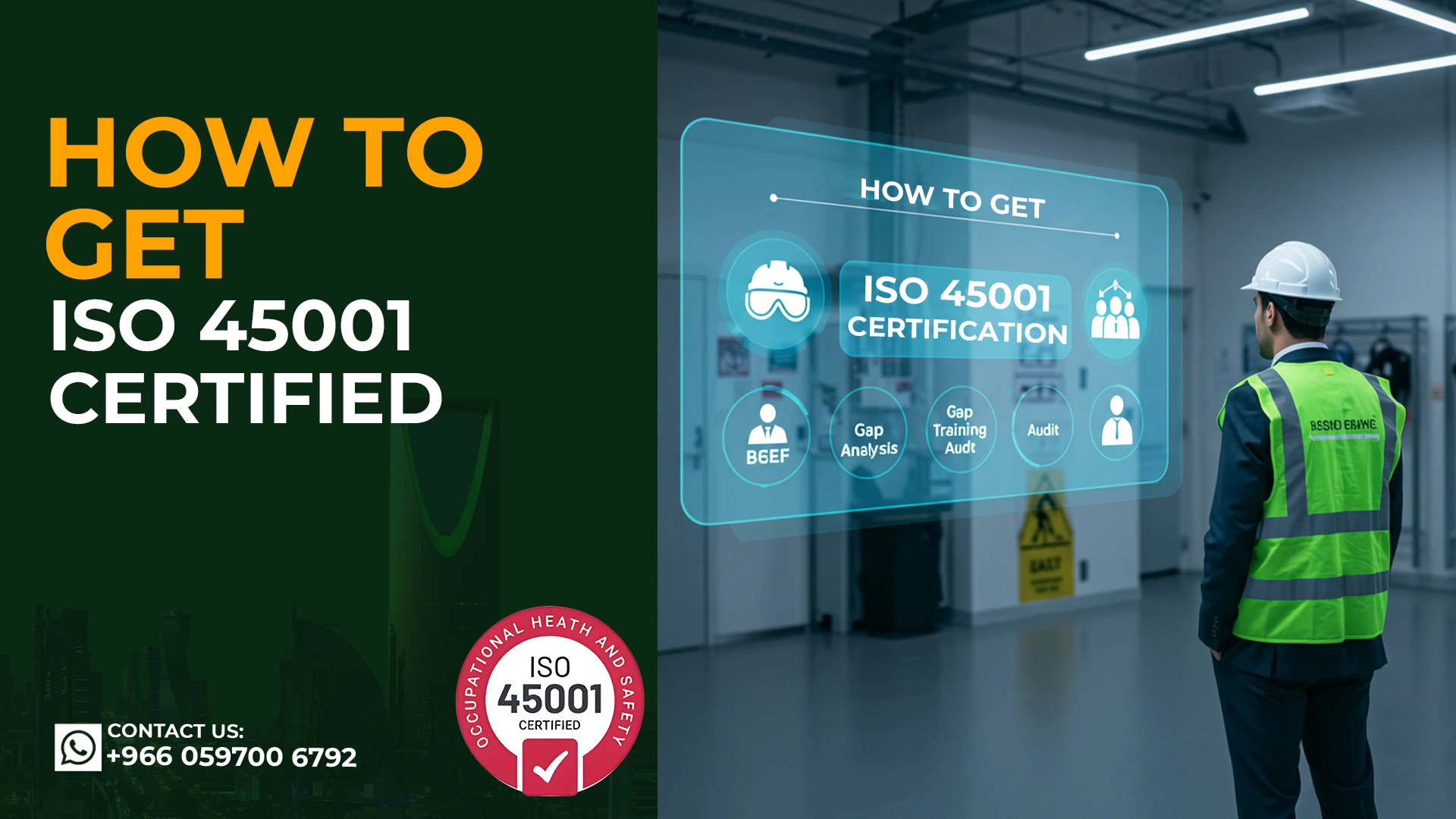

ISO 45001 latest version, is one of the most important international standards that companies rely on to protect workers, reduce workplace risks, and raise the level of occupational safety and health professionally and sustainably. In light of the goals of Saudi Vision 2023, the application of the ISO 45001 standard has become a real necessity for companies that seek compliance, reduce accidents, improve the work environment, and enhance the confidence of customers and stakeholders.
What is the iso 45001 latest version?
ISO 45001 latest version is ISO 45001:2018, which is the current and internationally approved version. It focuses on creating an effective occupational health and safety management system with the aim of preventing occupational injuries and diseases and providing a safe working environment.
In addition, iso 45001 latest version, is characterized by its integration within the High Level Structure (HLS), which facilitates its integration with other standards such as ISO 9001 and ISO 14001.
ISO 45001 clauses
The ISO 45001 standard consists of 10 main clauses, which represent the complete framework for an occupational health and safety management system. While clauses 4 to 10 are the clauses that are applicable and implementable within companies, as follows:
Clause 1: Scope
This clause defines the general framework for applying the standard and clarifies that ISO 45001 applies to all types of organizations, regardless of their size or nature of activity, as long as they seek to improve occupational health and safety.
Clause 2: Normative References
This clause refers to the reference documents associated with the standard. It does not contain implementation requirements but merely outlines the framework
Clause 3: Terms and Definitions
This clause reviews the official definitions used in the standard to ensure a consistent understanding of concepts related to occupational health and safety within organizations.
Clause 4: Context of the Organization
Focuses on understanding internal and external factors affecting the occupational safety system, identifying stakeholders and their needs, and defining the scope of ISO 45001 within the organization.
Clause 5: Leadership and Worker Participation
Emphasizes the role of senior management in supporting the occupational health and safety system, developing policies, providing resources, and ensuring employee participation in related decision-making.
Clause 6: Planning
This clause addresses identifying risks and opportunities, assessing occupational health and safety risks, and setting objectives and plans to achieve them in a proactive, well-considered manner.
Clause 7: Support
Includes providing human and technical resources, ensuring employee efficiency, raising awareness, and managing the documents and information necessary to operate the occupational health and safety management system effectively.
Clause 8: Operation
Focuses on operational control, implementing preventive measures, managing change, and emergency preparedness, including responding to potential incidents.
Clause 9: Performance Evaluation
Addresses performance monitoring and measurement, internal auditing, and management review to ensure the effectiveness of the ISO 45001 system and the achievement of its objectives.
Clause 10: Improvement
Focuses on addressing non-conformities with the standard’s principles, implementing corrective actions, and ensuring continuous improvement and updating of the occupational health and safety system.
Explore More: ISO 45001 audit document Checklist
Why companies need ISO 45001 certification
Obtaining ISO 45001 certification is no longer a luxury or an added advantage, but rather an organizational and operational necessity for all companies and factories, for the following reasons:
- Compliance with locally and internationally approved occupational safety laws and regulations is ensured, reducing legal violations and enhancing confidence with regulatory authorities.
- Reduced costs for treatment, compensation, and sudden work stoppages, helping the company to manage its financial resources more efficiently.
- Obtaining ISO 45001 certification reflects the company’s commitment to professional responsibility and gives it a strong reputation that enhances the confidence of customers, partners, and stakeholders.
- A safe work environment makes employees feel secure and cared for, which positively impacts their job satisfaction, increases productivity, reduces absenteeism, and also increases their loyalty.
- Implementing ISO 45001 helps spread awareness of safety among all employees, ensuring that occupational safety is a general culture within the work environment.
Explore More: is ISO 45001 Mandatory?
ISO 45001 standard cost
The cost of obtaining ISO 45001 certification varies depending on several factors, including the size of the company, the number of employees, the nature of the activity, the level of occupational risks, and the readiness of the current system. The duration of the project, the number of sites, and the company’s need for qualification and training also affect the final cost.
However, on average, in Saudi Arabia, the average cost of implementing and qualifying for ISO 45001 (excluding certification body fees) often ranges between 15,000 and 40,000 Saudi Riyals, while certification body fees vary depending on the body and the number of audit days.
Why MQM is your smart assistant
Modern Quality Makers (MQM) in Saudi Arabia is indeed your smart partner for the professional implementation of ISO 45001 latest version. MQM has over 20 years of experience in specialized consulting and qualifying companies for ISO standards, with a team of certified consultants specializing in ISO standards, including occupational health and safety systems.
In addition, MQM helps you analyze gaps, build an ISO 45001 system from scratch, prepare documentation, and provide full support until you successfully pass the final audit and obtain certification. We also guarantee you a practical, realistic, and effective implementation that suits the nature of your business, not just a formal fulfillment of requirements, thus achieving genuine compliance and truly beneficial long-term sustainability, all at competitive prices.
FAQs about ISO 45001 Latest Version
1. What is the difference between 45001 2018 and 45001 2023?
In fact, there is no new version called ISO 45001:2023; the adopted version is still ISO 45001:2018, and what has happened are interpretive updates and clarifications without changing the basic requirements of the standard.
2. What is the ISO 45001 2018 2023 )+ a1 2024?
It is an official amendment to the ISO 45001 latest version that adds requirements relating to climate change considerations within the context of the organization and stakeholders, without changing the basic provisions of the standard.
3. How long is ISO 45001 valid?
The ISO 45001 certification is valid for three years, with annual monitoring reviews to maintain the validity and continuity of the certification.