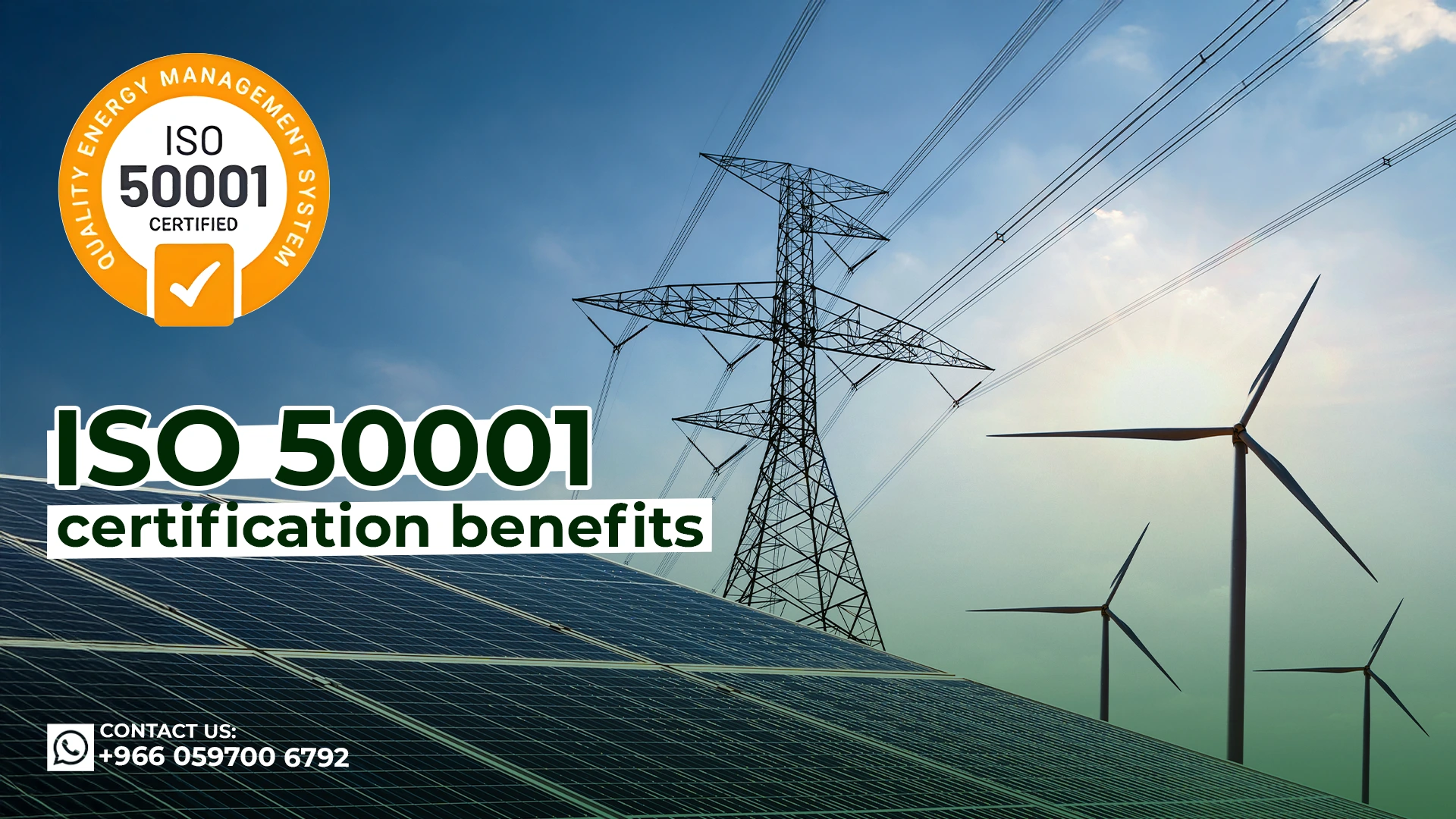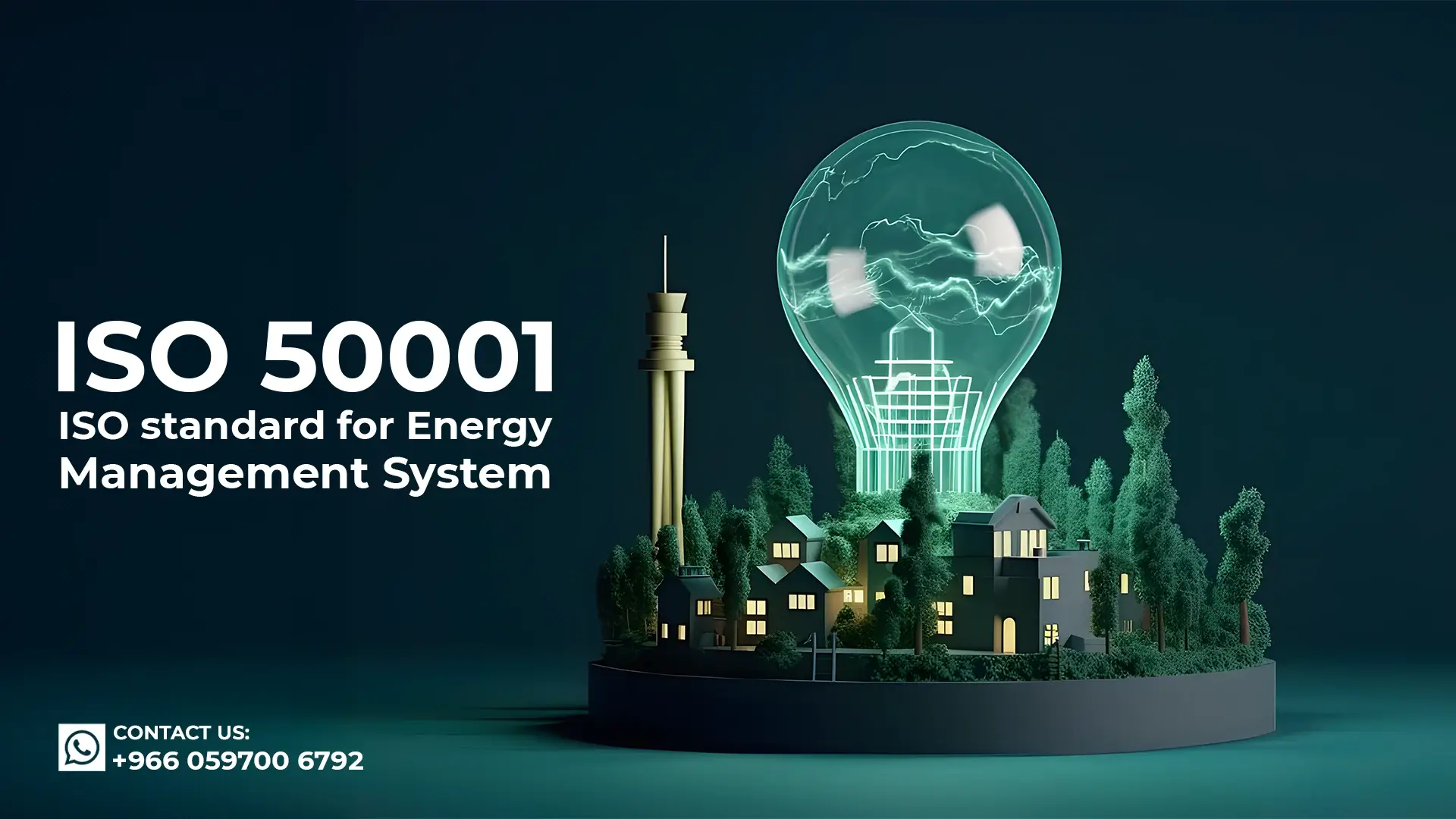
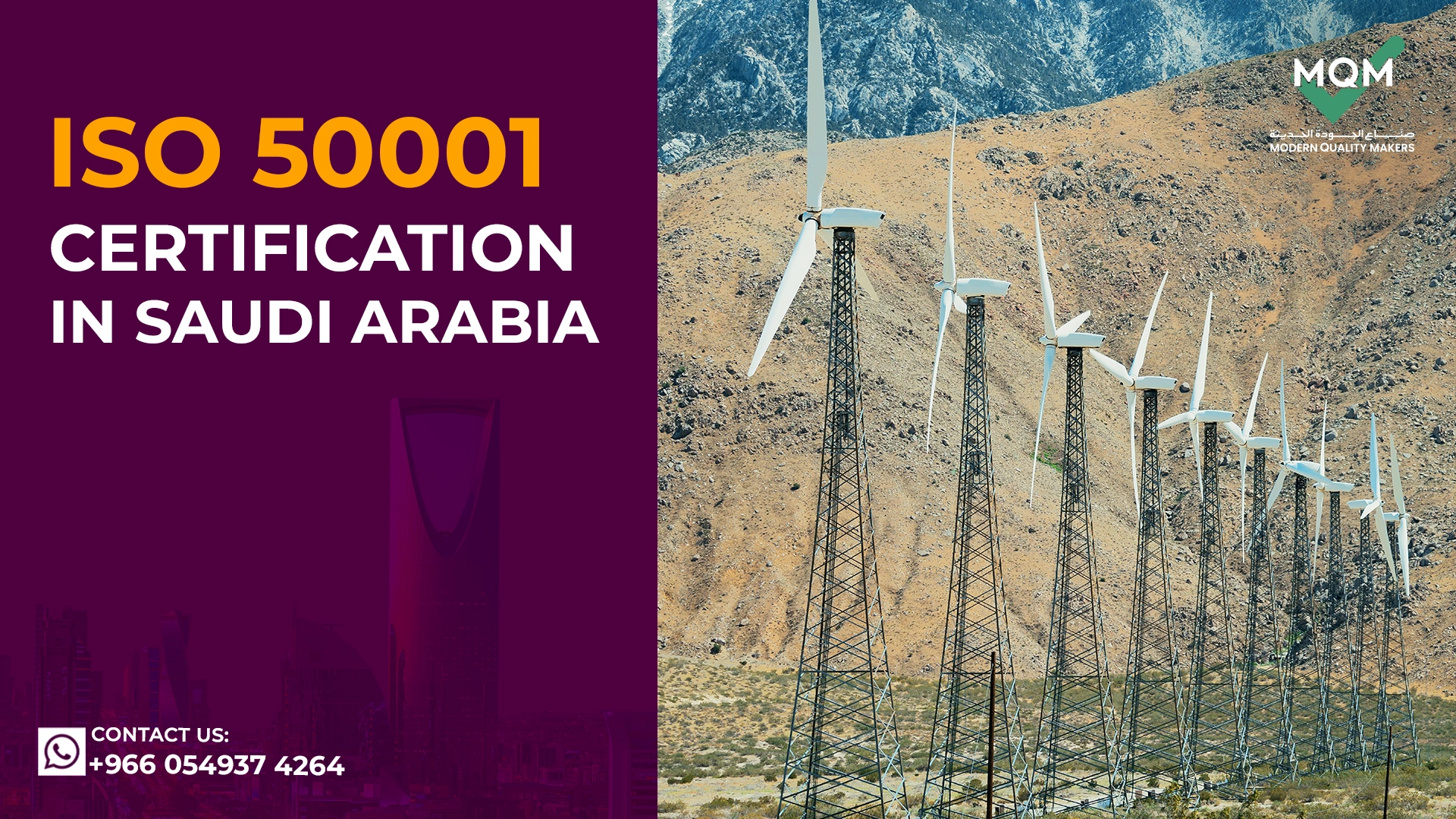
Conserving energy resources while reducing harmful emissions and the carbon footprint of institutions and factories across all sectors is one of the most important goals of Saudi Arabia’s Vision 2030. This explains the efforts of all institutions and companies, and the government’s encouragement, to obtain ISO 50001 certification in Saudi Arabia.
What is iso 50001 certification?
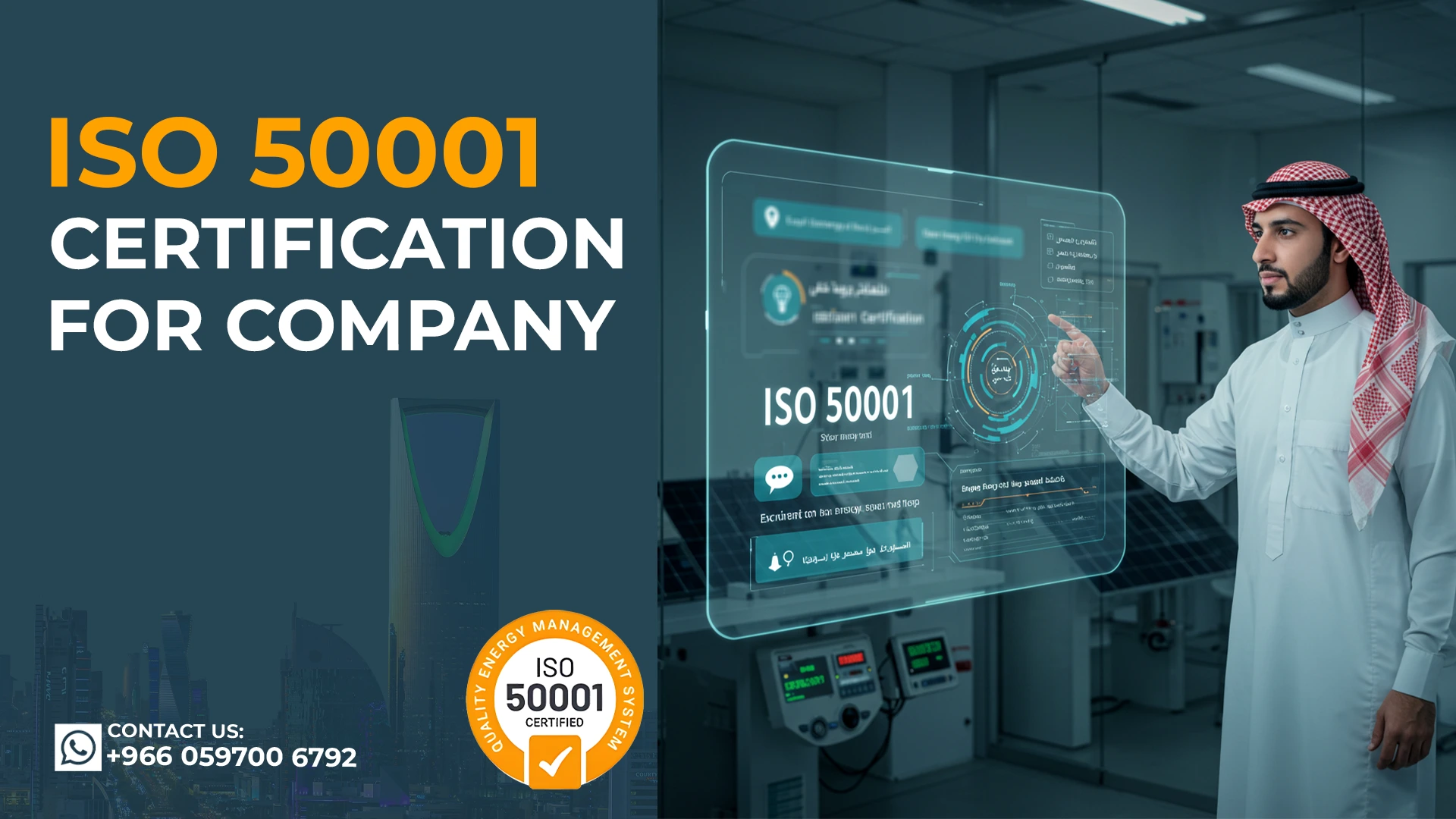
ISO 50001 refers to the international standard that provides a framework with specific principles and requirements for energy management systems (EnMS), helping organizations to develop policies, set goals, and use data to make better energy-related decisions with the aim of improving energy efficiency, reducing waste, minimizing carbon footprint, and lowering costs.
Explore More: ISO 50001 Certification Benefits
Why iso 50001 is important in Saudi Arabia
Implementing the ISO 50001 standard in Saudi Arabian companies and institutions offers several indispensable benefits. The most prominent, are:
- It helps companies comply with stringent environmental regulations.
- Enhancing the organization’s credibility with customers and stakeholders by demonstrating its commitment to sustainability, environmental conservation, and social responsibility.
- Improving operational performance is also a key factor in attracting more investors.
- The ISO 50001 standard also serves as a facilitator and guarantor of Saudi institutions’ commitment to all laws, regulations, and rules regarding energy use and environmental protection in the Kingdom.
In addition to the above, the implementation of an energy management system and obtaining ISO 50001 certification in Saudi Arabia is in line with the Kingdom’s transition to a more sustainable and energy-efficient future.
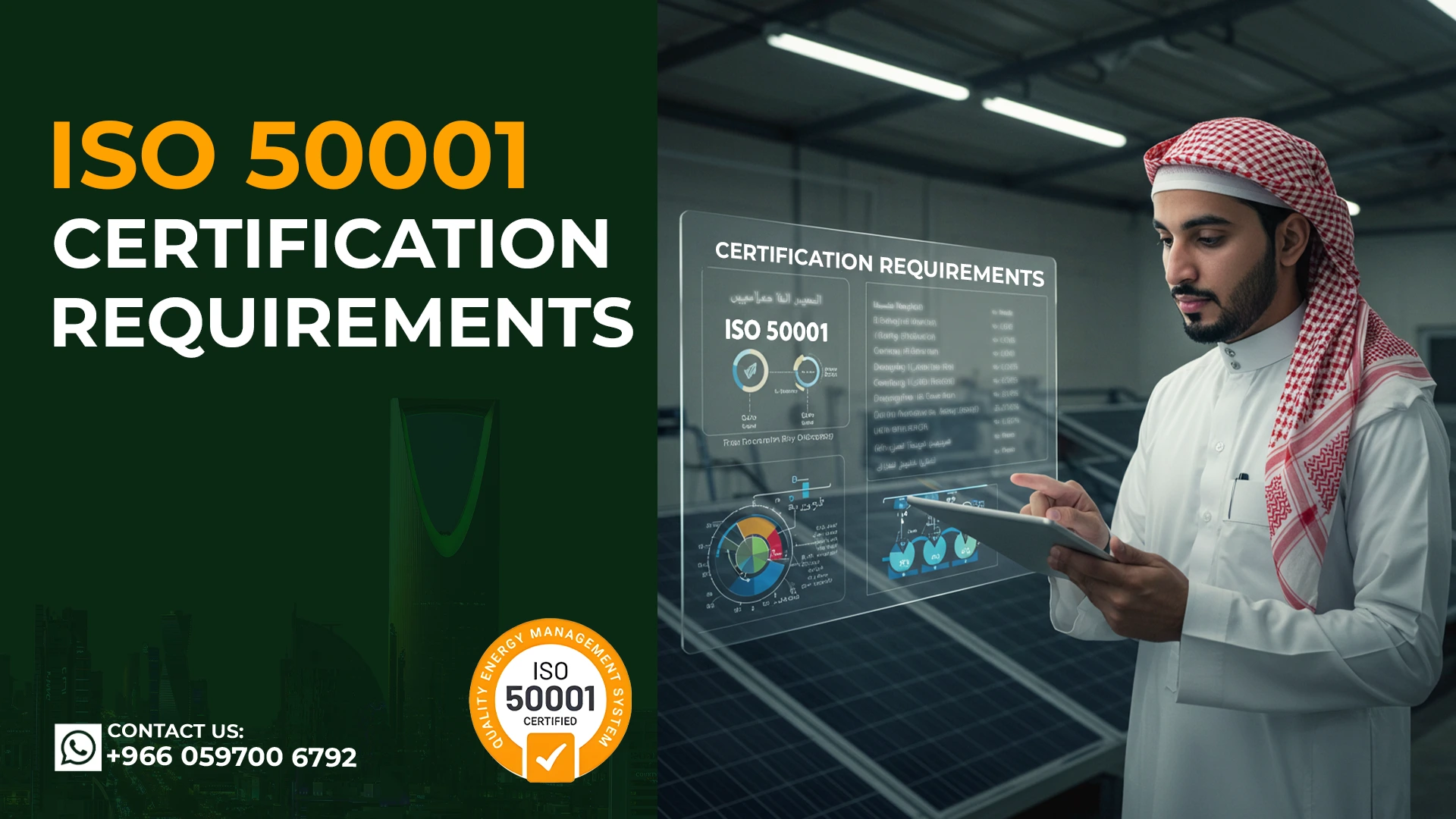
Explore More: ISO 50001 certification requirements
How to apply ISO 50001 in light of the 2030 vision
Implementing an energy management system in Saudi institutions to comply with ISO standards and with Saudi Vision 2030 requires following these steps:
Senior Management Commitment
First and foremost, it is essential to ensure that leadership is clearly committed to the energy policy that links energy management with the organization’s 2030 sustainability goals, particularly reducing the carbon footprint.
Conduct a comprehensive energy review
Current energy uses should be identified, and the extent to which energy consumption aligns with the long-term goals for 2030 should be analyzed. Opportunities for improving energy performance should also be identified.
Setting Key Energy Performance Indicators (EnPIs)
When implementing ISO 50001, it is essential to define clear energy benchmarks and measurable Key Performance Indicators (KPIs) that track progress towards 2030 vision goals.
Conduct regular management reviews and internal audits.
Senior management should review the entire energy management system after the implementation of the Energy Principles, in addition to conducting internal audits at least annually, ensuring its effectiveness in achieving the 2030 targets and identifying further opportunities for improvement whenever possible.
Obtaining ISO 50001 certification from an accredited body
After ensuring compliance with all energy management system standards, request an external audit from an accredited body. This verification by an accredited body and subsequent certification enhances the organization’s image and reputation with clients, partners, investors, government agencies, and stakeholders in general.
Continuous Improvement of Energy Management Systems
The organization must also ensure continuous improvement of its energy performance, setting more ambitious goals once the initial objectives are achieved. This aligns it with global energy management standards and the goals of Vision 2030.
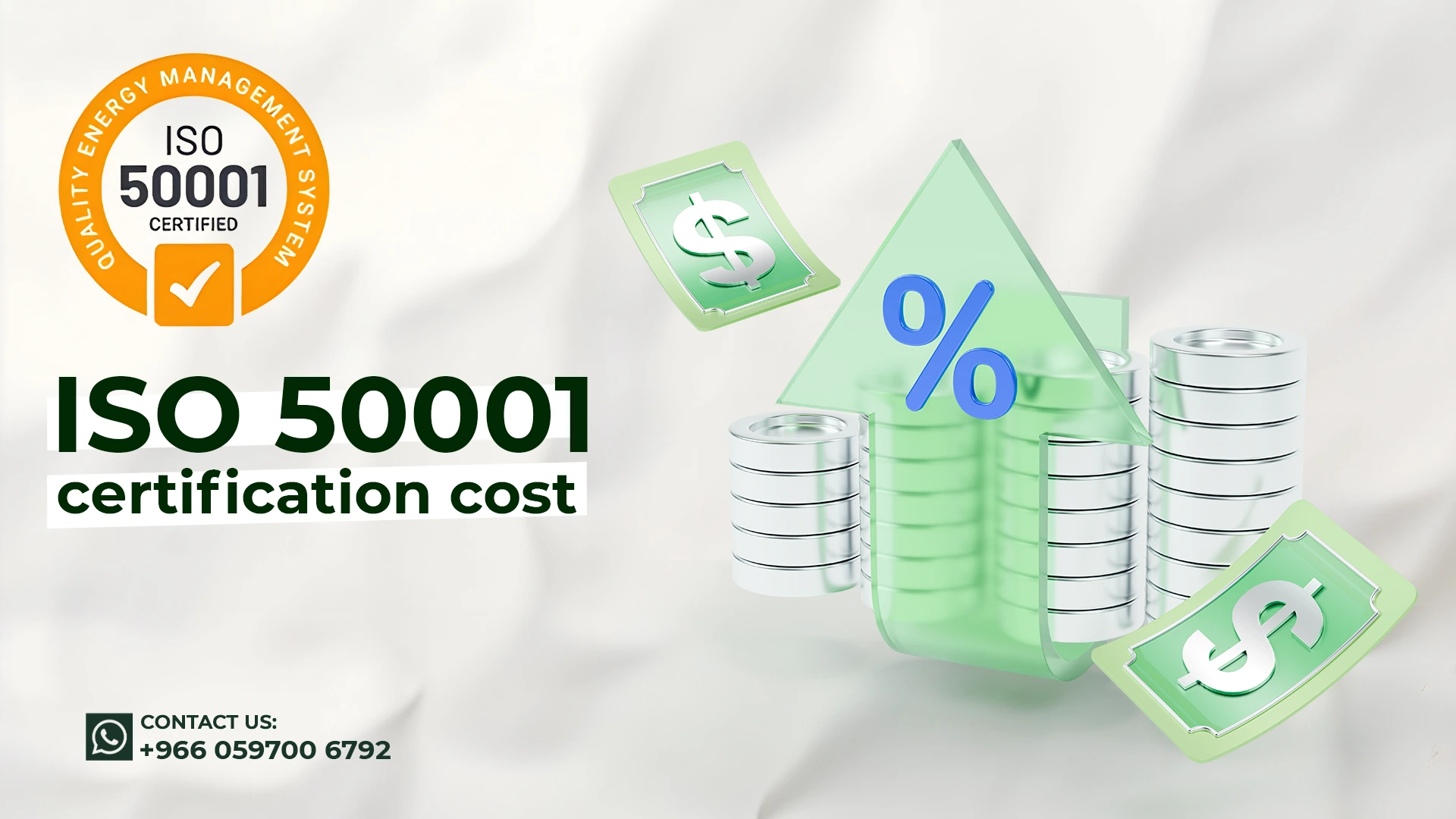
ISO 50001 certification in Saudi Arabia Cost
Certainly, the cost of ISO 50001 certification in Saudi Arabia varies significantly from one institution to another, but it usually ranges between 15,000 and 60,000 Saudi Riyals or more, as it may sometimes exceed 100,000 Riyals, especially since it depends on several factors such as the size of the company, its complexity, and its readiness and preparedness to apply the principles of the standard.
The total cost also includes other expenses such as consulting services, grant accreditation fees, system improvements, and more.
Explore More: New ISO Standard 2026: A Guide for Businesses in Saudi Arabia
Apply ISO 50001 Professionally with MQM in KSA
Undoubtedly, engaging a highly experienced and professional ISO consulting and certification company, such as Modern Quality Makers (MQM), ensures the professional implementation of an energy management system that aligns with the principles of ISO 50001 and the goals of Vision 2030.
When you request MQM’s services, you will receive unique benefits, such as:
- MQM is a professional company that has been operating in the field for over 20 years.
- The entire organization was studied by top ISO experts, and a compliant energy management system was developed.
- Implementing the energy management system with monitoring and professional documentation.
- Conduct a thorough internal audit, measuring energy key performance indicators [EnKPIs], and regularly making any necessary improvements or repairs.
- Providing all necessary support to the organization, whether before, during, and after obtaining the certificate.
- The organization also assists in updating and developing its energy management system to meet the requirements of ISO 5001 and Vision 2030.
- Modern Quality Makers Company also adheres to all deadlines and agreements with institutions without breach or negligence, and all our prices are very competitive and incomparable.
Therefore, if you wish to obtain ISO 50001 certification in Saudi Arabia professionally and accurately while simultaneously achieving the goals of Vision 2030 in the field of energy management, do not hesitate to contact us at Modern Quality Makers Company, MQM, today.
FAQs About ISO 50001 Certification in Saudi Arabia
1. What is ISO certification in Saudi Arabia?
This refers to qualifying companies in the Saudi market, in any activity, specialization, or sector, to meet all the principles and requirements of ISO standards and subsequently obtain ISO certification.
2. How to become ISO 50001 certified?
By studying the organization and developing an energy management system that complies with the principles and clauses of ISO 50001, in addition to the organization being able to pass the external audit by an accredited external body, and ongoing development of the energy management system as well.
3. How much is ISO 50001 certification?
The cost of obtaining an ISO 50001 certificate in Saudi Arabia may range between fifteen Saudi Riyals and sixty Saudi Riyals, or exceed one hundred thousand Saudi Riyals in large multi-branch companies. There is no absolute cost for the certificate as it varies from one institution to another based on several factors such as the size of the institution, its field, its complexity, and more.