
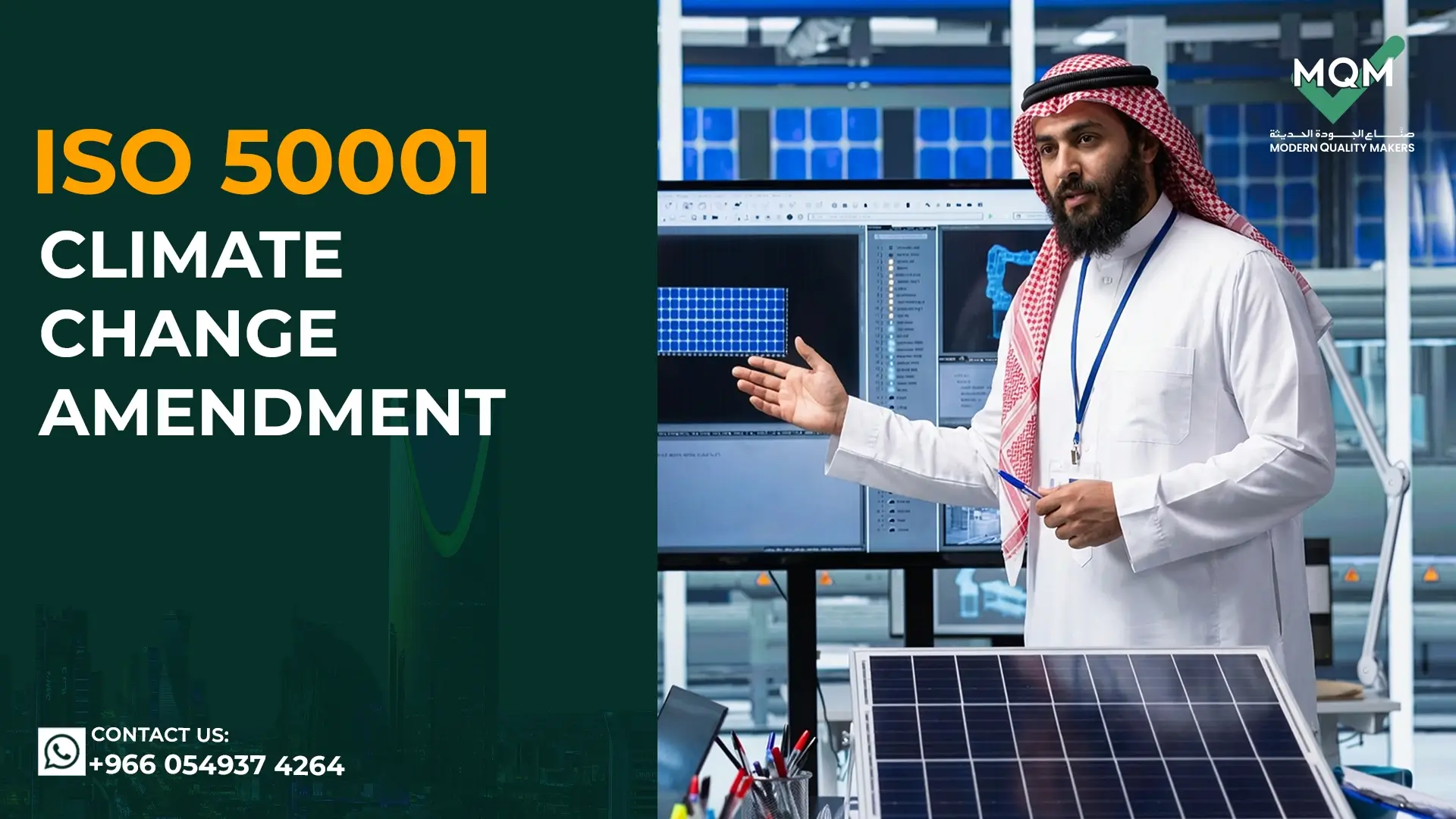
Implementing an effective and professional energy management system within an organization is a crucial step towards success and organizational excellence, especially given the significant challenges facing energy resources and the accompanying environmental pollution. In this context, the ISO 50001 standard is the most widely recognized international energy management system, and the ISO 50001 Climate Change Amendment was recently issued.
What is the ISO 50001 standard?
ISO 50001 is the international standard for energy management issued by the International Organization for Standardization (ISO). It aims to help companies establish an effective energy management system by identifying opportunities to improve efficiency, measuring energy performance, developing policies and plans to reduce waste and energy costs, and supporting the principle of sustainability.
Explaining the iso 50001 climate change amendment
A new amendment has been introduced to ISO 50001 to include climate change considerations within the requirements of the energy management system. The amendment states that an organization must:
- Determine whether climate change is a relevant issue to its activities (Clause 4.1).
- Be aware that stakeholders may have requirements related to climate change (Clause 4.2).
This iso 50001 climate change amendment reflects the importance of integrating sustainability and emissions reduction issues into energy planning, and thus links energy management to achieving broader environmental goals such as reducing the effects of global warming.
In short, this amendment does not add any fundamental new requirements, but merely highlights the need for energy management systems to take into account the risks and requirements related to climate change.
Benefits of implementing ISO 50001 in companies
No doubt that implementing the ISO 50001 standard offers numerous operational, financial, and environmental benefits for all businesses in both the short and long term. The most important and prominent benefits of ISO 50001 include:
Improving energy efficiency and reducing costs
Implementing an ISO 50001 energy management system with a clear methodology helps companies identify sources of waste and reduce unnecessary consumption, leading to lower bills and improved profitability.
Reducing carbon emissions
This standard helps reduce the carbon footprint and harmful emissions by optimizing energy use, thereby supporting sustainability goals and climate change mitigation initiatives in Saudi Arabia and globally.
Legal Compliance
Implementing ISO 50001 helps companies monitor and comply with legal requirements related to energy and the environment, thus avoiding law penalties.
Improving reputation
Adopting an international energy management standard such as ISO 50001 enhances the company’s reputation in local and global markets and enhances the confidence of customers, investors, and all stakeholders.
In addition, by reducing operating costs and improving environmental energy performance, the organization becomes more competitive in its sector, opening up new growth opportunities.
Continuous Improvement
Like all ISO standards, ISO 50001 adopts a continuous improvement approach, enhancing companies’ ability to improve energy performance over time, achieve higher efficiency, and effectively overcome energy and environmental challenges.
How to obtain an ISO 50001 certificate?
Obtaining ISO 50001 certification requires following specific steps to ensure that the energy management system is set up in accordance with the standard’s requirements, as follows:
- Studying the organization and defining the scope, along with analyzing the current situation and evaluating the organization’s existing energy system to identify gaps between this system and the requirements of ISO 50001.
- Establish a suitable energy management system that is compatible with the activities and with the principles of ISO 50001, including the impacts of climate change, in accordance with the new amendment in Clause 4.
- Start implementing this system while monitoring energy performance using appropriate measurement indicators to ensure that goals are achieved and performance is improved.
- Conduct an internal audit to assess compliance with the standard requirements and identify any necessary improvements before the external audit.
- Finally, an accredited certification body is chosen to conduct an external audit, and if all requirements are met and this audit is passed, the organization is awarded the ISO 50001 certification.
- The ISO 50001 certificate will be valid for 3 years from the date of issuance, with the need to develop and update the system and renew the certificate annually.
Role of MQM in implementing iso 50001 standard and its climate change amendment
Modern Quality Makers (MQM) plays a vital role in supporting Saudi companies through the successful implementation and certification of the ISO 50001 standard, including adaptation to the new iso 50001 climate change amendment requirements. MQM provides comprehensive consulting services, including:
- Our ISO experts and consultants conduct an initial gap assessment between your current energy system and the requirements of ISO 50001, incorporating climate change considerations into the analysis.
- Developing the necessary policies and documentation for your energy management system, ensuring consistency with the standard’s requirements, the new amendment, and the organization’s operations.
- Monitoring implementation and practical application within the organization, and providing consultations and recommendations to improve energy performance.
- We also make sure to provide the necessary support to the organization during the external audit to ensure that the audit is passed successfully and that ISO 50001 certification is obtained the first time.
We also assure you that, thanks to our long experience and deep understanding of ISO standards and the requirements of the Saudi market, MQM can enable companies to achieve an effective and sustainable energy management system that enhances their competitiveness and confirms their commitment to environmental responsibility.
FAQs about ISO 50001 Climate Change Amendment
What is ISO 50001 2018 A1 2024?
It is the iso 50001 climate change amendment that was added to ISO 50001:2018 and focuses on integrating climate change considerations into the energy management system, particularly in the sections 4.1 and 4.2, Context of the organization and stakeholders requirements related to climate change.
What is the latest version of ISO 50001?
The most recently approved version is ISO 50001:2018 with Amendment A1:2024 on climate change, and this version remains the official reference for application and certification.
What are the key differences between ISO 14001 and ISO 50001?
ISO 14001 focuses on the overall environmental management system, while ISO 50001 deals with energy management, improving its efficiency, and reducing its consumption, costs, and associated emissions.