
The global quality landscape is evolving, and at the forefront is a pivotal update aligning the world’s most recognized Quality Management System (QMS) standard with today’s most pressing challenge. The ISO 9001 climate change amendment is not just a procedural update; it’s a strategic signal to organizations worldwide, and especially in Saudi Arabia, that resilience and sustainability are now inseparable from quality.
For modern quality professionals, operational leaders, and decision-makers in the Kingdom, understanding and implementing this amendment is crucial. It bridges the gap between robust operational excellence—a core tenet of Vision 2030—and the growing demands for environmental, social, and governance (ESG) responsibility. This article serves as your definitive guide to navigating this change, ensuring your QMS remains compliant, competitive, and future-proof.
What is the ISO 9001 Climate Change Amendment?
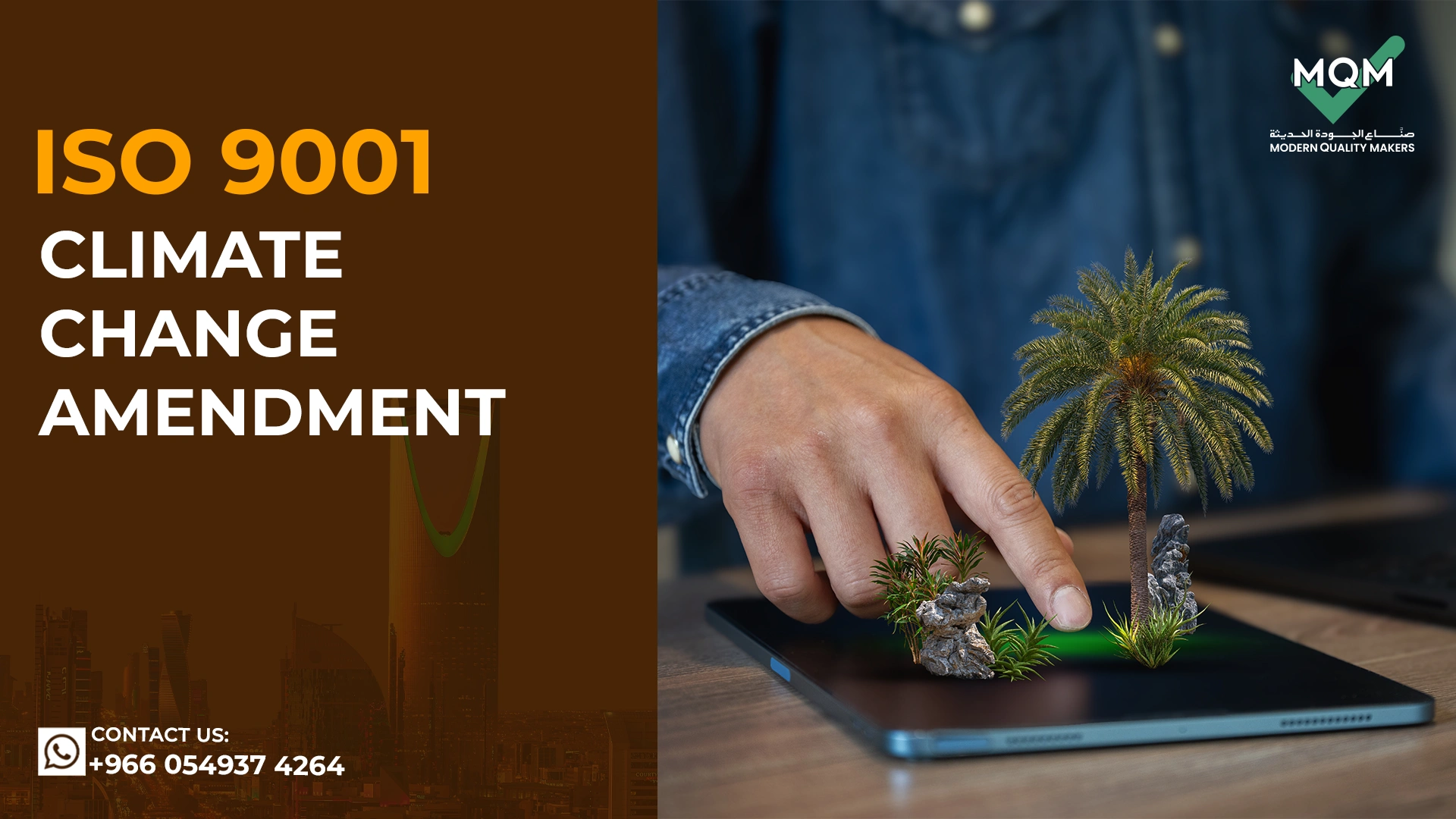
In February 2024, the International Organization for Standardization (ISO) issued a formal amendment to ISO 9001:2015. This amendment adds a new, non-negotiable requirement within clause 4.1 (Understanding the organization and its context) and 4.2 (Understanding the needs and expectations of interested parties).
In essence, it mandates that organizations must now determine whether climate change is a relevant issue to their QMS. This is not a suggestion, but a binding requirement for any organization seeking or holding ISO 9001 certification. It compels top management to consider both the potential direct and indirect impacts of climate change on their ability to consistently provide conforming products and services.
Explore More: ISO 9001 vs ISO 14001 vs ISO 45001: Key Differences & Standards Comparison
Why This Matters for Saudi Arabian Organizations?
Saudi Arabia’s economic and regulatory environment makes this amendment particularly significant:
- Alignment with Vision 2030 & Saudi Green Initiative: The Kingdom is aggressively pursuing sustainability goals. Integrating climate considerations into your QMS directly supports national objectives like reducing carbon emissions, promoting renewable energy, and enhancing environmental protection. It demonstrates corporate citizenship aligned with national strategy.
- Supply Chain & Investor Expectations: Global investors and multinational partners increasingly mandate strong ESG and climate risk disclosures. A QMS that explicitly addresses climate change strengthens your position in international trade and supply chains, a key focus for Saudi exporters and large-scale projects in Riyadh, Jeddah, and the Eastern Province.
- Risk Management in a Unique Climate: The Gulf region faces specific climate-related risks—extreme heat, water scarcity, dust storms, and potential supply chain disruptions. Proactively assessing these within your QMS is essential for business continuity, protecting assets, and ensuring employee safety.
- Competitive Advantage & Market Access: Being an early adopter showcases leadership. It can open doors to green tenders, partnerships with sustainability-conscious entities like NEOM or THE LINE, and enhance brand reputation among a growing eco-aware consumer base in the Kingdom.
Explore More: New ISO Standard 2026: A Guide for Businesses in Saudi Arabia
A Step-by-Step Action Plan for Implementation
Moving from requirement to action is key. Here’s how quality managers in Saudi Arabia can operationalize the amendment:
Step 1: Top Management Leadership & Context Review
Conduct a formal review of clauses 4.1 and 4.2 with your leadership team. Ask:
- How could extreme weather events (e.g., sandstorms, floods) disrupt our supply of raw materials, logistics, or operations?
- How do transition risks (e.g., new Saudi environmental regulations, carbon pricing, shifts in market demand) impact our business model?
- Do our key interested parties (investors, customers, SAGIA, Saudi Standards, Metrology and Quality Organization (SASO)) now have explicit climate-related expectations?
Step 2: Integration into Risk & Opportunity Thinking (Clause 6.1)
Climate change must be integrated into your systematic risk-based thinking.
- Identify Risks: e.g., Equipment failure due to excessive heat, increased costs of energy or cooling, supplier vulnerability.
- Identify Opportunities: e.g., Developing more energy-efficient processes, using sustainable materials aligned with Saudi Green Initiative goals, innovating climate-resilient products or services.
Step 3: Update QMS Objectives & Planning (Clause 6.2)
Set measurable QMS objectives that address relevant climate change issues. Examples:
- “Reduce energy consumption in our Dammam manufacturing facility by X% by 2025.”
- “Assess and qualify 100% of our critical suppliers in Riyadh on their climate resilience plans by Q3.”
- “Implement a water recycling initiative to reduce consumption in line with national targets.”
Step 4: Ensure Operational Control & Resilience (Clause 8.1)
Update your operational controls to address identified climate risks. This could involve:
- Revising maintenance schedules for HVAC and critical machinery ahead of peak summer heat.
- Diversifying logistics routes to mitigate disruption risks.
- Specifying temperature-controlled storage for sensitive materials.
Step 5: Documentation & Auditor Readiness
While the amendment doesn’t prescribe specific documentation, you must provide evidence of the thought process. Update your context analysis, risk register, and management review minutes to show climate change has been considered. Your ISO 9001 certification body in Saudi Arabia will audit this during surveillance or recertification audits.
Modern Quality Makers: Your ISO Success Partner in Saudi Arabia
In the dynamic landscape of Saudi Arabia’s Vision 2030, where excellence and sustainability converge, Modern Quality Makers stands as the definitive partner for organizations seeking not just certification, but transformative quality leadership. More than just ISO consultants, we are architects of resilient, future-proof management systems. We understand that today’s challenges—from the new ISO 9001 climate change amendment to integrating ESG principles—demand a proactive, strategic approach. Our expertise is rooted in the local market, aligning global standards with Saudi Arabia’s ambitious national goals and regulatory environment. We empower Saudi businesses to turn compliance into competitive advantage, ensuring their systems are robust, efficient, and ready to lead in an evolving global economy. For a partnership that bridges world-class standards with unparalleled local insight, the choice is clear: Modern Quality Makers.
Key elements included:
- Strategic Positioning: Links to Vision 2030 and transformative leadership.
- Unique Value Proposition: Positions them as “more than consultants” and as “architects” of systems.
- Relevance: Mentions the specific ISO 9001 climate change amendment and ESG.
- Local Expertise: Highlights understanding of the Saudi market and national goals.
- Benefit-Oriented: Focuses on competitive advantage and readiness for the future.
- Strong Closing: Ends with a clear, confident differentiator.
Conclusion: From Compliance to Strategic Leadership
Navigating the ISO 9001 climate change amendment is more than a compliance task—it’s a strategic opportunity to build a more resilient, sustainable, and competitive organization aligned with Saudi Vision 2030. By proactively integrating climate considerations into your Quality Management System, you’re not only future-proofing your operations but also demonstrating leadership in the Kingdom’s transformative journey.
Ready to transform this amendment into your competitive advantage?
Let Modern Quality Makers, Saudi Arabia’s premier ISO consultancy, guide you through every step. Our experts specialize in blending global standards with local market intelligence to create management systems that excel in both compliance and performance.
Contact Modern Quality Makers today for a free consultation on implementing the ISO 9001 climate change amendment and positioning your organization at the forefront of quality and sustainability in Saudi Arabia.
FAQS About ISO 9001 Climate Change Amendment
1. If climate change isn’t relevant to our business, can we ignore this?
No. You must conduct a documented analysis to determine relevance. Simply stating “not relevant” without justification will likely lead to a non-conformity during audit. The bar for proving irrelevance is high.
2. Does this turn ISO 9001 into an environmental standard?
No. The focus remains on how climate change affects your ability to achieve quality objectives and satisfy customer requirements. It’s about risk to your QMS, not general environmental management (which is covered by ISO 14001).
3. What is the deadline for implementation?
The amendment is effective immediately. Certification bodies will check for conformity in all audits happening after its publication. Early action is advised.