
Information and data have become among the most important assets that organizations rely on to manage their business, make decisions, and achieve their objectives. With the expansion of digital systems, cloud services, and remote work, the risks of cyberattacks, data leaks, system disruptions, and information loss have increased.
Therefore, protecting information is no longer based only on antivirus programs or updating operating systems. Organizations now need a clear methodology that helps them identify potential risks, analyze and assess their impact, and then select appropriate measures to address them.
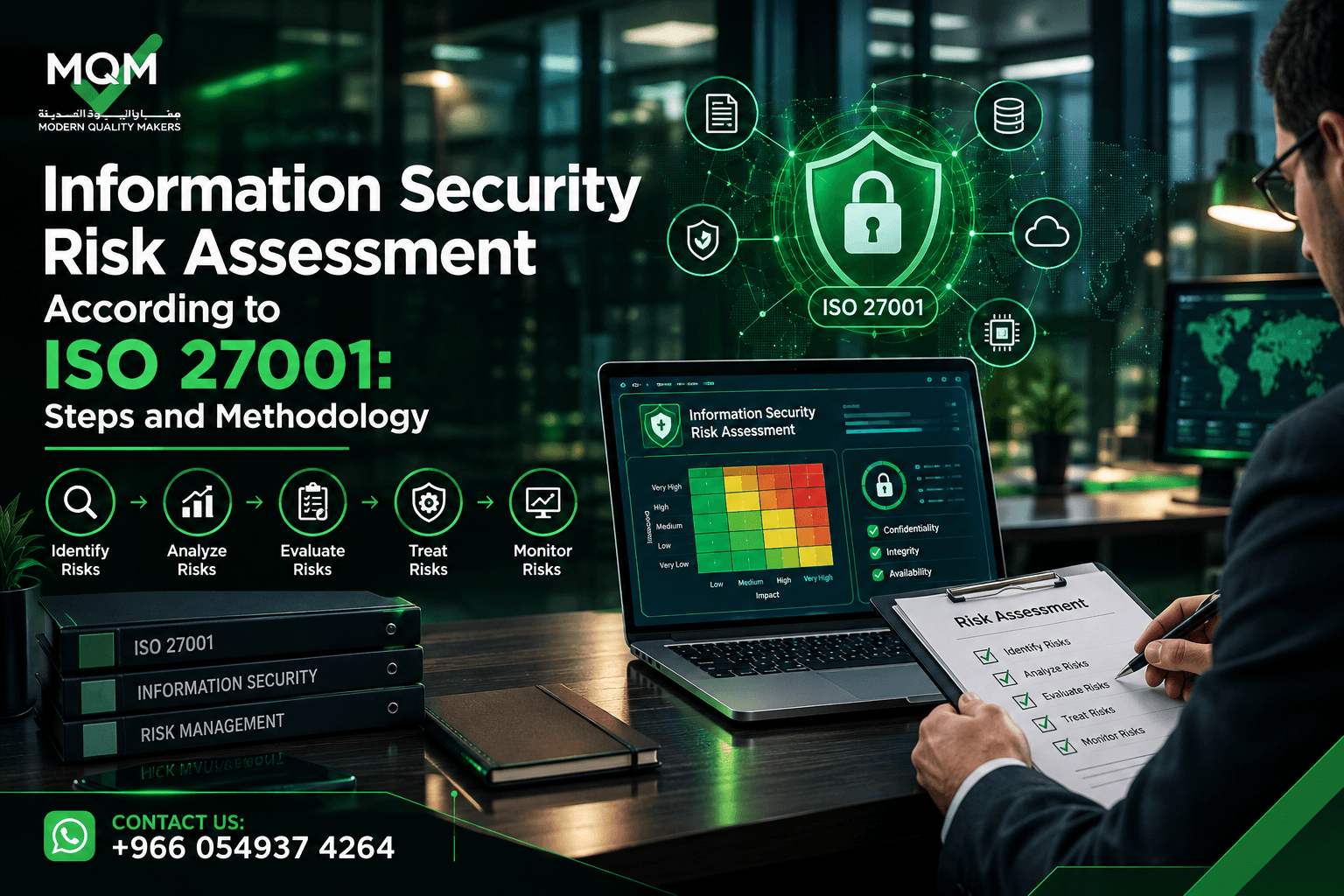
Information Security Risk Assessment is one of the most important fundamental stages when implementing an Information Security Management System according to the ISO 27001 standard, as it helps the organization build a security system based on actual risks rather than general procedures that may not suit the nature of its activities.
Introduction to Information Security Risk Assessment
Information Security Risk Assessment aims to help organizations understand the threats that may affect their data, systems, and operations, identify vulnerabilities that could be exploited, and then measure the likelihood of risks occurring and the potential magnitude of their impact.
Through this process, the organization can identify its security priorities, direct its resources toward the most important risks, and establish controls and procedures that reduce the likelihood of incidents occurring or limit their effects if they occur.
Information security risks are not limited to cyberattacks only, but also include human errors, equipment failures, data loss, poor access-rights management, natural disasters, and risks related to suppliers and external parties.
What Is Information Security Risk Assessment?
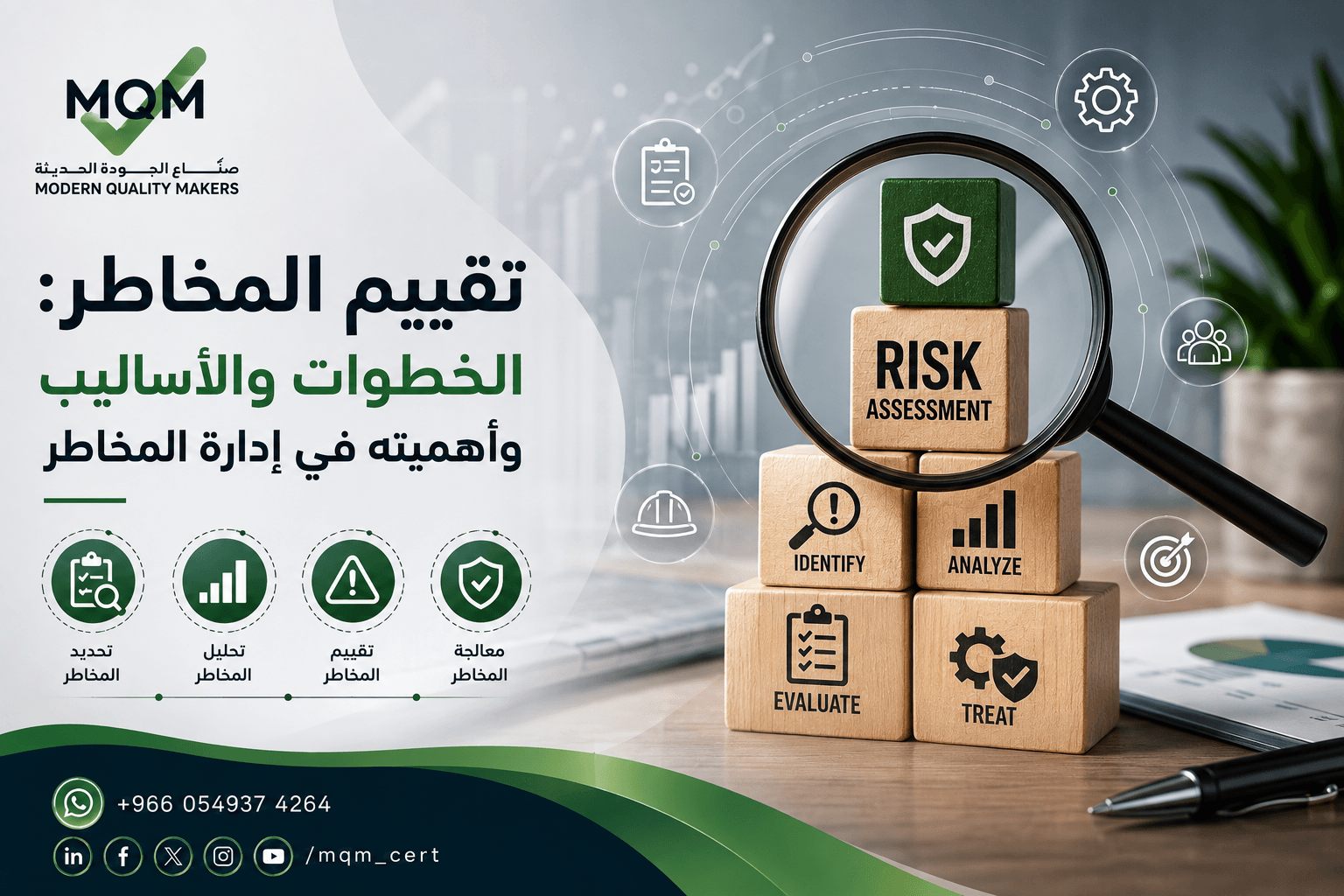
Information Security Risk Assessment refers to the organized process through which the important information assets within an organization are identified, threats and vulnerabilities that may affect them are recognized, and then the likelihood of risks occurring and their impact on the confidentiality, integrity, and availability of information are analyzed.
Information Security Risk Assessment answers a set of fundamental questions, including:
- What assets and data need to be protected?
- What threats may affect these assets?
- What vulnerabilities exist in the systems and procedures?
- What is the likelihood of each risk occurring?
- What is the potential extent of the damage if it occurs?
- What measures can be implemented to reduce the level of risk?
The assessment should be based on factual information, such as the nature of operations, data sensitivity, systems in use, previous incident records, and the legal and contractual requirements to which the organization is subject.
Importance of Information Security Risk Assessment
Applying an Information Security Risk Assessment methodology helps achieve many benefits, including:
Protecting Sensitive Data
The assessment helps identify important data, such as customer and employee data, financial information, and operational files, and then select appropriate controls to protect them from unauthorized access, leakage, or modification.
Reducing the Likelihood of Security Incidents
By identifying threats and vulnerabilities, the organization can take preventive measures before incidents occur, rather than waiting for a problem to happen and then dealing with its consequences.
Supporting Decision-Making
Information security risk analysis provides clear information that helps management determine cybersecurity spending priorities and select measures that provide the greatest possible benefit.
Enhancing Business Continuity
The failure of a critical system or the loss of a database may lead to operational disruption. Therefore, risk assessment helps identify scenarios that may affect business continuity and develop plans to deal with them.
Supporting Compliance with Regulatory Requirements
Many organizations need to demonstrate their ability to protect data and comply with legal and regulatory requirements. Risk assessment helps document the risks, procedures, and controls used to address them.
Improving Trust with Customers and Partners
When an organization has a clear system for managing information security risks, this strengthens the confidence of customers and partners in its ability to protect and responsibly handle data.
What Is the Relationship Between Risk Assessment and ISO 27001?
The ISO 27001 standard specifies the requirements necessary to establish, implement, maintain, and improve an Information Security Management System within an organization. The standard is based on a risk-based methodology, whereby security controls are selected based on the actual risks facing the organization.
ISO 27001 Risk Assessment is an important basis for determining the appropriate controls from Annex A of the standard, as controls are not selected randomly, but are determined according to the nature of the organization, its needs, and the results of the risk assessment.
The relationship between risk assessment and ISO 27001 includes the following:
- Defining the scope of the Information Security Management System.
- Identifying important assets, processes, and data.
- Identifying threats and vulnerabilities.
- Analyzing risks and determining their levels.
- Selecting appropriate risk treatment measures and controls.
- Documenting the results in the risk register.
- Monitoring and periodically reviewing risks.
- Continuously improving the Information Security Management System.
Information Security Risk Assessment Steps
Information Security Risk Assessment can be carried out through a set of organized steps, with the possibility of adjusting them according to the organization’s size and nature of its activities.
1. Defining the Assessment Scope
Before beginning the assessment process, the scope to be studied must be defined. The scope may include the entire organization, a specific department, an electronic system, a data center, or a cloud service.
Defining the scope should include:
- The departments and processes covered.
- The systems and applications used.
- Work locations and data centers.
- The types of data being processed.
- External parties and suppliers associated with the scope.
Defining the scope helps make the assessment process clearer and also prevents wasting time studying systems or processes that are not related to the assessment objectives.
2. Identifying Information Assets and Data
The next step is to prepare a list of information assets that need protection. Assets are not limited to electronic files only, but include everything that has value to the organization.
Examples of information assets include:
- Customer databases.
- Financial and accounting data.
- Employee files.
- Contracts and legal documents.
- Enterprise resource planning systems.
- Computers and servers.
- Applications and websites.
- Email.
- Cloud storage services.
- Networks and communication devices.
- Paper-based information.
- Internal knowledge and expertise.
After identifying the assets, they are classified according to their level of sensitivity and importance, such as public, internal, confidential, or highly confidential information.
3. Identifying Threats and Vulnerabilities
At this stage, threats that may affect each asset are identified, along with vulnerabilities that could allow the risk to occur.
Examples of threats include:
- Phishing attacks.
- Malware and ransomware.
- Device theft.
- Unauthorized access.
- Password leakage.
- Human errors.
- Server failures.
- Power or internet outages.
- Natural disasters.
- Abuse of privileges.
- Risks related to suppliers and external parties.
Vulnerabilities may include:
- Using weak passwords.
- Failure to implement multi-factor authentication.
- Delayed system updates.
- Weak backup procedures.
- Lack of clear policies.
- Granting excessive privileges.
- Insufficient employee training.
- Failure to encrypt sensitive data.
- Absence of incident response plans.
The threat, vulnerability, and affected asset should be linked together so that information security risk identification is more accurate and realistic.
4. Analyzing the Likelihood and Impact of Risks
After identifying threats and vulnerabilities, each risk is analyzed according to two main factors: the likelihood of occurrence and the magnitude of impact.
Likelihood of Occurrence
Likelihood of occurrence indicates how possible it is for the risk to occur, and it can be classified as:
- Low.
- Medium.
- High.
Likelihood is affected by factors such as the frequency of the threat, the strength of existing controls, how easily the vulnerability can be exploited, and the history of previous incidents.
Risk Impact
Risk impact measures the extent of damage that may occur when the risk materializes, and may include:
- Financial losses.
- Operational disruption.
- Loss of customer trust.
- Legal or regulatory damages.
- Disclosure of confidential information.
- Damage to the organization’s reputation.
- Impact on data integrity or availability.
When analyzing impact, the three dimensions of information security should be considered:
- Confidentiality: Preventing access to information by unauthorized persons.
- Integrity: Maintaining the accuracy of information and preventing unauthorized modification.
- Availability: Ensuring that information can be accessed when needed.
5. Determining the Risk Level
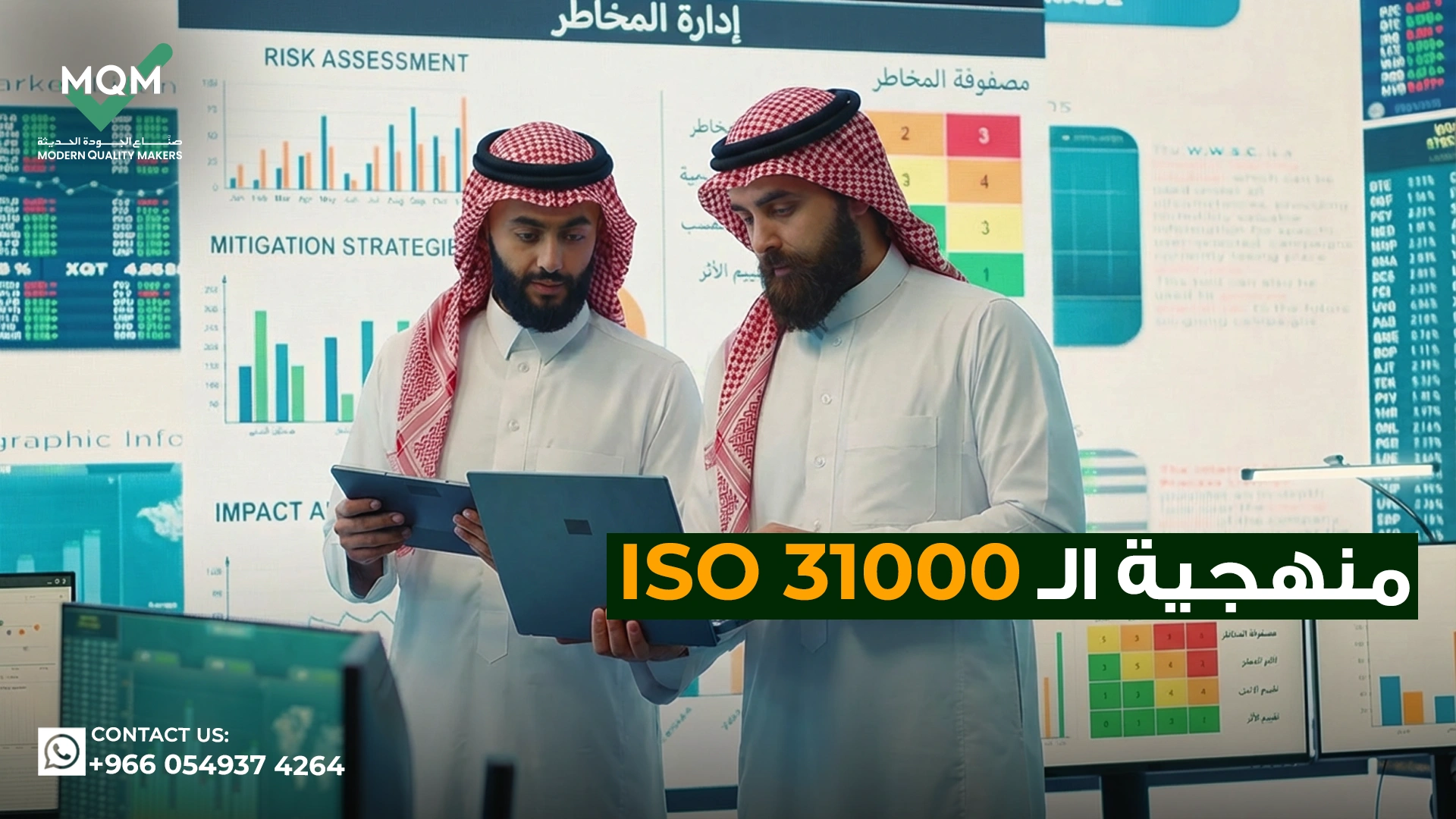
The risk level is determined by combining the likelihood of occurrence with the magnitude of impact. A risk matrix can be used to classify the results as:
- Low risks.
- Medium risks.
- High risks.
- Critical risks.
For example, if the likelihood of a risk occurring is high and its impact is high, it may be classified as a critical risk that requires immediate treatment.
Low-level risks may be accepted or monitored, provided that this is based on a clear decision and approval from the relevant management.
How to Identify Information Security Risks
Identifying Information Security Risks requires studying the relationship between the asset, threat, vulnerability, and potential consequence.
A risk register can be used to include the following elements:
| Element | Example |
| Information Asset | Customer Database |
| Threat | Unauthorized Access |
| Vulnerability | Weak Access Rights Management |
| Potential Impact | Customer Data Leakage |
| Likelihood of Occurrence | High |
| Impact Level | High |
| Risk Level | Critical |
| Proposed Action | Review Access Rights and Implement Multi-Factor Authentication |
| Person Responsible for Treatment | Information Technology Department |
| Target Date | To be determined by management |
This register helps standardize the method of analyzing risks, define responsibilities, and monitor the required actions.
Preparing an Information Security Risk Treatment Plan
After completing the risk assessment, an Information Security Risk Treatment Plan should be prepared. This is the plan that explains how to deal with the identified risks.
There are four main options for risk treatment:
Risk Reduction
This is achieved by implementing controls and measures that reduce the likelihood of the risk occurring or limit its impact, such as:
- Data encryption.
- Implementing backups.
- Updating systems.
- Training employees.
- Restricting access rights.
- Implementing threat detection systems.
- Conducting periodic system testing.
Risk Avoidance
The organization may decide to stop a specific activity or service if the associated risk is very high and cannot be adequately controlled.
Risk Transfer
Part of the risk may be transferred to another party, such as using a specialized company or obtaining insurance against certain risks, while management and monitoring responsibility remain with the organization.
Risk Acceptance
Management may accept certain risks when their level is low or when the cost of treating them is higher than their expected impact. The decision to accept the risk and the party that approved it should be documented.
The treatment plan should include:
- Risk description.
- Current risk level.
- Required action.
- Proposed security control.
- Person responsible for implementation.
- Required resources.
- Target date.
- Residual risk level.
- Method of monitoring implementation.
Difference Between Risk Assessment and Risk Treatment
Although the two processes are related, each has a different objective.
Risk assessment focuses on identifying existing or potential risks, analyzing their likelihood and impact, and then classifying them according to priority.
Risk treatment, on the other hand, focuses on selecting and implementing measures and controls that help reduce, avoid, transfer, or accept risks.
In simple terms, risk assessment answers the question:
What risks does the organization face?
While risk treatment answers the question:
What will we do to deal with these risks?
Common Mistakes When Conducting Information Security Risk Assessment
Some organizations may make mistakes that affect the accuracy of the assessment results. The most common include:
Conducting the Assessment Only Once
Threats, systems, and processes continuously change. Therefore, the risk assessment should be reviewed periodically, as well as whenever a significant change occurs in systems or the organizational structure.
Ignoring Human Risks
Employees may be one of the most important sources of risk due to errors, lack of awareness, or misuse of privileges. Therefore, the human factor should be included in the assessment process.
Not Involving Different Departments
The assessment should not be limited to the Information Technology Department only, because other departments possess important information about processes, data, and operational risks.
Focusing Only on Technical Threats
Information security risks include legal, regulatory, operational, and human aspects, not just viruses and cyberattacks.
Failure to Document Results
The absence of a clear risk register makes it difficult to define responsibilities, monitor actions, and measure improvement.
Selecting Controls Without Actual Analysis
It is not sufficient to implement a large number of security controls. Rather, it is necessary to ensure that each control addresses a specific risk and is appropriate to the nature of the organization.
Ignoring Residual Risks
Even after implementing measures, some risks may remain. Therefore, the residual risk level should be identified, reviewed, and approved by the relevant management.
Role of Specialized Experts in Implementing ISO 27001
Organizations may need to work with specialized experts when conducting Information Security Risk Assessment or implementing an Information Security Management System according to ISO 27001, especially if they lack internal expertise or want to accelerate the implementation process.
Specialized experts can help with:
- Defining the scope of the Information Security Management System
- Preparing an appropriate risk assessment methodology
- Identifying assets, data, and processes
- Identifying threats and vulnerabilities
- Preparing the risk register
- Selecting appropriate controls
- Preparing the Information Security Risk Treatment Plan
- Developing policies and procedures
- Training employees and raising awareness
- Conducting internal reviews
- Preparing for audits and obtaining certification
Quality Makers is committed to helping organizations build Information Security Management Systems that are suitable for the nature of their activities by providing practical solutions that help protect data, reduce risks, and improve compliance with ISO 27001 requirements.
Cost of ISO 27001 Certification
The price of ISO 27001 certification varies from one organization to another according to several factors, including the organization’s size and the complexity of its operations, its readiness to implement an Information Security Management System, as well as the nature of its activities and the level of risks it faces. The experience of the implementing party and the certification body, as well as the cost of external auditing and certificate issuance, also affect the final cost.
The cost also includes follow-up, monitoring, and continuous improvement activities, as the organization needs to maintain the effectiveness of its Information Security Management System and comply with the requirements of the standard. Approximately, the price of ISO 27001 certification ranges between SAR 5,000 and SAR 20,000, with the possibility of higher costs depending on the organization’s needs and scope of implementation. To learn more details about the factors affecting the cost, you can refer to the guide Cost of ISO 27001 Certification
Conclusion
Information Security Risk Assessment represents the starting point for building an effective and sustainable system for protecting an organization’s data and systems. By identifying assets, threats, and vulnerabilities, and analyzing likelihood and impact, the organization can determine its priorities and select appropriate controls to address risks.
Applying an Information Security Risk Assessment methodology according to ISO 27001 also helps enhance the confidentiality, integrity, and availability of data, improve business continuity, and reduce losses resulting from security incidents.
If you want to protect your organization’s data and implement an Information Security Management System according to ISO 27001, the Quality Makers team can help you prepare an integrated risk assessment methodology and develop an appropriate treatment plan tailored to the nature of your business.
Frequently Asked Questions
What Is Meant by Risk Assessment?
Risk assessment is the process of identifying potential risks that may affect the organization’s objectives, then analyzing their likelihood and impact, and determining appropriate measures to deal with them.
What Are Some Examples of Risk Assessment?
Examples of risk assessment include evaluating the likelihood of customer data leakage, server failure, file loss, email compromise, or an employee accessing information they are not authorized to view.
What Are the Five Steps of Risk Assessment?
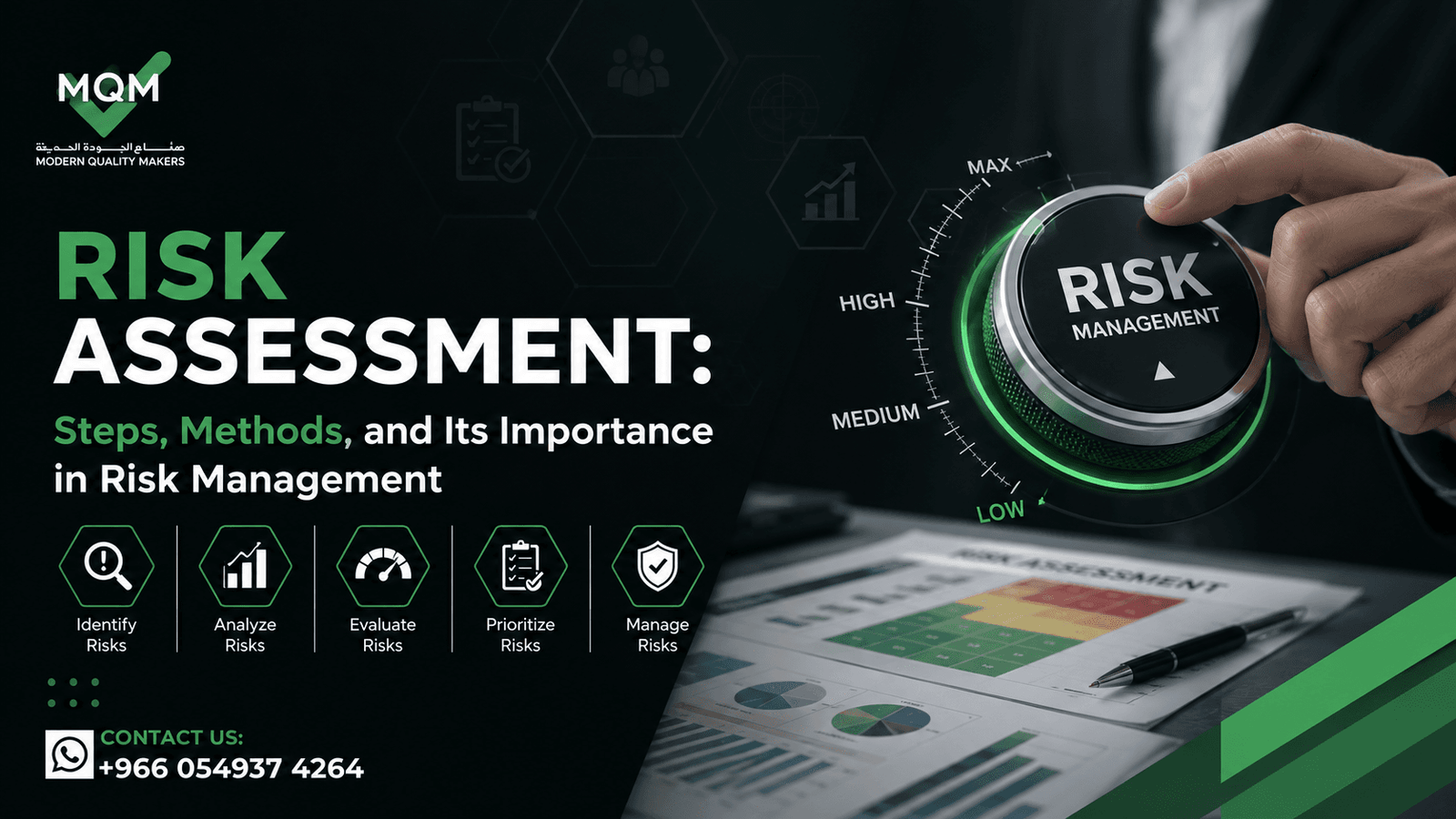
The basic steps include defining the assessment scope, identifying assets, identifying threats and vulnerabilities, analyzing likelihood and impact, and then determining the risk level and documenting the results.
What Is a Work Risk Assessment?
It is the process of identifying risks that may affect the organization’s operations, employees, resources, and operational objectives, and then establishing measures that help reduce or control these risks.
What Is Information Security Risk Assessment?
It is the process of identifying and analyzing risks that may affect the confidentiality, integrity, and availability of information, while determining appropriate controls and measures to protect data and systems.
What Is the Importance of Information Security Risk Assessment?
The assessment helps protect data, reduce the likelihood of incidents, improve business continuity, support compliance with legal and regulatory requirements, and determine investment priorities in cybersecurity.
What Are the Steps of Information Security Risk Assessment?
The steps begin with defining the assessment scope, followed by identifying assets, threats, and vulnerabilities, analyzing likelihood and impact, determining the risk level, and then preparing and monitoring the treatment plan.
How Are Information Security Risks Identified?
Risks are identified by studying information assets, the threats that may affect them, and the vulnerabilities that can be exploited, then analyzing the potential consequences and determining the level of each risk.
What Is the Difference Between Risk Assessment and Risk Treatment?
Risk assessment focuses on identifying, analyzing, and classifying risks, while risk treatment focuses on selecting and implementing measures and controls that help reduce, avoid, transfer, or accept risks.
How Is a Risk Treatment Plan Prepared?
The treatment plan is prepared by identifying priority risks, selecting appropriate measures, defining responsibilities, resources, and target dates, and then monitoring implementation and measuring the level of residual risks.
What Is the Role of ISO 27001 in Risk Assessment?
ISO 27001 provides a risk-based framework for Information Security Management, helping the organization identify risks, select appropriate controls, document measures, and continuously improve its Information Security Management System.
CTA :
Protect your organization’s data from threats through Information Security Risk Assessment according to ISO 27001 with Quality Makers experts. Contact us today.