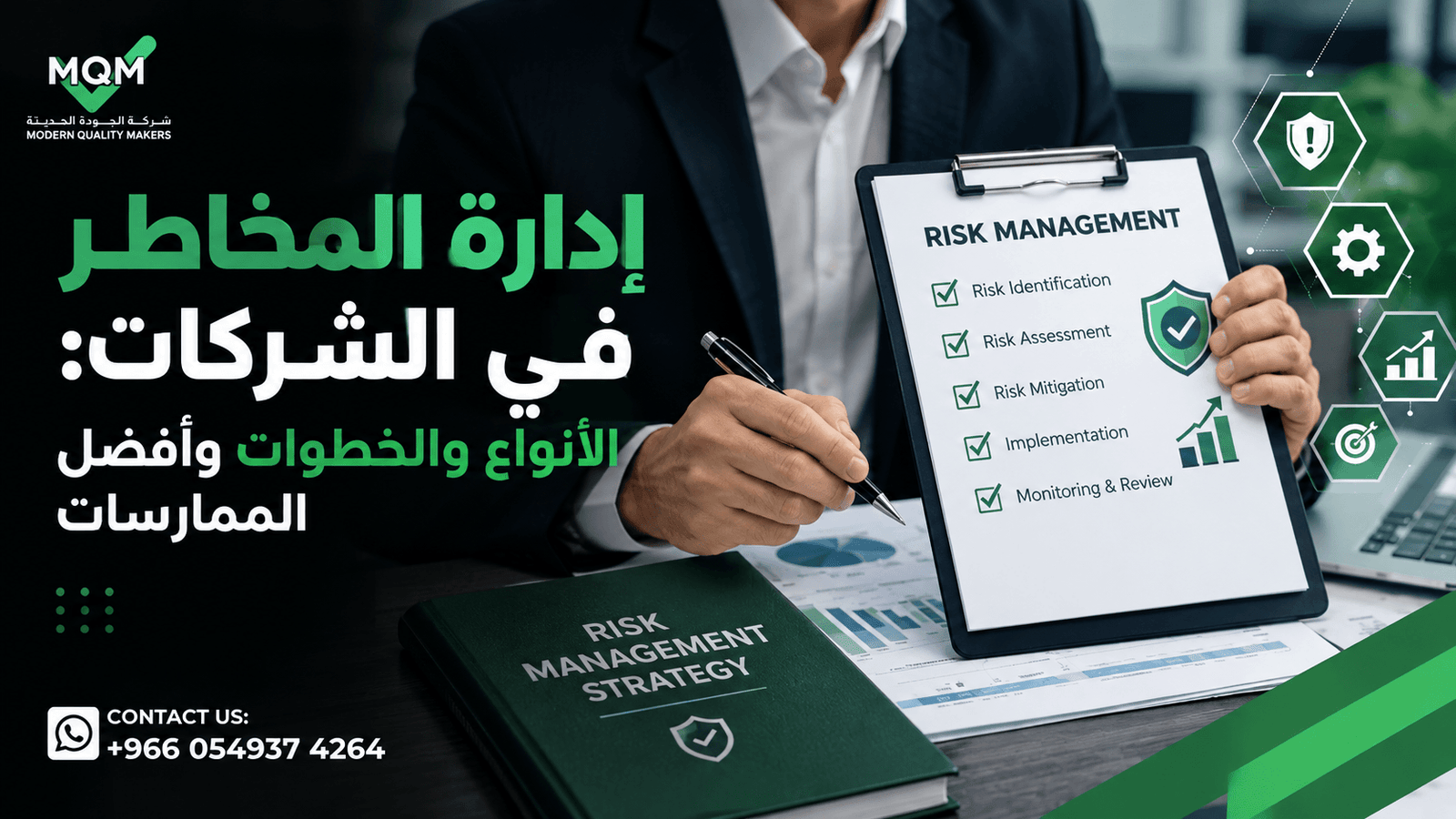
Risk management in companies is one of the most important practices that helps organizations deal with uncertainty and prepare for challenges that may affect their objectives, operations, and resources. Risks may be financial, operational, strategic, legal, or related to reputation, technology, and supply chains.
Risk management is not limited to dealing with problems after they occur. Instead, it relies on a proactive methodology that begins with identifying, analyzing, and evaluating risks, followed by selecting appropriate measures to address them and continuously monitoring them.
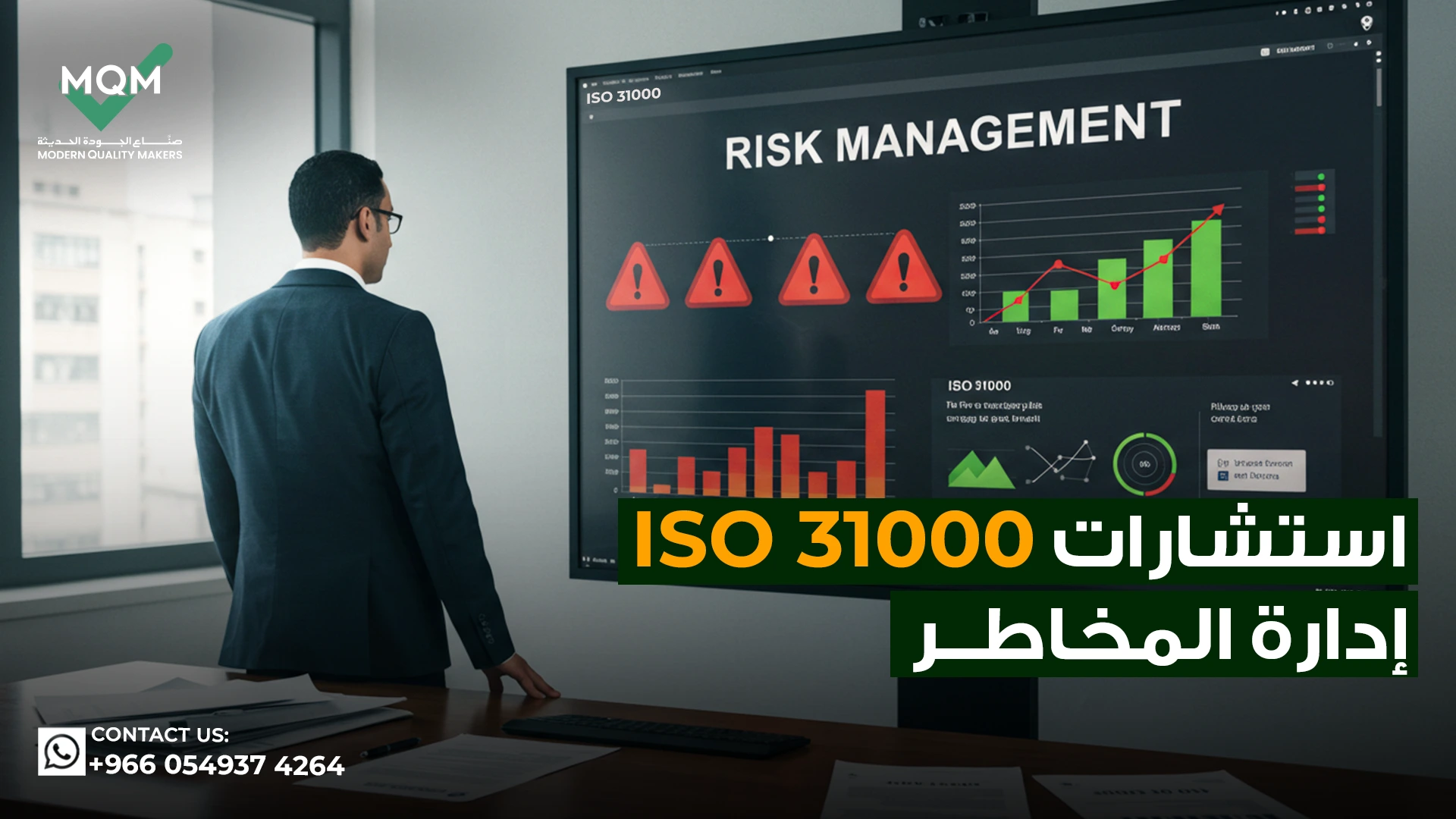
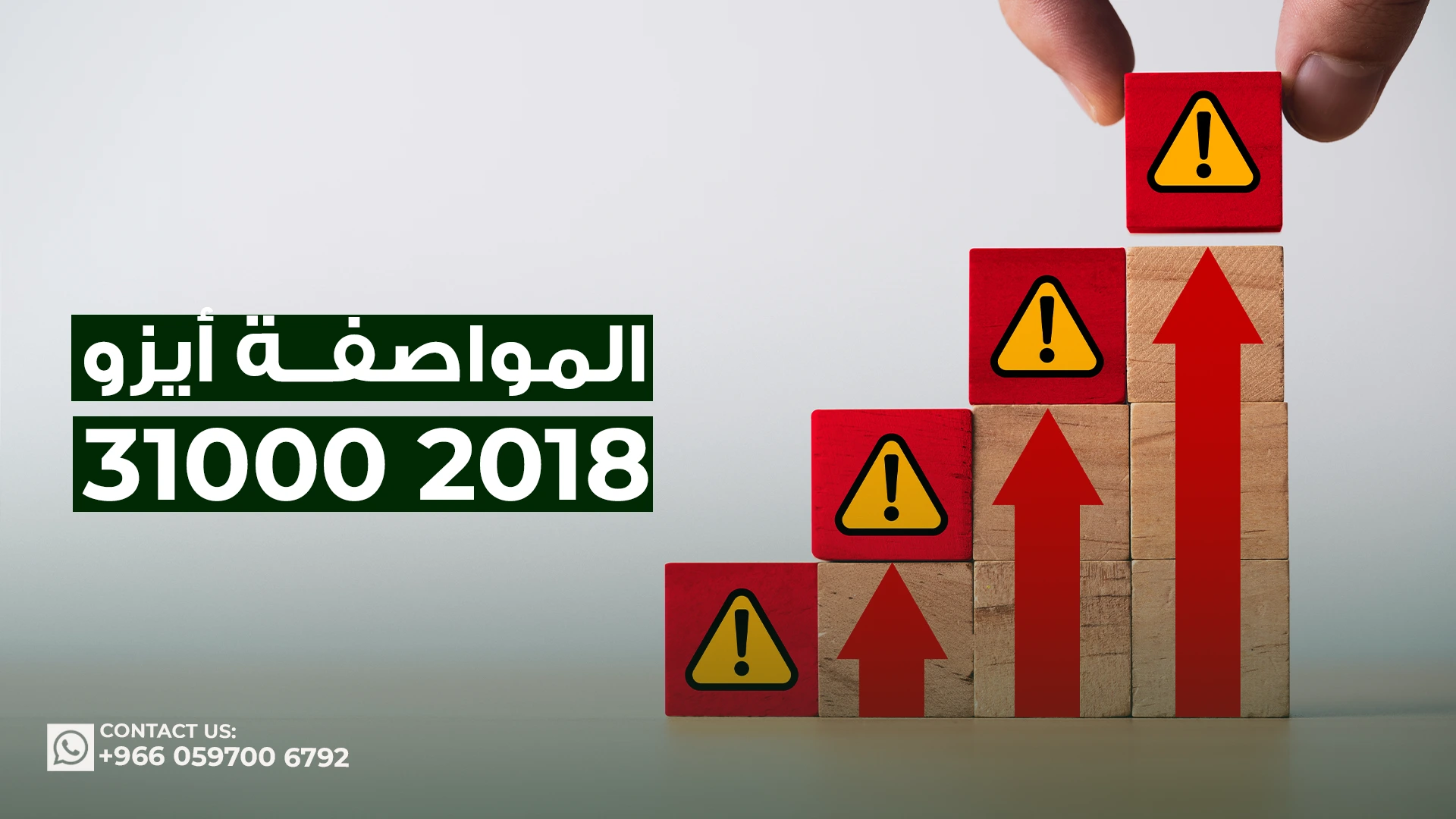
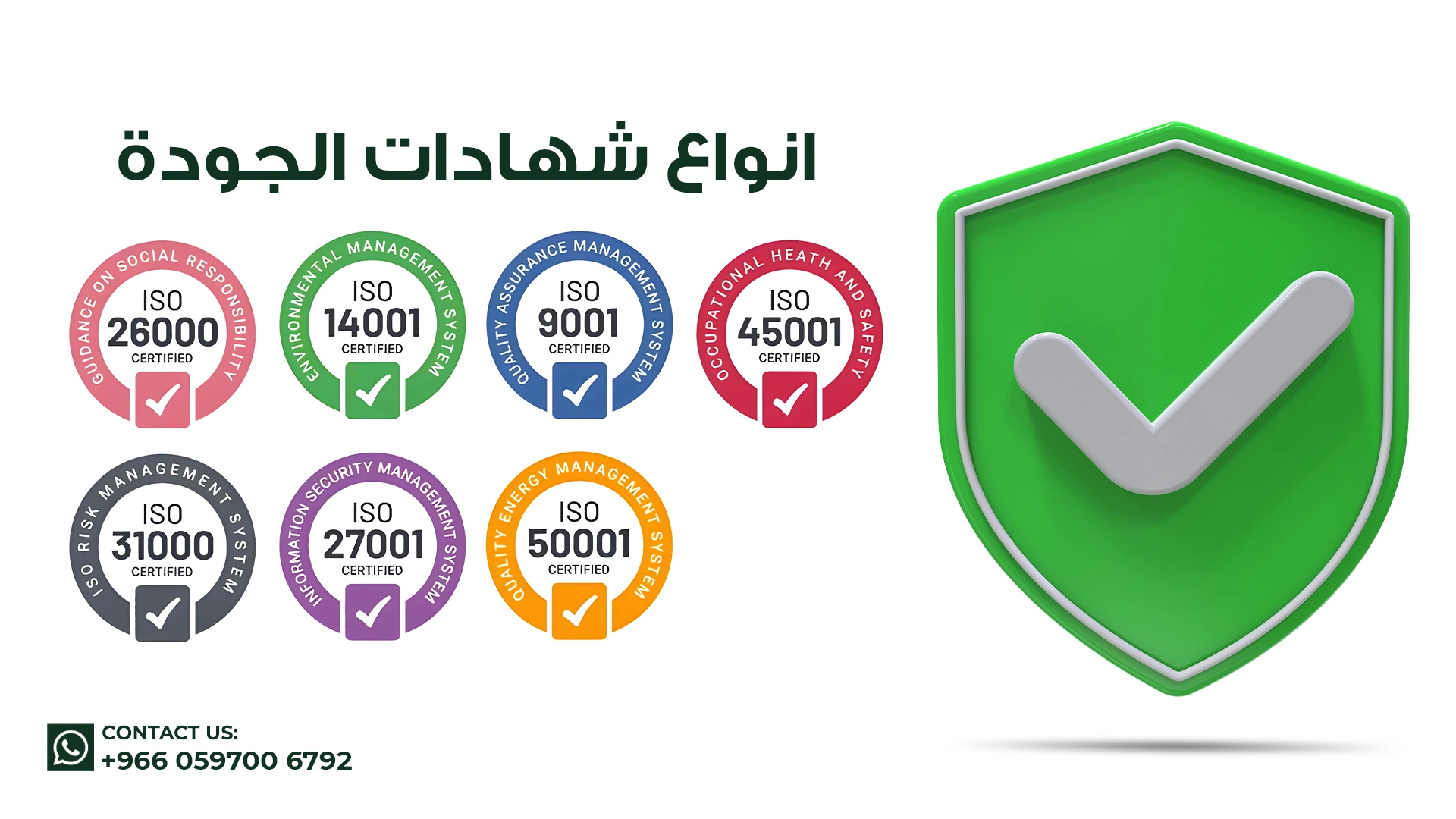
ISO 31000 provides guidelines that help organizations organize the risk management process and integrate it into governance, strategy, planning, operations, and decision-making.
Risk management in companies has become one of the fundamental pillars that help organizations prepare for challenges and reduce the potential impact of risks.
What Is Risk Management in Companies?
Risk management in companies is a structured process aimed at identifying events or circumstances that may affect the achievement of an organization’s objectives, then analyzing their likelihood and impact, determining priorities for dealing with them, and establishing appropriate measures to reduce or manage their effects.
Risk management does not mean that an organization can prevent all risks. Rather, it helps the organization understand risks, prepare for them, and make more informed decisions.
What Is Risk Management?
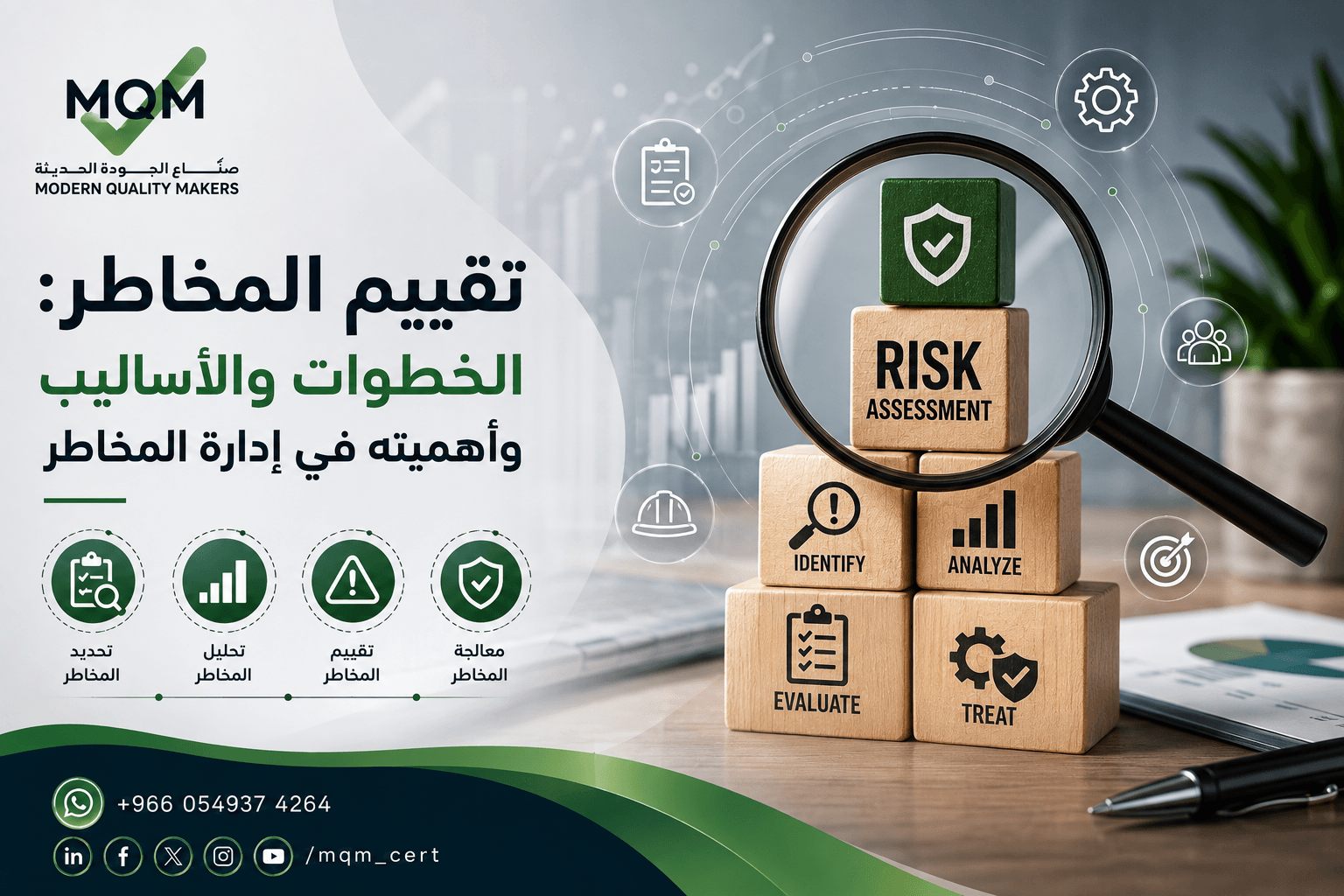
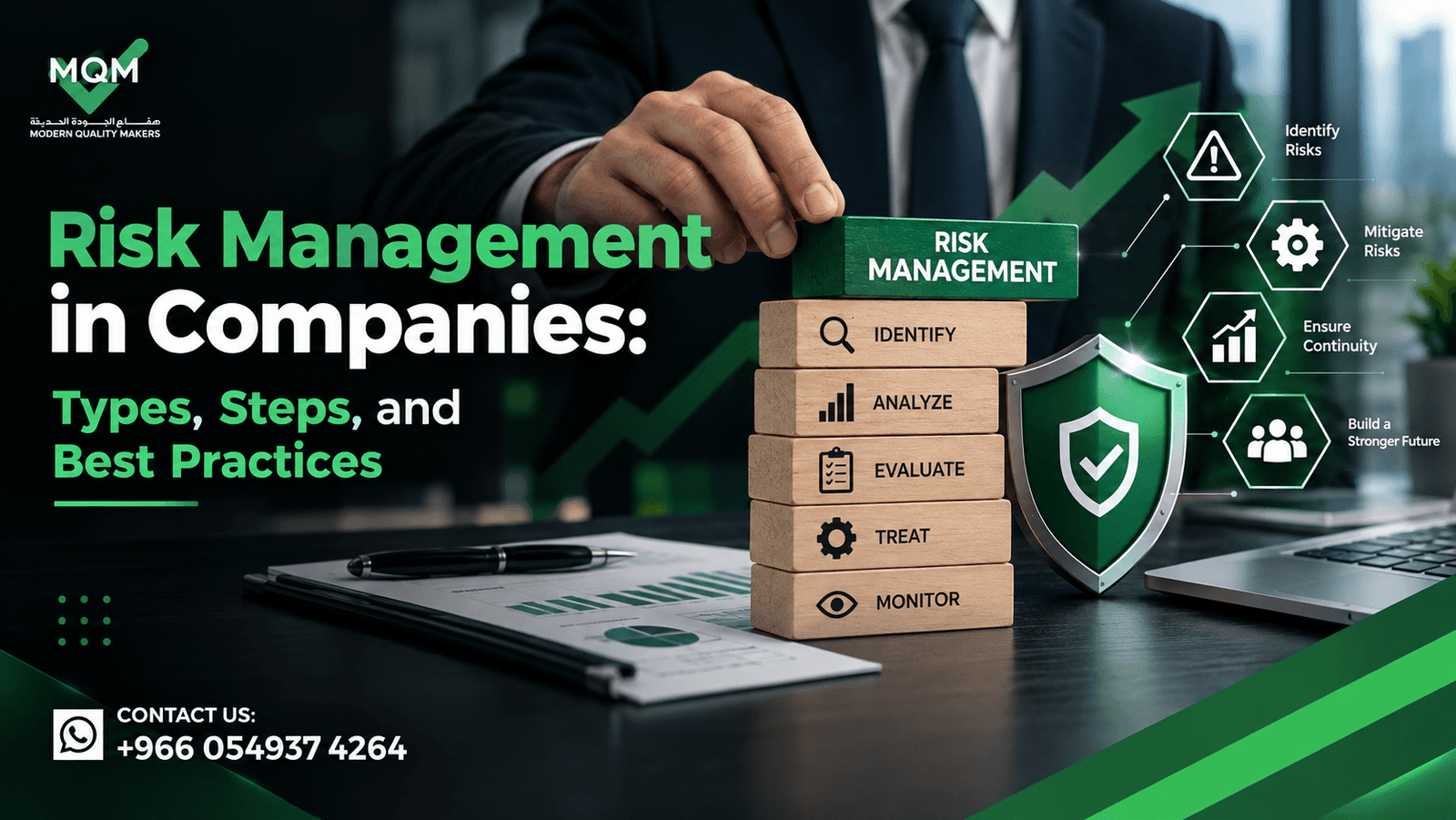
Risk management is a set of activities and procedures used by an organization to deal with risks throughout their life cycle, starting from identifying them through analyzing, evaluating, treating, monitoring, and reviewing them.
It can be applied at the organization-wide level through enterprise risk management, or at the level of a department, project, or specific process.
Importance of Risk Management for Organizations
Risk management helps companies understand the factors that may affect the achievement of their objectives. It also helps management prioritize its efforts and direct resources toward the most important risks.
Some of the key benefits of implementing risk management include:
- Reducing the likelihood of losses or limiting their impact.
- Improving decision-making.
- Supporting the achievement of strategic and operational objectives.
- Identifying potential risks at an early stage.
- Improving the organization’s ability to respond to changes.
- Protecting assets, resources, and information.
- Supporting business continuity.
- Improving preparedness for unexpected situations.
- Promoting a risk-awareness culture within the organization.
Risk management in companies helps organizations make more accurate decisions based on a clear understanding of risks and their potential impact.
What Are the Benefits of Risk Management?
The benefits of risk management include helping organizations deal with uncertainty in a more structured way instead of waiting for a problem to occur and then attempting to address it.
It also contributes to setting priorities, improving resource utilization, reducing the impact of risks on operations and objectives, and supporting management in making decisions based on a better understanding of potential risks.
Types of Risks Facing Companies
Types of risk management in companies vary according to the nature of the activity, the size of the organization, and the environment in which it operates. Therefore, there is no fixed number that applies to all organizations.
Some of the most common classifications include:
1. Strategic Risks
These are risks that may affect an organization’s ability to achieve its long-term objectives, such as:
- Entering new markets without sufficient study.
- Changes in customer needs.
- Increased competition.
- Inappropriate investment decisions.
- Market changes.
2. Operational Risks
These are related to the organization’s day-to-day operations, such as:
- Equipment or system failures.
- Employee errors.
- Weak procedures.
- Operational disruptions.
- Supplier-related problems.
- Production or service delivery errors.
The procedures related to this type are known as operational risk management.
3. Financial Risks
These relate to factors that may affect the organization’s financial position, such as:
- Exchange rate fluctuations.
- Increased costs.
- Cash flow problems.
- Customer payment defaults.
- Price fluctuations.
- Investment losses.
Financial risk management helps identify these risks, evaluate their impact, and establish appropriate measures to address them.
4. Legal and Regulatory Risks
These result from failure to comply with legal, regulatory, or contractual requirements and may include fines, disputes, or restrictions on business activities.
5. Reputation Risks
These may result from customer complaints, poor product or service quality, media-related issues, or practices that affect stakeholder trust.
The nature of risk management in companies varies depending on the type of risks, the organization’s size, and the nature of its activities.
What Are the Five Main Types of Risks?
There is no universally mandatory list that limits risks to only five types for all companies, as classifications vary according to the nature of the organization.
However, common practical classifications include:
- Strategic risks.
- Operational risks.
- Financial risks.
- Legal and regulatory risks.
- Reputation risks.
Some organizations may need to add other types of risks, such as cybersecurity, environmental, or supply chain risks, depending on the nature of their activities.
How Many Types of Risks Are There?
There is no fixed number of risk types that can be applied to all companies. One organization may face strategic, operational, financial, and legal risks, while another may require additional classifications such as technological, cybersecurity, or environmental risks.
Therefore, it is preferable for each organization to define its risk classification according to its context, objectives, and the nature of its operations.
What Are Some Examples of Risks?
Companies may face many different risks, including:
- Failure of a critical electronic system.
- Loss of data or information.
- Delay by a supplier.
- Increased raw material costs.
- Declining sales.
- Loss of experienced employees.
- Violation of legal or regulatory requirements.
- An accident occurring at work.
- Power outages or interruptions to essential services.
- An issue that affects the organization’s reputation.
The importance of each risk varies depending on its likelihood of occurrence and the extent of its impact on the organization.
Risk Management in Companies Steps
Risk management in companies requires a clear methodology that helps the organization move from simply identifying risks to taking practical measures to address them.
The process generally includes the following stages:
1. Defining the Organization’s Context and Objectives
Before beginning risk assessment, the organization needs to understand its objectives, the processes it performs, and the internal and external factors that may affect it.
The scope of the risk management process and the risk assessment criteria used within the organization should also be defined.
2. Risk Identification
At this stage, potential risks that may prevent the organization from achieving its objectives or affect its operations and resources are identified.
This may include:
- Reviewing processes.
- Interviewing employees.
- Analyzing previous incidents.
- Reviewing complaints.
- Analyzing data.
- Evaluating suppliers.
- Reviewing legal requirements.
- Brainstorming sessions.
3. Risk Analysis
After identifying risks, they are analyzed to understand their causes, likelihood of occurrence, and potential consequences if they occur.
The analysis may include examining:
- The source of the risk.
- The causes of its occurrence.
- The likelihood of occurrence.
- The magnitude of its impact.
- Existing controls.
- The effectiveness of existing measures.
4. Risk Evaluation
Risk evaluation aims to determine the level of significance of each risk and compare it with the criteria established by the organization.
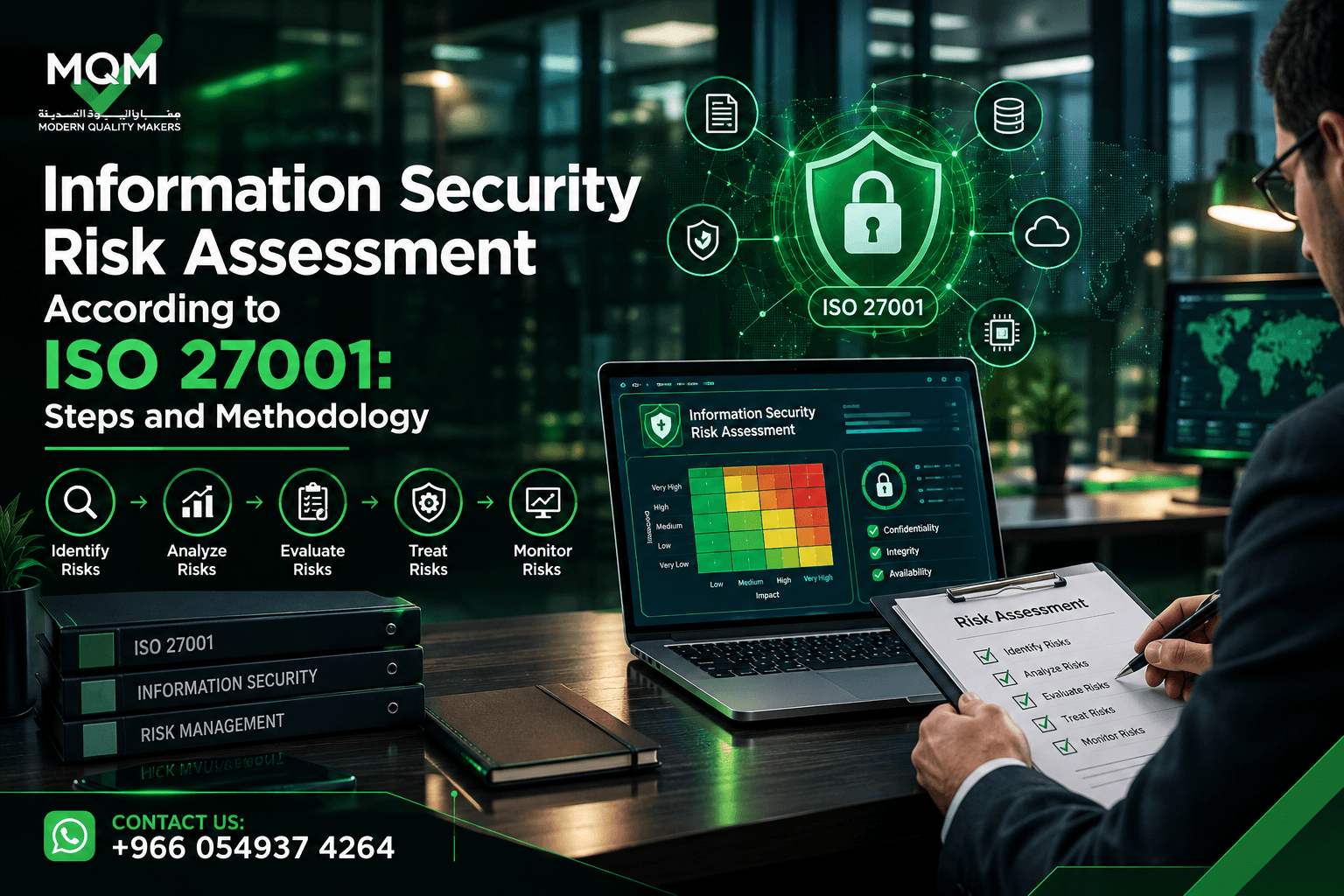
Risk priorities are usually determined based on a combination of:
Likelihood of occurrence × Magnitude of impact
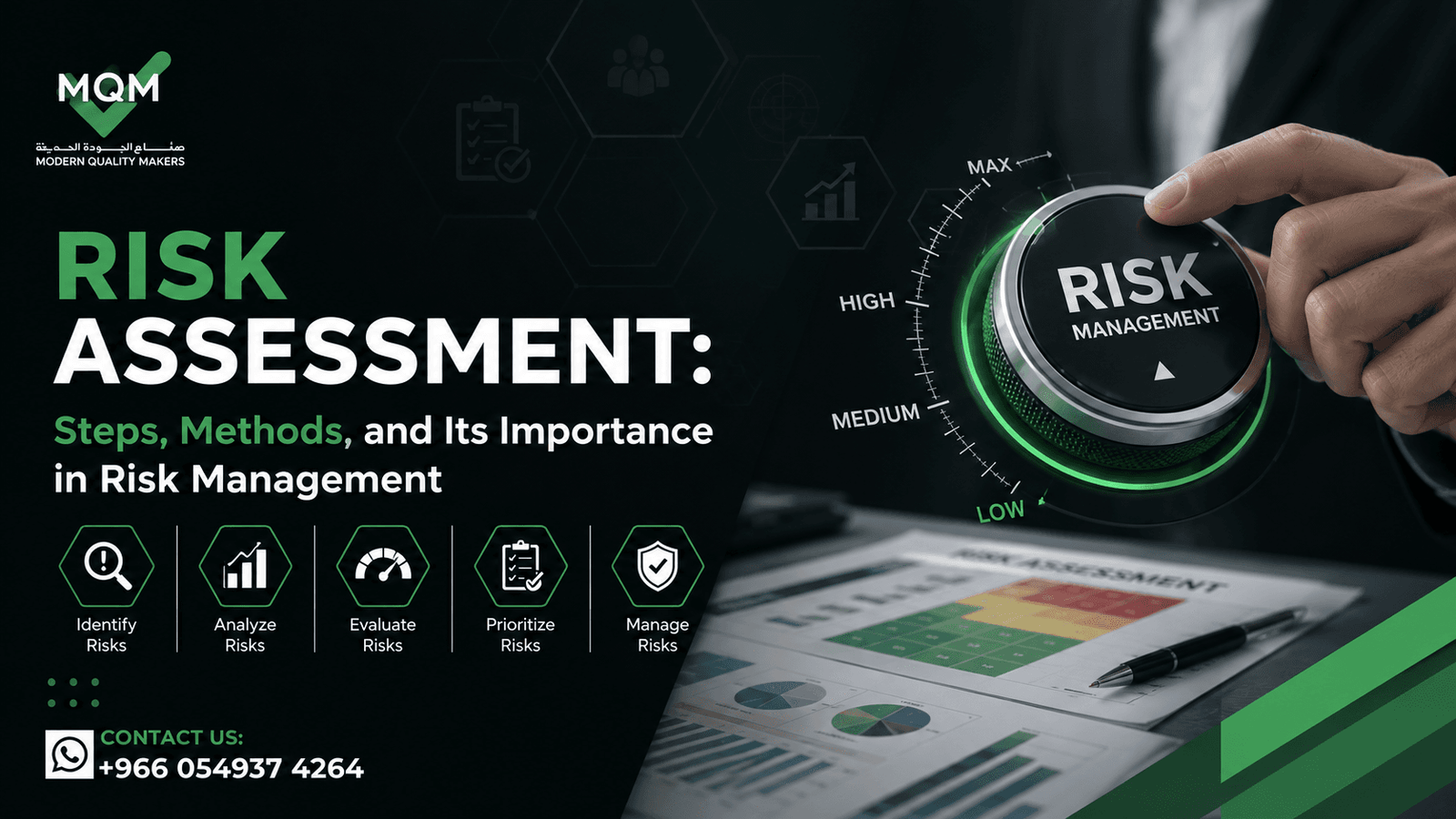
A risk matrix can be used to classify results into levels such as low, medium, and high, according to the methodology adopted by the organization.
What Are the Five Steps of Risk Assessment?
The risk assessment process can be practically simplified into five main steps:
- Identify the risks.
- Identify the causes and sources of the risks.
- Analyze the likelihood and impact.
- Determine the risk level and priority.
- Determine treatment and follow-up measures.
These steps can be used as a practical way to organize the assessment, while the organization’s risk management process may be more detailed depending on the scope and methodology used.
What Are the Risk Assessment Methods?
There are several methods for assessing risks, and the appropriate method is selected according to the organization’s nature and the available data.
The most common methods include:
Qualitative Assessment
This method relies on classifying risks using levels such as low, medium, and high.
Quantitative Assessment
This method relies on data and numerical values to estimate the likelihood of risks and their financial or operational impact when appropriate data is available.
Risk Matrix
It is used to compare the likelihood of a risk occurring with the magnitude of its impact and then determine its priority level.
Scenario Analysis
This involves examining potential scenarios and determining how each one may affect the organization’s objectives and operations.
What Are the Steps for Risk Analysis in the Workplace?
When conducting a workplace risk analysis, a number of practical steps can be followed, including:
- Identify the activity or process to be assessed.
- Identify potential sources of risk.
- Identify the people, assets, or processes that may be affected.
- Estimate the likelihood of the risk occurring.
- Estimate the severity of its impact.
- Determine the level of risk.
- Review existing controls and procedures.
- Identify any additional measures required.
- Monitor the effectiveness of the measures and reassess when necessary.
5. Developing a Risk Management Plan
After identifying risks and assessing their priorities, the organization needs to develop a risk management plan that explains how priority risks will be addressed.
A risk management plan provides a practical framework that helps organize risk management in companies.
What Are the Components of a Risk Plan?
A risk plan may include a number of essential elements, such as:
- Risk description.
- Risk source or causes.
- Likelihood of occurrence.
- Magnitude of impact.
- Risk level.
- Treatment priority.
- Existing procedures and controls.
- Proposed measures.
- Responsible person or department.
- Required resources.
- Implementation timeline.
- Monitoring indicators.
- Emergency measures when necessary.
- Review date.
This information can be maintained in a Risk Register to track the status of each risk and the measures associated with it.
Risk Treatment Methods
After assessing risks, the organization selects the appropriate method for dealing with them according to the risk level and nature of the activity.
The appropriate treatment approach should be selected according to the nature and priority of the risk within the organization’s risk management methodology.
The most common risk treatment methods include:
Risk Avoidance
An organization may choose to stop an activity or change the way it is performed when the risk is unacceptable and cannot be adequately controlled.
Risk Reduction
This is achieved by implementing measures and controls that reduce the likelihood of the risk occurring or limit its impact.
Risk Sharing or Transfer
In some cases, part of the impact of a risk can be shared or transferred through contractual arrangements, insurance, or other appropriate means.
Risk Acceptance
An organization may accept certain risks when their level falls within its acceptable limits, while continuing to monitor and review them.
What Are the Duties of a Risk Management Officer?
The duties of a risk management officer vary according to the organization’s size and the nature of the role, but may include:
- Identifying potential risks.
- Updating the risk register.
- Collecting and analyzing risk-related data.
- Participating in risk assessment.
- Following up on treatment plans.
- Preparing risk reports.
- Monitoring key risk indicators.
- Coordinating with different departments.
- Following up on the implementation of corrective and preventive actions.
- Escalating significant risks to the relevant management.
- Contributing to promoting a risk management culture.
- Reviewing risks when changes occur within the organization.
Risk management responsibility is not limited to one employee. Effective risk management requires the participation of the departments and individuals responsible for different operations.
Risk Monitoring and Review
The risk management process does not end once a treatment plan has been established. The organization needs continuous monitoring and review.
The level of risk may change as a result of:
- Changes in processes.
- Introducing new technology.
- Changes in suppliers.
- New legal requirements.
- Changes in market conditions.
- An incident or problem occurring.
- The emergence of new threats.
Therefore, the risk register and the related assessments and measures should be reviewed and updated when necessary.
Continuous monitoring ensures that risk management in companies remains effective and capable of development.
What Is the Risk Assessment Pyramid?
The term risk assessment pyramid may be used to refer to different models for ranking risks or determining priorities. Therefore, there is no single mandatory form for it in ISO 31000.
In practical applications, a hierarchy can be used to classify risks according to their level of severity, giving priority to risks that combine a high likelihood with a significant impact, followed by lower levels according to the organization’s criteria.
It is important not to confuse the risk assessment pyramid with the hierarchy of controls used in some areas of occupational health and safety, which focuses on ranking risk control measures.
Difference Between Risk Management and Crisis Management
Risk management primarily focuses on identifying potential events, preparing for them before they occur, as well as dealing with and monitoring them.
Crisis management, on the other hand, focuses on dealing with serious events that have already occurred or have reached a stage requiring an urgent and organized response.
In simpler terms:
Risk Management = Preparing for and dealing with uncertainty and potential risks.
Crisis Management = An organized response to critical events when they occur.
The two processes complement each other because effective risk management helps organizations prepare better for potential crises.
What Is the Difference Between Problems and Risks?
The fundamental difference is that a Problem is an event or condition that already exists and requires a solution, while a Risk is the possibility of a future event that may affect the organization’s objectives.
Example:
If the company’s electronic system has already stopped, this is a problem that requires action.
However, the possibility that the system may stop in the future due to poor maintenance or infrastructure is a risk that can be identified, assessed, and addressed through appropriate measures.
Therefore, risk management helps organizations deal with potential events before they turn into actual problems.
The Role of ISO 31000 in Risk Management
ISO 31000 provides guidelines that help organizations develop a structured risk management methodology and can be applied to different types of organizations and activities.
The methodology helps integrate risk management into governance, strategy, planning, decision-making, and various organizational processes.
Applying the principles of ISO 31000 helps develop a structured methodology for risk management in companies.
What Are the ISO 31000 Risk Management Standards?
The current edition of ISO 31000 is ISO 31000:2018, an international guideline titled Risk management — Guidelines, which provides principles and guidelines for risk management. ISO has confirmed the continuation of the current edition following its periodic review, with work underway on a future edition.
The ISO 31000 methodology is based on a number of fundamental concepts, including:
- Integrating risk management into the organization’s activities.
- Tailoring the risk management methodology to the organization’s context.
- Engaging stakeholders.
- Considering human and cultural factors.
- Continual improvement.
- Creating and protecting value.
- Identifying, analyzing, and evaluating risks.
- Treating risks.
- Monitoring and reviewing.
- Communication and consultation.
ISO explains that risk management should not be a separate activity from the organization, but rather part of governance, strategy, planning, decision-making, and operations.
Can You Obtain an ISO 31000 Certificate?
It is important to clarify that ISO 31000 is not a standard for obtaining organizational conformity certification like some other management system standards. Rather, it provides guidelines that organizations can use to develop and improve their risk management methodology.
Best Practices in Risk Management
To achieve better results from risk management in companies, it is important to follow a number of practices, including:
- Linking risk management to the organization’s objectives.
- Clearly defining responsibilities.
- Regularly updating the risk register.
- Using clear criteria for risk assessment.
- Involving different departments.
- Not focusing only on financial risks.
- Monitoring the effectiveness of treatment measures.
- Using data and indicators when available.
- Reviewing risks when significant changes occur.
- Promoting risk management awareness within the organization.
- Documenting assessment results and treatment plans.
- Integrating risk management into daily and strategic decisions.
By applying a clear methodology, risk management in companies becomes part of planning and decision-making rather than merely a procedure for dealing with problems after they occur.
Conclusion
Risk management in companies helps organizations deal with uncertainty in a structured manner instead of waiting for problems to occur and then addressing them. The process begins with identifying risks, analyzing them, and evaluating their priorities, followed by developing a risk management plan, selecting appropriate treatment measures, and conducting ongoing monitoring and review.
ISO 31000 also provides a guideline framework that organizations can use to build an integrated risk management methodology that fits the nature of their activities, objectives, and context.
By applying a clear and continuous methodology, organizations can improve their ability to prepare for risks, support decision-making, protect their resources, and strengthen their ability to achieve their objectives.
Frequently Asked Questions About Risk Management
What Are the Five Main Types of Risks?
Common classifications include strategic, operational, financial, legal and regulatory risks, and reputation risks, with the possibility of adding other types depending on the nature of the organization.
What Is Risk Management?
It is a structured process for identifying, analyzing, evaluating, treating, and monitoring risks, helping organizations deal with uncertainty and achieve their objectives.
What Are the ISO 31000 Risk Management Standards?
ISO 31000:2018 provides risk management guidelines that help organizations establish an appropriate methodology for identifying, analyzing, evaluating, treating, monitoring, and reviewing risks.
What Are the Steps of the Risk Management Process?
They include defining the context and objectives, identifying risks, analyzing them, evaluating them, treating them, and then monitoring, reviewing, communicating, and documenting the process.
What Are the Duties of a Risk Management Officer?
They include identifying and assessing risks, updating the risk register, following up on treatment plans, analyzing data, preparing reports, and coordinating with different departments.
What Are the Five Steps of Risk Assessment?
They can be simplified into identifying risks, identifying their causes, analyzing likelihood and impact, determining the risk level, and then defining treatment and follow-up measures.
What Are the Risk Assessment Methods?
The main methods include qualitative assessment, quantitative assessment, risk matrices, and scenario analysis.
What Are the Steps for Risk Analysis in the Workplace?
They begin with identifying the activity and sources of risk, followed by identifying those affected, analyzing likelihood and impact, determining the risk level, reviewing controls, and establishing appropriate measures.
What Are the Components of a Risk Plan?
They include the risk description and causes, likelihood and impact, risk level, treatment measures, responsibilities, resources, timeline, and monitoring indicators.
What Are Some Examples of Risks?
Examples include system failures, data loss, supplier delays, increased costs, declining sales, accidents, legal issues, and reputation risks.
What Is the Risk Assessment Pyramid?
It is a term that may refer to different models for ranking risks according to their level of severity and priority, and there is no single mandatory model for it in ISO 31000.
What Is the Difference Between Crisis Management and Risk Management?
Risk management focuses on preparing for, dealing with, and monitoring risks, while crisis management focuses on responding to critical events when they occur.
How Many Types of Risks Are There?
There is no fixed number of risk types, as the classification varies according to the organization’s nature, activity, and context.
What Are the Benefits of Risk Management?
It helps improve decision-making, reduce the impact of losses, identify risks early, protect resources, support business continuity, and achieve objectives.
What Is the Difference Between Problems and Risks?
A problem is an event that already exists and requires a solution, while a risk is the possibility of a future event that may affect the organization’s objectives.
CTA
Would you like to develop risk management in your company according to a structured methodology that helps you identify, analyze, and evaluate risks and establish effective treatment plans?
Contact the Quality Makers team to learn about the most suitable approaches for your organization’s activities and how to apply ISO 31000 risk management principles.
📞 Contact us today and start building a more effective risk management methodology within your organization.