

Social responsibility has become an important element in building successful organizations. Companies are no longer evaluated solely on their profits and the quality of their products and services; their treatment of employees, customers, suppliers, communities, and the environment is also taken into account. This highlights the importance of ISO 26000, which provides guidance to help organizations adopt responsible practices and strengthen their contribution to sustainable development.
A Social Responsibility Management System, as an applied concept within an organization, helps organize efforts related to ethics, governance, human rights, environmental protection, and community engagement. It is important to distinguish this general management concept from ISO 26000 itself: the standard provides guidance for organizations and is not a management system standard that can be certified against.
In this guide, we explore the concept of ISO 26000, its objectives, principles, and main areas, as well as how organizations can benefit from it to improve organizational performance and design social responsibility initiatives that align with community needs and organizational goals.
A Social Responsibility Management System helps an organization turn its social and environmental commitments into clear policies and measurable objectives.
What Is the ISO 26000 Social Responsibility Management System?
The term Social Responsibility Management System is used to describe the methods, policies, and procedures an organization adopts to organize its responsible practices and monitor their results. These may include establishing professional conduct rules, improving working conditions, reducing environmental impacts, protecting consumer rights, and developing relationships with local communities.
ISO 26000:2010, on the other hand, is an international guidance standard issued by the International Organization for Standardization (ISO). It explains the concept of social responsibility and its related principles, and provides guidance on integrating social responsibility into an organization’s policies, operations, and decisions.
The standard is suitable for different types of organizations, including private companies, government entities, and nonprofit organizations, regardless of their size or location. It also encourages organizations to consider the interests of stakeholders, such as employees, customers, suppliers, and communities affected by their activities.
Therefore, applying ISO 26000 guidance does not simply mean conducting a charity campaign or launching a temporary initiative. It requires treating social responsibility as part of how an organization is managed and how its daily decisions are made.
What Is the ISO 26000 Standard, and What Is Its Purpose?
The ISO 26000 standard aims to help organizations understand social responsibility and translate its principles into practical practices. It goes beyond donations and volunteer work to address ethical conduct, respect for human rights, working conditions, transparency, environmental protection, and fair treatment of customers and suppliers.
The main objectives of the standard include:
- Clarifying the fundamental concepts and principles of social responsibility.
- Helping organizations identify the economic, social, and environmental impacts of their activities.
- Encouraging dialogue with stakeholders and understanding their expectations.
- Supporting ethical and responsible decision-making.
- Integrating responsible practices into organizational policies, procedures, and operations.
- Contributing to sustainable development and improving the organization’s relationship with society.
By applying the standard’s guidance, an organization can develop a Social Responsibility Management System that suits its business activities, resources, and risks, instead of relying on separate initiatives that are not connected to a clear plan.
Can an Organization Obtain ISO 26000 Certification?
One of the most common questions about ISO 26000 is whether an organization can obtain an accredited certificate for this standard. The answer is that ISO 26000 is not a certifiable standard because it provides guidance rather than specific conformity requirements for auditing a management system and issuing a certificate.
Organizations should therefore be cautious of entities offering certificates claiming that an organization is “certified to ISO 26000” as proof of conformity with the standard. Instead, organizations can use its guidance to develop responsible practices, document initiatives and results, and review internal performance.
What Is Social Responsibility?
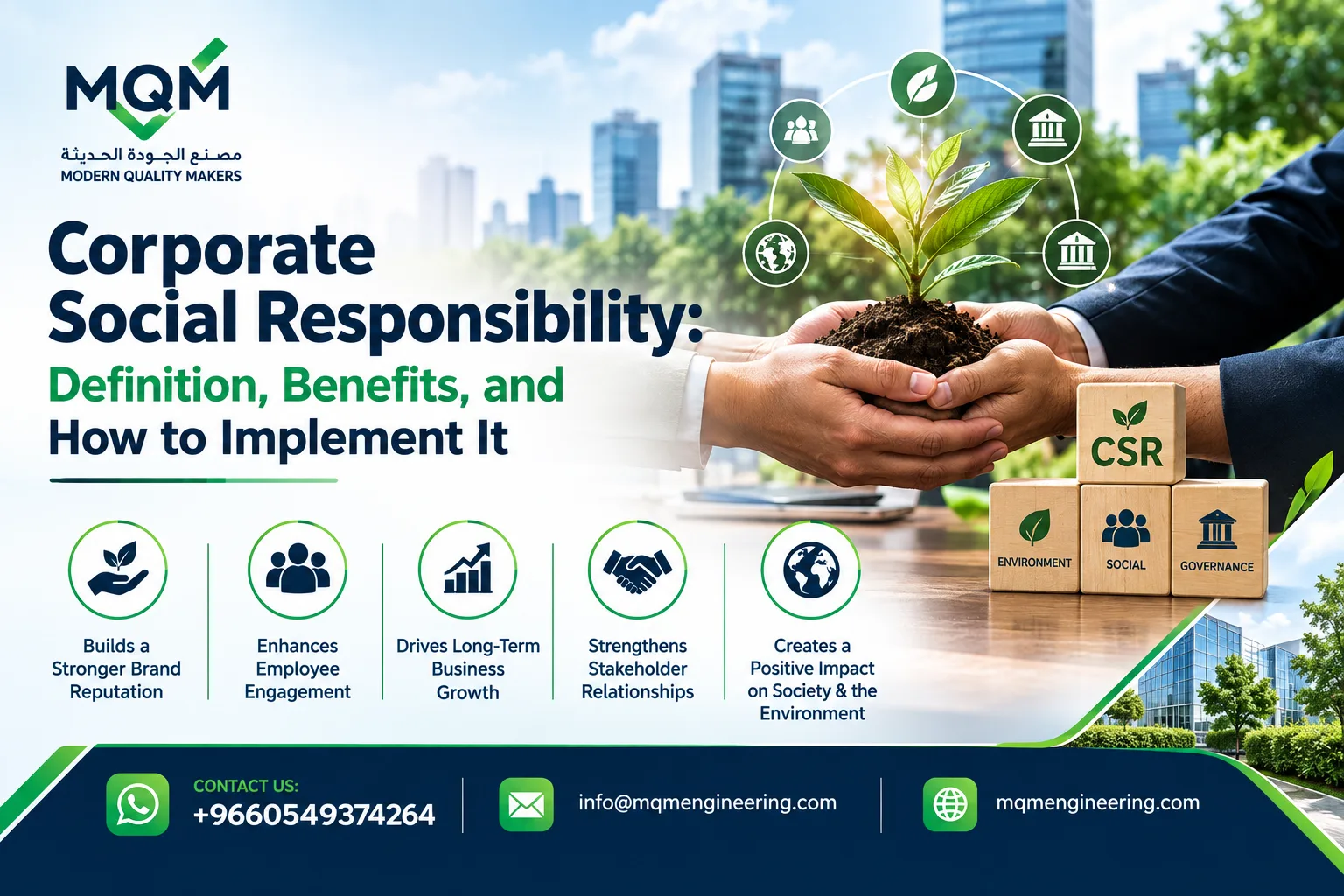
Social responsibility refers to an organization’s responsibility for the effects of its decisions and activities on society and the environment. This involves ethical and transparent conduct, consideration of stakeholder expectations, compliance with applicable laws, and contributions to sustainable development.
Social responsibility appears in many everyday decisions. A company that provides a safe working environment and respects employees’ rights demonstrates one aspect of social responsibility. The same applies to an organization that communicates clearly with customers, protects their data, reduces waste and pollution, and follows fair business practices.
Corporate social responsibility also involves understanding the needs of the surrounding community and identifying areas where the organization can contribute effectively, such as education, training, healthcare, and skills development. These contributions should address actual needs rather than simply seek media attention.
Why Is Social Responsibility Important for Companies and Organizations?
Focusing on social responsibility helps build more stable relationships between an organization and its stakeholders. It also enables the organization to better understand the effects of its decisions and manage risks more effectively.
The main benefits of adopting responsible practices include:
- Strengthening trust and corporate reputation: When a company operates transparently and fairly and honors its commitments, it supports the trust of customers, employees, and suppliers.
- Improving the work environment: Attention to health, safety, training, and equal opportunities can help increase employee satisfaction and support workforce stability.
- Understanding social and environmental risks: Assessing the impacts of activities helps identify potential problems, such as poor working conditions, resource waste, or inadequate handling of customer complaints.
- Supporting community relationships: Initiatives based on genuine needs enable organizations to make more effective and lasting contributions.
- Improving governance and transparency: Clear responsibilities, decision-making mechanisms, and performance monitoring help strengthen accountability within the organization.
A Social Responsibility Management System helps organize the relationship between organizational goals and the needs of employees, customers, and the surrounding community.
From this perspective, a Social Responsibility Management System can provide a framework for organizing these efforts and measuring their results, provided that it is appropriate to the organization’s size and activities and receives genuine support from senior management.
What Are the Fundamental Principles of Social Responsibility Under ISO 26000?
ISO 26000 is based on seven fundamental principles that help organizations guide their decisions and practices:
- Accountability: Taking responsibility for the impacts of the organization’s decisions and activities, being prepared to explain the results, and addressing harm when it occurs.
- Transparency: Providing important information clearly and accurately and not concealing information that affects stakeholders.
- Ethical behavior: Making decisions based on integrity, fairness, and respect for others.
- Respect for stakeholder interests: Identifying parties affected by the organization’s activities and considering their legitimate interests.
- Respect for the rule of law: Complying with laws and regulations relevant to the organization’s activities.
- Respect for international norms of behavior: Considering relevant international norms when developing policies and practices.
- Respect for human rights: Protecting individuals’ fundamental rights and avoiding practices that violate them.
Applying these principles is not the responsibility of a single department. They should be reflected in senior management decisions, human resources policies, procurement, customer service, operations management, and external relationships.
What Are the Main Areas Covered by ISO 26000?
ISO 26000 addresses seven core social responsibility subjects and provides guidance on the issues associated with each one.
An effective Social Responsibility Management System considers organizational governance, human rights, labor practices, the environment, consumer issues, and community involvement.
1. Organizational Governance
This covers how decisions are made, how responsibilities are allocated, how performance is monitored, and how responsible conduct is integrated into the organization’s strategy and management.
2. Human Rights
This includes respecting fundamental rights, avoiding discrimination, addressing the risks of human rights violations, and providing appropriate mechanisms for receiving and handling complaints.
3. Labor Practices
These relate to employment relationships, working conditions, occupational health and safety, employee dialogue, training, and skills development.
4. The Environment
This area includes reducing pollution, using resources responsibly, minimizing waste, and understanding the environmental impacts of activities, products, and services.
5. Fair Operating Practices
This subject addresses integrity in business transactions, combating bribery and corruption, respecting fair competition, and promoting responsible conduct throughout the supply chain.
6. Consumer Issues
These include providing clear and accurate information about products and services, protecting consumer health, safety, and privacy, and handling complaints fairly.
7. Community Involvement and Development
This includes engaging with local communities, supporting education and training, developing skills, and contributing to health, social, and economic initiatives based on actual needs.
Understanding these subjects helps organizations develop an integrated Social Responsibility Management System, rather than focusing solely on donations while overlooking employee rights, consumer protection, or environmental practices.
How Can ISO 26000 Be Implemented Within an Organization?
Implementing ISO 26000 does not require creating a system separate from the organization’s other management systems. Its guidance can be integrated into existing policies and procedures according to the organization’s needs and priorities.
The following steps can be used to get started:
Step 1: Assess the current situation. The organization reviews its existing policies and practices in governance, labor, environmental management, consumer issues, and community engagement, identifying strengths and areas for improvement.
Step 2: Identify stakeholders. These may include employees, customers, suppliers, regulatory authorities, and local communities. The organization identifies the issues that matter to each group.
Step 3: Set priorities. Not every issue has the same level of importance for every organization. The organization should assess the scale of impacts, the likelihood of risks, stakeholder needs, and available resources.
Step 4: Establish policies and objectives. Responsibilities are assigned to departments, objectives are defined, necessary resources are identified, and performance indicators are established.
Step 5: Implement initiatives. Objectives are translated into specific activities with assigned owners, timelines, budgets, and monitoring mechanisms.
Step 6: Measure and review results. The organization compares results with objectives, gathers feedback, identifies opportunities for improvement, and documents what has been achieved and what still needs attention.
Through these steps, an organization can develop a Social Responsibility Management System that evolves as its needs change, rather than relying only on short-term initiatives whose results are not measured.
What Are Examples of Social Responsibility Programs and Initiatives?
Social responsibility programs vary according to an organization’s activities, size, and the community in which it operates. Examples include:
- Education and training: Offering free workshops, supporting digital and professional skills development, or partnering with educational institutions.
- Health and safety: Organizing health awareness campaigns, supporting prevention initiatives, or promoting workplace safety practices.
- Environmental protection: Reducing water and energy consumption, sorting waste, recycling, and raising awareness about responsible resource use.
- Local community development: Supporting small businesses or providing training and development opportunities for groups that need to build their skills.
- Improving the work environment: Developing occupational health and safety programs, promoting equal opportunities, and providing clear channels for reporting problems.
- Consumer protection: Improving the clarity of information, making complaints easier to submit, and strengthening data protection and privacy procedures.
To ensure these programs are effective, organizations should identify the problem each initiative addresses, the target beneficiaries, the expected outcome, and indicators for measuring success. An initiative’s success should not be measured only by the number of activities conducted, but by whether it achieves a useful impact that can be monitored and evaluated.
What Is the Relationship Between Social Responsibility and Sustainability?
Social responsibility and sustainability overlap because both focus on the long-term effects of decisions and activities on society, the economy, and the environment. Responsible practices can support business sustainability by improving resource use, strengthening stakeholder relationships, and reducing social and environmental risks.
However, sustainability is not limited to environmental issues, and social responsibility is not limited to charitable work. A sustainable organization needs to manage its resources efficiently, respect employee rights, provide responsible products and services, and deal fairly with suppliers and customers.
ISO 26000 guidance can help organizations identify areas for improvement and connect them to strategic objectives while taking into account applicable laws and the surrounding social, economic, and environmental conditions.
What Role Does Social Responsibility Play in Improving Organizational Performance?
Responsible practices influence how an organization manages its relationships, resources, and risks. When an organization reviews working conditions, handles customer complaints, improves transparency, and monitors the environmental impacts of its operations, it gains a clearer understanding of the areas that need development.
Performance can be monitored using suitable indicators, such as employee participation in training programs, the number of complaints resolved, energy and water consumption rates, the percentage of suppliers assessed for responsible practices, and the extent to which community initiatives achieve their objectives.
This does not mean that implementing ISO 26000 automatically guarantees higher profits or specific results. Outcomes depend on the organization’s nature, implementation quality, and continuity of monitoring. However, clear objectives and documented results can support better decision-making and create opportunities for continual improvement.
How Can an Organization Design a Social Responsibility Initiative?
A successful initiative begins with a clearly identified need, not with choosing a general activity without research. The organization should identify the problem, understand the beneficiaries, consult stakeholders, and then establish objectives that can be monitored.
For example, if an assessment of the local community reveals a need to improve young people’s professional skills, the organization could design a training program related to skills that are genuinely in demand. The program should define the target number of beneficiaries, training content, participating organizations, budget, duration, and performance indicators.
The organization should also assign responsibility for implementing the initiative, determine how data will be collected, establish a method for evaluating results, and decide how challenges will be addressed. Involving beneficiaries in the evaluation helps determine whether the initiative actually meets their needs or requires adjustment.
It is also preferable to document lessons learned and use them in future initiatives, while avoiding exaggerated claims about results or publishing information about beneficiaries without appropriate consent.
What Are the Stages of Implementing Social Responsibility Initiatives?
An initiative can be organized into the following connected stages:
- Identify the need: Study the problem and gather information from appropriate sources and stakeholders.
- Plan the initiative: Establish objectives, identify the target beneficiaries, and prepare a budget and timeline.
- Assign responsibilities: Allocate tasks among departments and partners and clarify coordination mechanisms.
- Implement and monitor: Carry out activities, review progress, and record challenges.
- Measure impact: Compare results with objectives using measurable indicators.
- Report and improve: Document results clearly, identify improvement opportunities, and apply lessons learned.
These stages should ideally be integrated into the organization’s Social Responsibility Management System, so that initiatives become part of planning and monitoring rather than separate activities whose impact is difficult to evaluate.
What Is the Difference Between Social Responsibility and Community Responsibility?
The terms social responsibility and community responsibility are used with similar meanings in many contexts. Both may refer to an organization’s responsibility for the effects of its decisions and activities on people, the environment, and society.
ISO 26000 uses the term “social responsibility” in its title and content, while many organizations use “community responsibility” to express the same concept or to emphasize the relationship with the local community.
More important than the choice of terminology is the implementation of responsible practices. A responsible organization does not simply announce its initiatives; it reviews its policies, decisions, and results, respects stakeholder rights, and communicates transparently about the impacts of its activities.
Developing a Social Responsibility Management System requires regular reviews of results, consideration of stakeholder feedback, and updates to practices when necessary.
Conclusion
Social responsibility is an important part of modern organizational management because it helps companies and institutions understand the impacts of their activities and improve their relationships with employees, customers, suppliers, communities, and the environment. ISO 26000 provides guidance that helps organizations translate principles into policies, practices, and initiatives that can be monitored.
Developing a Social Responsibility Management System requires management commitment, an understanding of stakeholder needs, clear objectives, and appropriate performance indicators. Through continuous review and transparent communication, an organization can improve its practices in line with the nature of its activities and its priorities.
Is your organization looking to develop more responsible and sustainable practices? Quality Makers can help you understand the principles of social responsibility and identify appropriate areas for improvement based on your organization’s activities and objectives. Contact our team to discuss your organization’s needs and develop practical steps that support continual improvement.
Frequently Asked Questions About ISO 26000 and Social Responsibility
1. What Does CSR Mean?
CSR stands for Corporate Social Responsibility. It refers to an organization’s commitment to considering the social, environmental, and ethical impacts of its decisions and activities, while respecting stakeholder rights and contributing to sustainable development.
2. What Is the Concept of Social Responsibility?
Social responsibility is an organization’s responsibility for the effects of its decisions and activities on society and the environment through transparent and ethical practices, respect for laws and human rights, and responsible conduct. It is not limited to donations; it also includes working conditions, consumer protection, governance, and responsible environmental practices.
3. What Are Social Responsibility Initiatives?
Social responsibility initiatives are activities or projects implemented by an organization to address a specific social or environmental need. Examples include supporting education, training young people, conducting health awareness campaigns, recycling, and developing professional skills, provided that clear objectives are established and results are measured.
4. What Are Social Responsibility Programs?
Social responsibility programs are organized plans that include a set of initiatives and activities connected to a common objective, such as supporting education, protecting the environment, or improving working conditions. They usually include identifying beneficiaries, budgets, responsibilities, timelines, and performance indicators.
5. What Are Some Examples of Social Responsibility?
Examples include providing a safe and fair work environment, protecting customer data, reducing resource consumption, dealing transparently with suppliers, offering training opportunities, and participating in development projects that serve the local community. Suitable practices depend on the organization’s nature and stakeholder needs.
6. What Are Some Examples of Community Initiatives?
Examples include organizing literacy programs, providing free training for students and graduates, supporting health awareness campaigns, planting trees in public areas, collecting recyclable waste, and supporting small businesses. Ideally, an initiative should address a genuine need and produce results that can be monitored.
7. What Is the Purpose of Community Engagement?
Community engagement aims to build an effective relationship between an organization and its surrounding community, understand community needs, and encourage cooperation in addressing shared challenges. It also helps direct resources toward initiatives with practical benefits, strengthen trust, and support sustainable development.
8. What Are the Stages of Implementing an Initiative?
An initiative typically passes through six stages: identifying the need, studying the target beneficiaries, setting objectives and preparing a plan, defining the budget and responsibilities, implementing and monitoring activities, and measuring results and documenting lessons learned. Continuous review helps improve future initiatives.
9. How Do You Design a Social Responsibility Initiative?
Designing a social responsibility initiative begins with identifying a clear problem and understanding its causes and the needs of the affected groups. The organization then defines objectives and expected results, selects suitable activities, estimates the budget, assigns responsibilities, and establishes impact indicators. Results should be reviewed after implementation to determine whether objectives have been achieved and what improvements are needed.
10. Why Is Social Responsibility Important for Companies?
Social responsibility helps companies strengthen trust and corporate reputation, improve relationships with employees, customers, and suppliers, understand social and environmental risks, and develop governance and transparency practices. These practices may support long-term business sustainability, although outcomes depend on implementation quality and the nature of the organization’s activities.
11. What Are the Principles of ISO 26000?
ISO 26000 is based on seven fundamental principles: accountability, transparency, ethical behavior, respect for stakeholder interests, respect for the rule of law, respect for international norms of behavior, and respect for human rights. These principles help organizations integrate social responsibility into their decisions and operations.
The principles of ISO 26000 can be used to develop a Social Responsibility Management System suited to the nature and size of the organization.
12. What Areas Does ISO 26000 Cover?
ISO 26000 covers seven main subjects: organizational governance, human rights, labor practices, the environment, fair operating practices, consumer issues, and community involvement and development. These subjects provide guidance for identifying the areas of social responsibility an organization needs to improve.
13. How Is ISO 26000 Implemented in Organizations?
ISO 26000 guidance is implemented by assessing current practices, identifying stakeholders and priority issues, establishing appropriate policies and objectives, assigning responsibilities, implementing initiatives, and monitoring results to improve performance. It is important to emphasize that ISO 26000 is a guidance standard and is not certifiable.