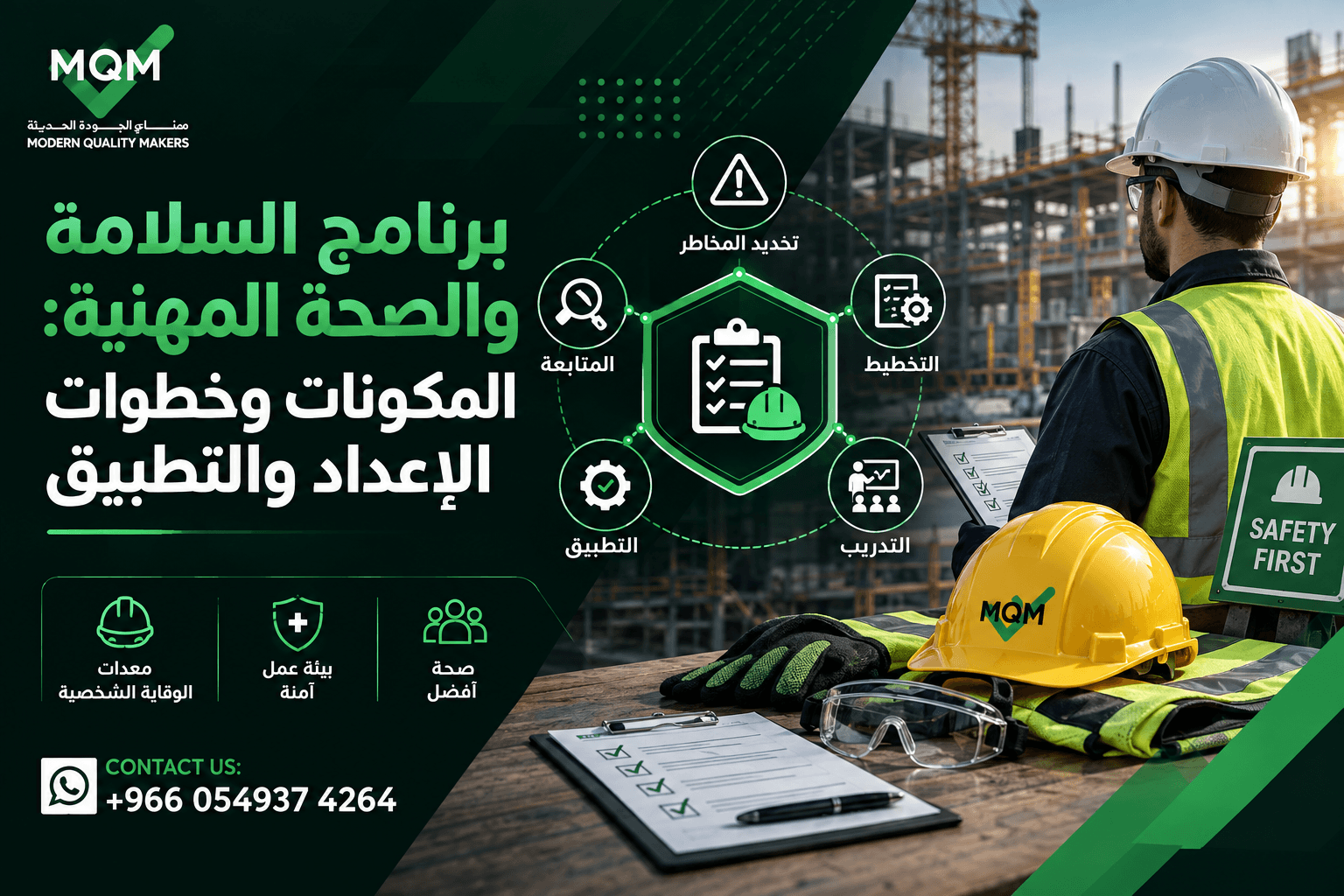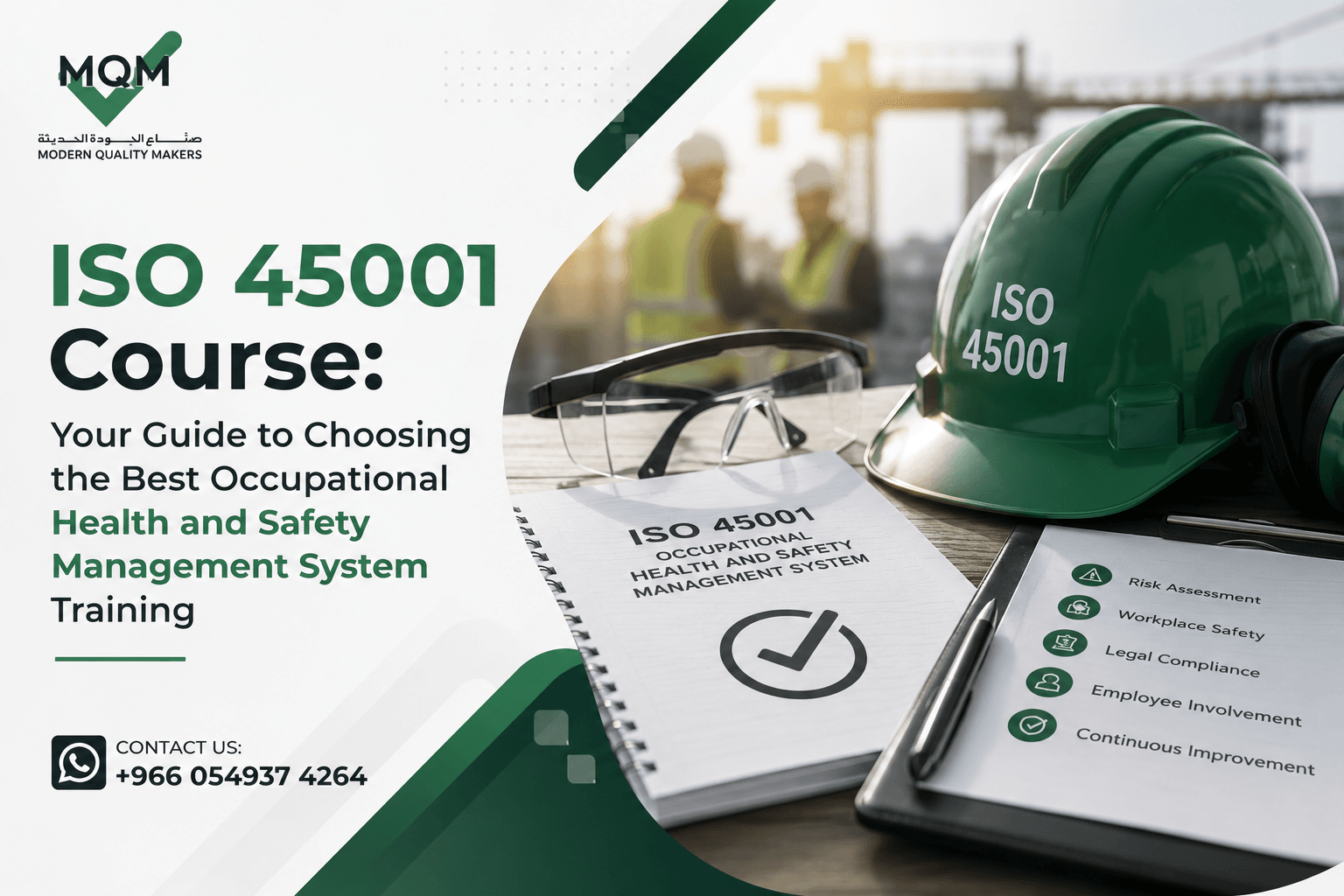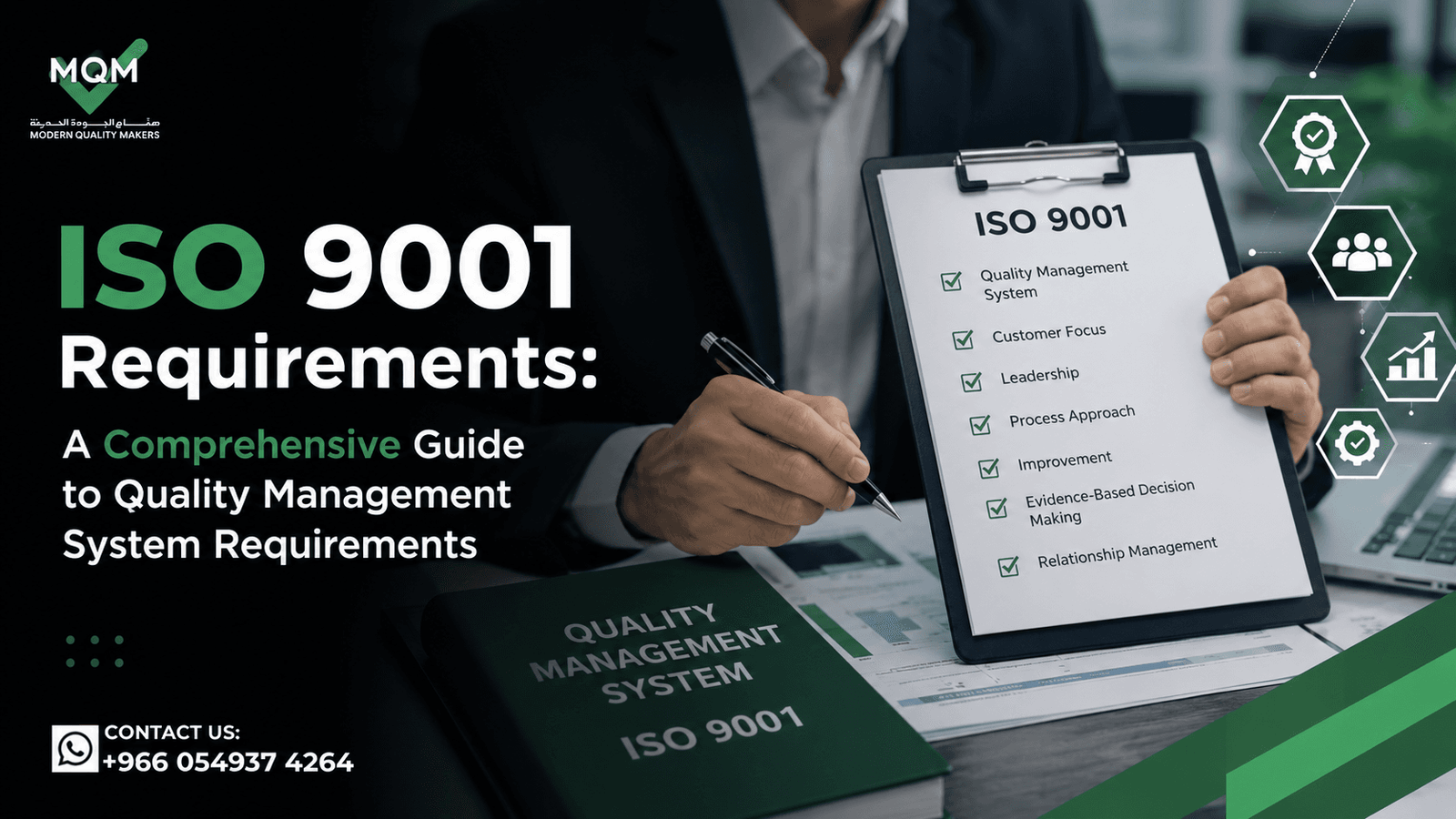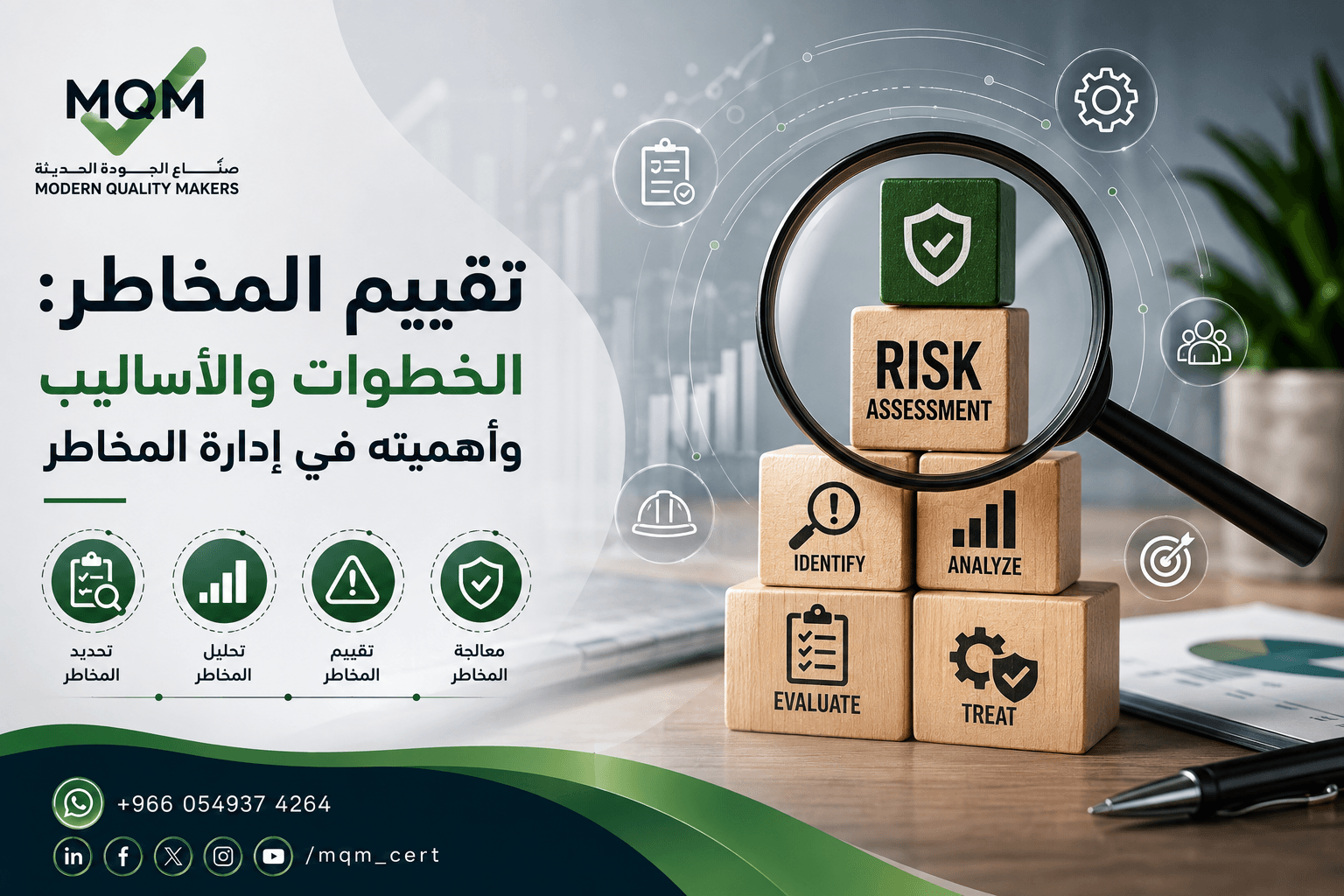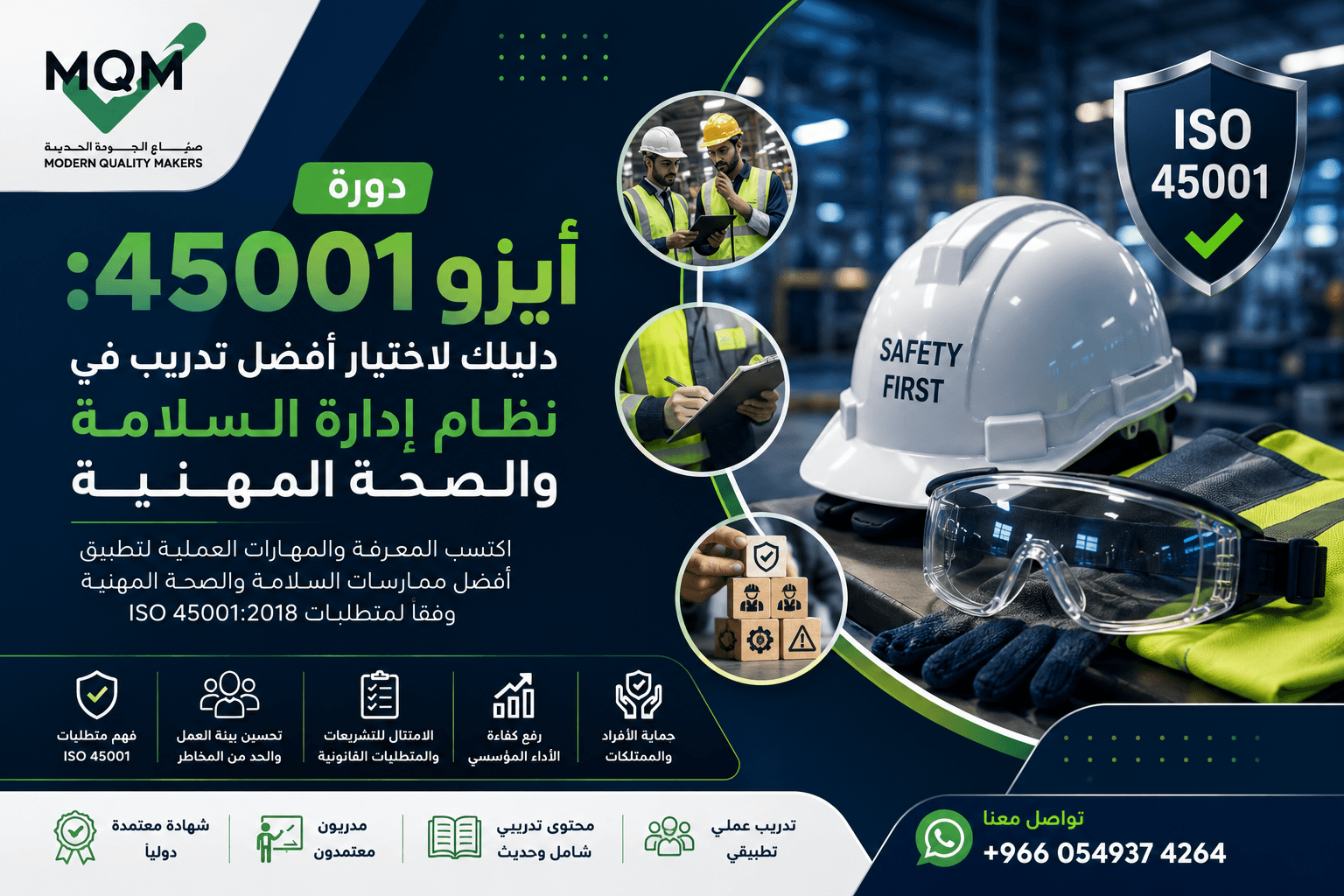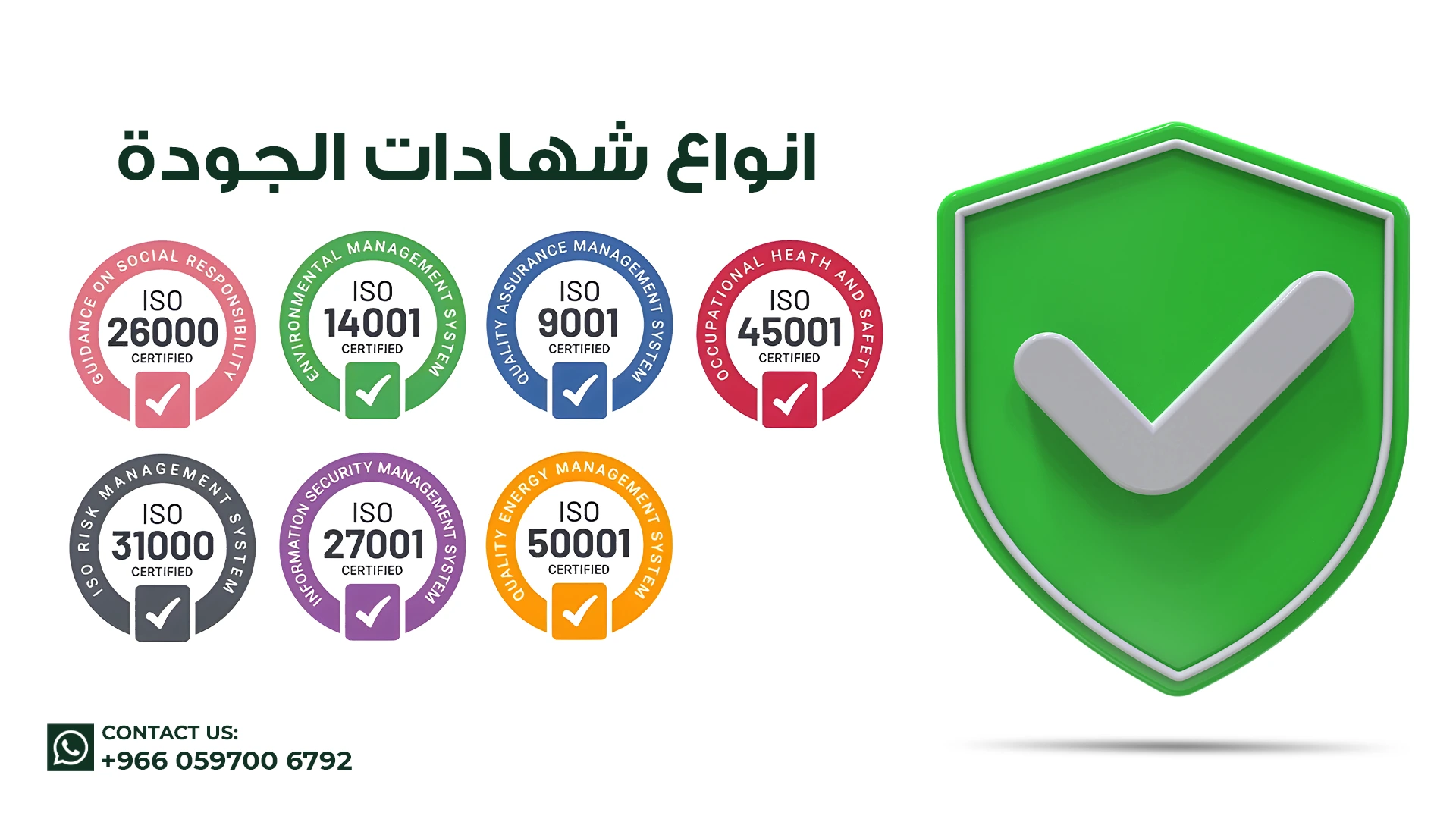

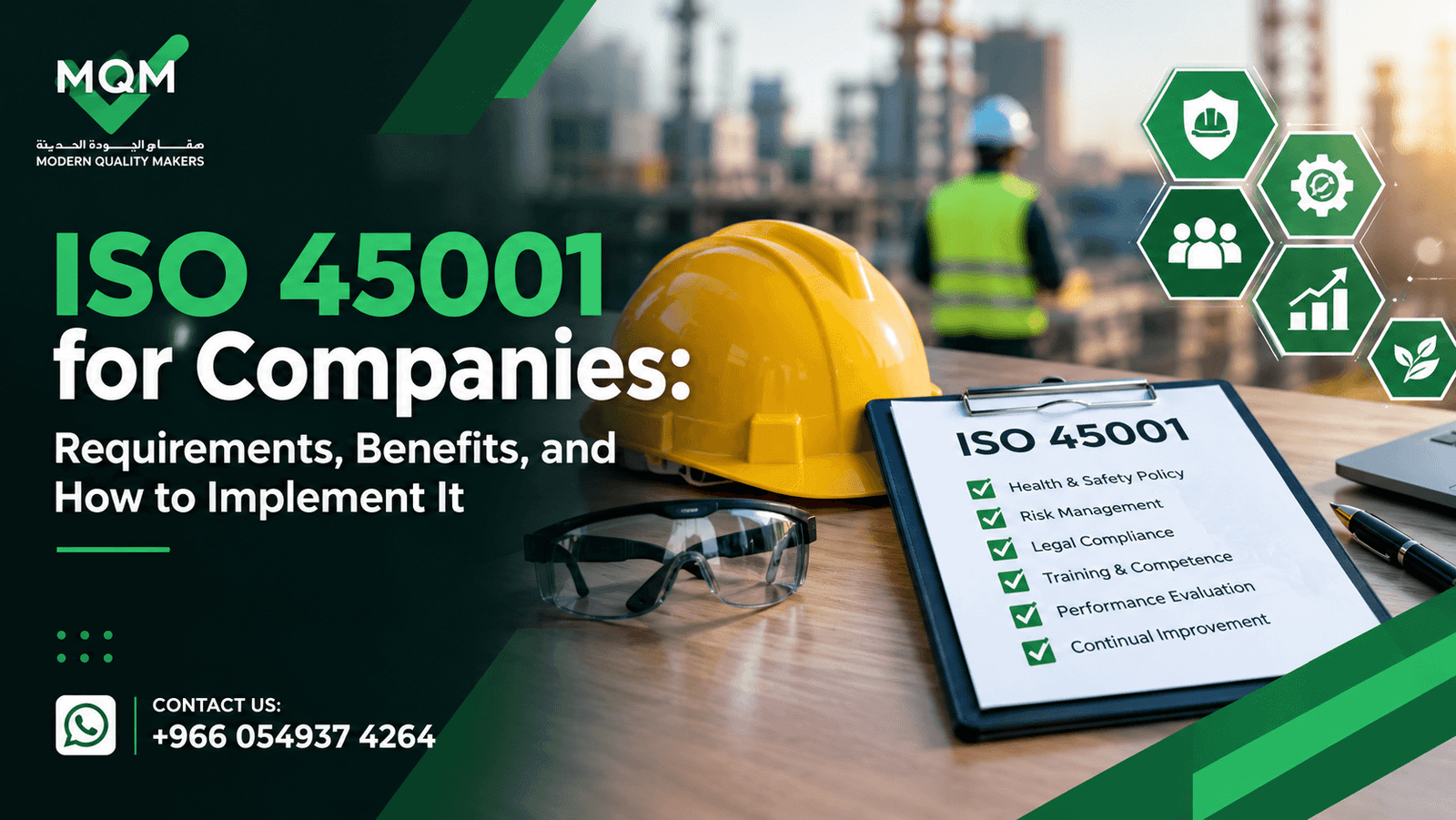
Occupational health and safety are essential elements for business continuity, protecting workers, and reducing accidents in the workplace. With the diversity of industrial, service, and construction activities, organizations need a clear system that helps them identify occupational hazards, assess the likelihood of their occurrence, and establish appropriate controls to reduce their impact. This is where the importance of ISO 45001 for Companies emerges, as an international standard that helps establish a systematic occupational health and safety management system and continuously improve its performance.
Attention to safety is not limited to providing protective equipment or dealing with accidents after they occur. It begins with understanding the nature of risks associated with daily operations, defining responsibilities, training employees, and monitoring the effectiveness of preventive measures. Implementing the system helps integrate safety into planning and decision-making rather than treating it as an activity separate from the organization’s management.
For ISO 45001 for Companies, linking safety to daily decisions helps make prevention part of the way work is managed.
In this guide, we explore the ISO 45001 standard, its key requirements and benefits, the steps for implementing it within organizations, and its role in occupational risk management, in addition to explaining the difference between it and OSHA and the role of internal audits in monitoring the system’s effectiveness.
What Is the ISO 45001 System?
ISO 45001 is an international standard that specifies the requirements for an occupational health and safety management system. Its purpose is to help organizations provide a safer working environment, prevent work-related injuries and illnesses, and continuously improve occupational health and safety performance.
The commonly known edition of the standard is ISO 45001:2018. It is based on a structured management methodology that links hazard identification, control planning, implementation of procedures, measurement of results, and performance review. It also emphasizes the role of leadership and worker participation in building an organizational culture that values prevention and improvement.
The standard is not limited to factories or large companies. The management system can be adapted to the nature of different organizations, including construction companies, industrial facilities, hospitals, service companies, and organizations with office-based activities.
It is important to distinguish between implementing the standard and obtaining a certificate of conformity to it. Implementing the system means establishing, carrying out, and monitoring procedures, while certification requires an assessment by an independent and qualified certification body according to the approved assessment scope.
What Is the ISO 45001 Occupational Health and Safety Management System?
How Does the Management System Work in Practice?
For the system to be effective, safety requirements should be linked to daily operations, such as purchasing equipment, assigning tasks, maintenance, contractor management, and changes to operating methods. For example, when a new machine is introduced, it is not enough to operate it after installation. Its risks should be assessed, the required protective measures identified, users trained, and safe shutdown and maintenance procedures clarified.
The organization also needs to clearly define the scope of the system: the sites, activities, and functions it covers, as well as the factors that may affect worker safety. This definition helps prevent high-risk activities from being excluded from monitoring or from clearly defined responsibilities.
An occupational health and safety management system is an interconnected set of policies, procedures, responsibilities, and processes that an organization uses to control work-related risks and improve working conditions.
ISO 45001 for Companies provides a framework that helps organizations move from scattered procedures to an integrated system that includes clear objectives, defined responsibilities, and mechanisms for monitoring performance and addressing shortcomings.
The system usually includes the following elements:
- Occupational Health and Safety Policy: Clarifies management’s commitment to protecting workers and improving the work environment.
- Hazard and Opportunity Identification: Includes studying activities, working conditions, and situations that may lead to an injury or occupational illness.
- Legal Obligations: Identifying the legal and regulatory requirements applicable to the organization’s activities and monitoring compliance with them.
- Operational Planning: Establishing controls and procedures appropriate to the identified risks.
- Competence and Awareness: Ensuring that workers have the skills and knowledge required to perform their tasks safely.
- Performance Evaluation: Monitoring indicators, incidents, observations, and audit results.
- Continual Improvement: Addressing nonconformities and developing procedures based on the results.
Why Is ISO 45001 Important for Companies and Organizations?
The importance of ISO 45001 for Companies lies in providing a management framework that helps address work-related risks systematically rather than relying on reactions after accidents occur. The system gives management a clearer view of potential problems, required responsibilities, and the procedures that should be implemented and reviewed.
The importance of this approach increases in sectors involving fieldwork, equipment, chemicals, or high-risk operational processes. However, it remains useful in office environments that may also face ergonomic, organizational, or occupational health risks.
Some of its most important aspects include:
- Protecting Workers: By identifying hazards and applying controls appropriate to the nature of tasks.
- Improving Risk Management: Through documenting assessment processes, setting priorities, and defining responsibilities.
- Supporting Compliance: The system helps identify and monitor relevant legal requirements, without replacing actual compliance with the law.
- Raising Awareness: Training and communication help strengthen workers’ understanding of risks and preventive measures.
- Improving Operations: Reducing accidents and related disruptions may help limit some unplanned costs.
- Building Trust: Having a documented system can support the confidence of customers and partners, especially when safety management is part of contractual requirements.
What Are the Main ISO 45001 Requirements?
Documentation and Records Required According to the Needs of the System
Implementing the standard does not mean creating the largest possible number of forms. Rather, it means retaining the documented information needed to operate the system and demonstrate its effectiveness. Depending on the organization’s nature, records may include risk assessments, training records, inspection and maintenance results, incident reports, internal audit results, corrective action follow-up, and management review minutes.
Documents should be easily accessible and up to date, and employees should know which version of work procedures is approved. Records must also be protected against loss or inappropriate use, and responsibility for updating and reviewing them should be defined.
Worker Participation and Communication
The effectiveness of the safety system improves when workers can report hazards and near misses without delay, their observations reach the responsible person, and the observations are followed up until closure. It is useful to provide clear reporting channels, short awareness meetings, and understandable instructions for workers and contractors, while ensuring that the language and communication methods are appropriate for the people concerned.
Implementing the Standard requires understanding the organization’s context and the nature of its activities, identifying relevant interested parties and their needs, and then building a system that fits the actual risks and applicable obligations.
The main requirements include:
- Leadership Commitment: Establishing an occupational health and safety policy and objectives and providing the resources needed to implement the system.
- Worker Participation: Involving workers, according to the nature of the organization, in identifying risks, developing procedures, and reporting problems to management.
- Hazard Identification and Risk Assessment: Studying operations, activities, normal and abnormal conditions, and potential emergencies.
- Legal Compliance: Identifying relevant laws, regulations, and safety requirements and evaluating the extent of compliance with them.
- Operational Planning: Applying controls to reduce risks while considering the hierarchy of preventive controls as far as possible.
- Emergency Preparedness: Identifying potential scenarios, establishing response plans, and training for them when needed.
- Documentation: Retaining the required documented information and appropriate evidence of the implementation of procedures.
- Performance Monitoring: Measuring results, investigating incidents, and addressing nonconformities.
- Auditing and Review: Conducting internal audits and management reviews to assess the system’s suitability and effectiveness.
These requirements must be adapted to the organization’s size, the nature of its activities, and its level of risk, rather than using standardized procedures that do not reflect actual working conditions.
ISO 45001 for Companies requires implementation that is proportionate to the organization’s size, operations, and actual risks.
How Is ISO 45001 Implemented Within Companies?
1. Identifying Occupational Risks
The process begins by listing the activities, workplaces, equipment, materials, and tasks that may cause injuries or occupational illnesses. This includes routine and non-routine work, maintenance, movement within sites, and potential emergency situations.
For example, a construction company may face risks related to working at heights, falling materials, equipment handling, and electrical hazards. Industrial facilities may need to assess risks associated with machinery, chemicals, noise, and operating conditions.
It is important to involve workers and supervisors at this stage, as their daily experience may reveal risks that are not apparent from reviewing documents alone.
2. Assessing Risks and Establishing Controls
After identifying risks, their likelihood and the severity of their consequences are assessed according to a methodology appropriate to the organization. Priorities and the necessary actions are then determined.
It is preferable to apply controls according to a hierarchy that begins with eliminating the hazard where possible, then replacing it with a less hazardous alternative, using engineering and administrative controls, and then personal protective equipment when needed. Personal protective equipment alone should not be relied upon if more effective ways of controlling the hazard are available.
Assessment results, responsibilities, and implementation deadlines are documented. The assessment is then repeated when operations, equipment, or working conditions change, or when new information about risks emerges.
3. Defining Responsibilities and Procedures
Every management level should understand its role in the system, from senior management to supervisors and workers. This includes defining who is responsible for monitoring risks, reporting incidents, approving procedures, and reviewing inspection and audit results.
Safe work procedures, equipment-use rules, mechanisms for reporting unsafe conditions, and methods for dealing with incidents and emergencies should also be documented.
Clear responsibilities prevent the assumption that safety is the responsibility of only one employee. The safety officer provides technical support and follow-up, but leadership, departments, and workers all have essential roles in implementing the system.
4. Training and Awareness
Distributing written instructions is not enough without ensuring that workers understand them and can apply them. Therefore, training needs should be identified according to tasks and risks, and appropriate training should be provided upon hiring, changing jobs, or introducing new equipment or processes.
Awareness activities may include how to use protective equipment, report hazards, respond to emergencies, and handle materials and equipment safely. Training effectiveness should also be evaluated through observation, tests, or performance monitoring, and appropriate records should be retained.
5. Monitoring and Continual Improvement
This stage includes monitoring performance indicators, inspecting workplaces, analyzing incidents and near misses, and verifying the implementation of corrective actions. Indicators may include the number of incidents, inspection results, the rate of closing observations, and the extent to which training has been completed.
Improvement is not limited to addressing the immediate problem. Its root causes should also be investigated, followed by actions that reduce the likelihood of recurrence and a review of the solution’s effectiveness after implementation.
6. Managing Change and Contractors
Risks should be reassessed when equipment, materials, workplace design, the number of workers, or the method of performing a task changes. A change that appears minor may introduce new risks if the related operating, training, and maintenance procedures are not reviewed.
When contractors or service providers are engaged, it is important to clarify safety requirements before work begins, verify workers’ and equipment’s competence when necessary, and coordinate emergency and incident-reporting procedures between the parties. This helps prevent conflicting instructions or the transfer of risks between work teams.
7. Emergency Preparedness and Testing Plans
The organization identifies potential emergency situations according to the nature of its activities, such as fire, leakage, serious injury, or interruption of essential services. It then establishes reporting and evacuation mechanisms, identifies assembly points, provides appropriate response resources, and trains workers accordingly.
Having a written emergency plan is not enough. It should be tested or reviewed appropriately, observations resulting from training or drills should be recorded, and the plan should then be improved based on the results.
Implementing ISO 45001 for Companies requires a clear plan that begins with understanding the current situation, then identifying gaps, developing procedures, training workers, and reviewing results. It is not advisable to begin by preparing large numbers of documents before understanding the actual risks and processes that need improvement.
Therefore, the success of ISO 45001 for Companies begins with understanding operational reality before preparing procedures and forms.
What Are the Benefits of Implementing ISO 45001 for Companies?
How Can a Company Monitor the System’s Impact?
Management can monitor the system’s effectiveness through a set of indicators appropriate to the nature of the activity, rather than relying on the number of accidents alone. Leading indicators may include the training completion rate, the number of inspections conducted, the speed of closing observations, the percentage of equipment inspected on time, and worker participation in reporting hazards. Lagging indicators may include incidents, injuries, and lost workdays, according to the appropriate measurement method.
It is preferable to establish a clear definition for each indicator, its data source, the person responsible for monitoring it, and the frequency of its review. Results should be used to understand the causes of problems and identify opportunities for improvement, not merely to prepare formal reports or compare figures that do not reflect differences in the nature of activities.
The benefits of the system become evident when it turns into a daily practice supported by leadership, participation, and monitoring, rather than just a set of documents prepared for assessment purposes.
The most important expected benefits include:
- Improving the ability to identify hazards and address them systematically.
- Supporting the prevention of work-related injuries and illnesses.
- Clarifying safety-related responsibilities and procedures.
- Strengthening worker participation in reporting risks and suggesting improvements.
- Supporting the monitoring of relevant legal and regulatory obligations.
- Improving the documentation of incidents, their investigation, and the follow-up of corrective actions.
- Providing information that helps management determine safety spending priorities.
- Supporting customer and contracting-party confidence when safety management is an important factor in supplier selection.
However, certification alone does not guarantee the elimination of incidents or the achievement of specific results. Actual outcomes depend on the quality of implementation, the commitment of management and workers, and the suitability of controls for the risks.
The value of ISO 45001 for Companies is realized when monitoring results are used to adjust controls and improve practices.
The Role of ISO 45001 for Companies in Improving Operational Performance
ISO 45001 for Companies helps link occupational health and safety requirements to daily operations, from task planning and the allocation of responsibilities to performance monitoring and problem-solving. This approach allows management to identify shortcomings early and establish preventive measures that suit the actual risks within the organization.
Implementing ISO 45001 for Companies also contributes to standardizing safety procedures across departments, clarifying the responsibilities of workers and supervisors, and improving mechanisms for reporting incidents and situations that could have caused injuries. Regularly reviewing performance results helps identify procedures that need to be developed.
What Types of Risks Does ISO 45001 Help Manage?
ISO 45001 for Companies provides a framework for identifying a wide range of work-related risks. Their nature varies according to the sector, activities, and operating environment.
The most prominent include:
- Physical Hazards: Such as noise, vibration, heat, and inappropriate lighting.
- Chemical Hazards: Such as exposure to vapors, gases, and hazardous substances.
- Biological Hazards: Such as exposure to biological agents in some healthcare facilities and laboratories.
- Mechanical Hazards: Such as moving parts, machinery, and lifting equipment.
- Electrical Hazards: Such as unsafe connections or improper maintenance.
- Slips, Trips, and Falls: Particularly at construction sites and when working at heights.
- Ergonomic Hazards: Such as repetitive movements, unsuitable working postures, and lifting loads.
- Work-Related Psychosocial Hazards: Such as excessive workload, bullying, and workplace violence, depending on the organization’s context.
Risks must be identified based on the organization’s actual conditions, because a general hazard list does not replace on-site inspection and detailed assessment.
What Is the Role of ISO 45001 in Improving Occupational Health and Safety?
Applying Controls According to the Level of Risk
Priorities differ from one organization to another. Therefore, actions should be ranked according to the severity of the hazard, its likelihood of occurring, and the number of people who may be affected. Critical risks may require immediate intervention, while less urgent improvements can be included in an implementation plan with assigned responsibilities and deadlines.
After implementing an action, the organization should verify that it has actually reduced the risk. If a control measure does not achieve the required result, it should be reassessed and a more effective measure selected. In this way, the occupational health and safety management system becomes a continuous process of learning and improvement rather than a fixed checklist of requirements.
The standard helps integrate safety into daily decisions, from process design and equipment purchasing to maintenance, task allocation, and emergency preparedness.
Instead of merely recording incidents, an organization can analyze their causes, identify recurring patterns, and review controls that did not achieve the desired result. Worker participation also supports the early identification of unsafe conditions and the development of procedures that are better suited to practical realities.
Improving occupational safety depends on continuity. Therefore, the system’s objectives, indicator results, and observations must be reviewed periodically, and procedures updated when necessary.
What Is the Difference Between ISO 45001 and Other Occupational Safety Systems?
ISO 45001 is an occupational health and safety management system standard, while other systems may be legal regulations, guidelines, internal programs, or specialized technical standards.
These systems differ in scope and nature. One may focus on specific legal requirements, while another provides technical guidance for a particular task. Therefore, an organization must identify the requirements applicable to its activities and should not assume that implementing one management standard replaces all legal or technical obligations.
ISO 45001 is distinguished by providing an integrated framework that links leadership, planning, risk assessment, participation, operations, performance measurement, and continual improvement within a single system.
What Is the Difference Between ISO 45001 and OSHA?
The fundamental difference is that ISO 45001 is an international occupational health and safety management system standard. Organizations can use it to build a management system and assess its conformity through an independent certification body. OSHA, on the other hand, stands for the United States Occupational Safety and Health Administration. It is a U.S. government agency that issues and enforces regulatory requirements within its jurisdiction, in addition to providing safety guidance and resources.
Therefore, OSHA is not a certification equivalent to ISO 45001, and implementing the international standard does not automatically replace the legal obligations applicable to an organization.
If a company operates in Egypt, Saudi Arabia, or any other country, it must identify the relevant local laws and regulations and use ISO 45001 as a management framework that supports safety, while taking into account the legal requirements applicable to its activities and location.
Who Is Responsible for Implementing the ISO 45001 Management System Within a Company?
Senior management holds leadership responsibility for the system’s effectiveness because it establishes the policy and objectives, provides resources, and monitors performance. At the same time, implementation responsibilities are distributed among departments, supervisors, and workers according to their roles.
The occupational health and safety officer usually coordinates several technical activities, such as risk assessment, awareness, action follow-up, and reporting. However, the officer cannot ensure the system’s effectiveness alone without the cooperation of departments and work teams.
It is preferable to assign clear, written responsibilities, establish reporting and escalation mechanisms, and ensure that workers participate in matters affecting their safety.
How Is a Company’s Readiness to Implement ISO 45001 Assessed?
Readiness assessment begins by reviewing the current situation and comparing it with the requirements of the standard. This may include reviewing policies, procedures, incident records, training, risk assessments, and legal requirements, in addition to inspecting workplaces and interviewing relevant employees.
After that, a list of gaps requiring attention is prepared, with priorities ranked and a responsible person, resources, and target timeframe defined for each action.
The assessment must reflect actual implementation, not merely the existence of documents. A company may have a written policy, but that is not sufficient if work procedures are not implemented or workers have not received appropriate training.
Readiness review helps prepare a practical implementation plan, but it does not in itself guarantee certification. This depends on the extent to which requirements are fulfilled and the results of the assessment conducted by the certification body.
What Is the Role of Internal Auditing in the ISO 45001 System?
What Should Happen After the Audit?
After recording audit results, a distinction should be made between an observation, an opportunity for improvement, and a nonconformity, according to the organization’s methodology. When a nonconformity is identified, the immediate problem should be addressed, its root cause understood, the appropriate corrective action determined, and its implementation and effectiveness verified.
For example, an audit may reveal incomplete inspection records for lifting equipment. The correction should not be limited to completing a missing record. It should also include verifying that the inspection was actually conducted, identifying why the record was missing, and determining a method to prevent recurrence, such as changing responsibilities or the reminder and follow-up system.
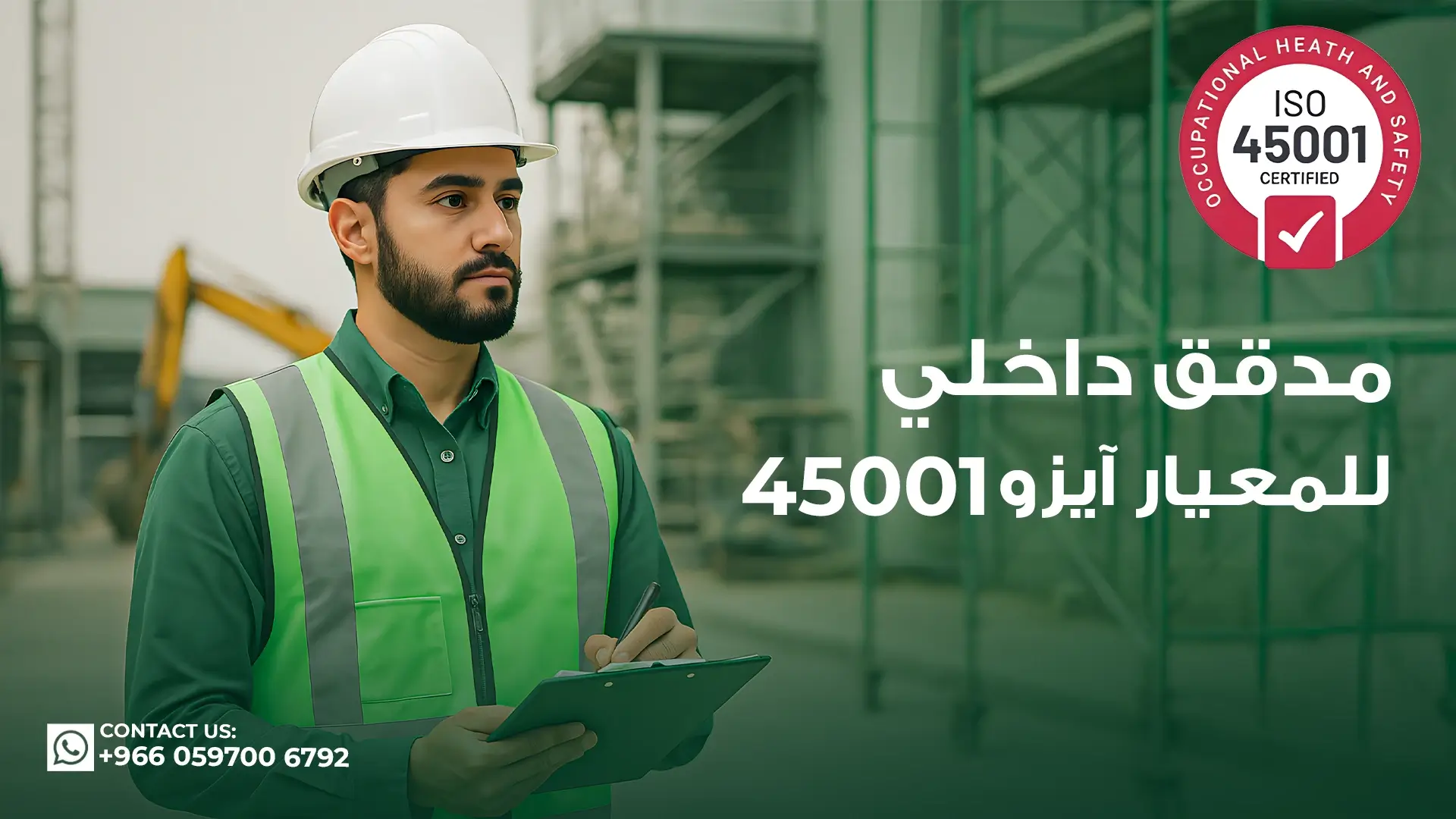
Internal auditing is used to verify the extent to which the management system conforms to the requirements of the standard and the organization itself, as well as to evaluate whether the system is implemented and effective.
Audits are planned according to the importance of processes, risks, previous changes, and past audit results. They should be conducted by competent and objective individuals, while maintaining impartiality and avoiding auditing one’s own work in a way that weakens the reliability of the results.
The audit process may include reviewing records, interviewing workers, observing working conditions, and verifying the implementation of controls and corrective actions. The results are then documented, responsibilities and deadlines for addressing them are defined, and the effectiveness of the actions taken is followed up.
Regular auditing helps identify gaps before they worsen, provide reliable information to management, and identify opportunities to improve the occupational health and safety management system.
How to Obtain ISO 45001 Certification
How Do You Choose a Certification Body?
Before entering into a contract, verify the certification body’s experience within the scope of the company’s activities, its competence, and whether its accreditation is suitable for the intended need. It is useful to confirm the scope of certification that will appear on the certificate, the sites and activities covered, the audit stages, and the requirements related to certificate surveillance and renewal. Do not rely on price alone or assume that any certificate offered meets the requirements of every customer or contracting party.
It is also necessary to distinguish between the body providing consultancy to develop the system and the body conducting the certification audit. The certification process should be independent and objective according to the certification body’s arrangements and applicable accreditation requirements.
To obtain ISO 45001 Certification, a company needs to implement an occupational health and safety management system according to the requirements of the standard and verify its effectiveness before applying for certification. The basic steps are as follows:
- Assess the Current Situation: Review occupational health and safety procedures within the company and identify gaps compared with ISO 45001 requirements.
- Establish an Occupational Safety Management System: Develop a clear safety policy and define responsibilities, objectives, and procedures appropriate to the organization’s activities.
- Identify and Assess Risks: List occupational risks and determine the controls needed to reduce them, taking into account relevant legal and regulatory requirements.
- Train Workers and Implement Procedures: Make employees aware of their responsibilities, ensure that prevention and emergency-response procedures are implemented, and document the required activities.
- Conduct an Internal Audit: Review the system’s implementation and effectiveness, identify nonconformities, and work to address them.
- Conduct Management Review and Prepare for Assessment: Ensure that resources are available and review performance results, audits, and corrective actions.
- Apply for Certification: Select an independent and qualified certification body and undergo the external audit according to the required certification scope. When the requirements are fulfilled, the certificate may be issued by the competent body.
The time required to obtain ISO 45001 certification depends on the company’s size, the complexity of its activities, the readiness of its current safety management system, and how quickly gaps are addressed.
It is important for ISO 45001 for Companies to treat certification as a means of demonstrating the conformity of the system, not as a substitute for actual implementation. Therefore, it is preferable to begin with a comprehensive needs assessment before determining the implementation and audit timeline, while ensuring that the certification body is competent and its accreditation is suitable for the required certification scope.
How Can a Company Maintain the Effectiveness of the ISO 45001 System After Certification?
The role of ISO 45001 for Companies does not end once the external audit has been passed. The organization needs to monitor risks, update assessments when changes occur, investigate incidents, conduct internal audits, and review performance indicators.
Continual monitoring helps ensure that safety procedures remain appropriate for the nature of the work and that workers understand their responsibilities and apply the required instructions. Nonconformities should also be addressed, and corrective actions documented to verify their effectiveness and prevent the recurrence of problems.
Conclusion
Periodic review of safety objectives and performance indicators helps keep the system suitable as processes, equipment, employees, and legal requirements change. Therefore, ISO 45001 should be treated as an ongoing management framework for protecting workers and improving operations, not as a step that ends once the certificate is issued.
Implementing ISO 45001 for Companies represents an important step toward more organized management of occupational risks, strengthening worker protection, and improving operational performance. The system’s success depends on understanding actual risks, defining responsibilities, training employees, monitoring results, and implementing improvements continuously.
The benefits are not achieved through preparing documents alone, but by turning the system’s requirements into actual practices that suit the organization’s nature, operations, and legal obligations.
Is your company seeking to develop its occupational health and safety management system? Learn about ISO 45001 requirements and benefit from the expertise of Quality Makers in assessing systems and developing safety and risk management practices that suit the nature of your organization.
Frequently Asked Questions About ISO 45001
1. What Is the ISO 45001 System?
It is an international standard that specifies the requirements for an occupational health and safety management system. It helps organizations identify and control work-related risks, prevent work-related injuries and illnesses, and continuously improve performance.
2. What Is the ISO 45001 Course?
It is a training course designed to introduce participants to the requirements of the standard and how to understand and implement it or audit the management system. The content varies according to the course level. It may be awareness-based, focused on implementation, internal auditing, or auditor qualification.
3. What Are the Most Important Occupational Health and Safety Laws?
Laws vary according to the country, sector, and nature of work. They usually include requirements related to a safe working environment, protective equipment, training, risk management, incident reporting, and emergency preparedness. Therefore, the applicable legislation and regulations in the relevant country must be consulted.
4. What Is the Difference Between Occupational Health and Occupational Safety?
Occupational safety focuses on preventing accidents and injuries resulting from workplace hazards, while occupational health focuses on protecting workers’ health from effects related to the work environment, including exposure to hazardous substances, noise, biological factors, and occupational stress. The two fields complement each other within an occupational health and safety management system.
5. What Are the Types of Occupational Health and Safety Risks?
They include physical, chemical, biological, mechanical, and electrical hazards; slips, trips, and falls; and ergonomic and work-related psychosocial hazards. The identification of priority risks depends on the nature of activities and the organization’s conditions.
6. What Are the Duties of an Occupational Safety Officer?
Depending on the officer’s role and authority, duties include monitoring risk assessments, awareness and training, workplace inspections, following up on the implementation of preventive measures, documenting incidents and observations, proposing corrective actions, and submitting reports to management. The responsibility for the system’s effectiveness remains shared between management and workers according to their roles.
7. What Are the Occupational Safety Requirements and Supplies?
They vary according to the risks and may include helmets, goggles, gloves, safety shoes, hearing and respiratory protection devices, as well as rescue equipment, first-aid supplies, alarm systems, and collective protection systems when needed. They must be selected according to risk assessment and appropriate specifications, and workers must be trained to use them.
8. What Is the Difference Between ISO 45001 and OSHA?
ISO 45001 is an international occupational health and safety management system standard, while OSHA is a U.S. agency concerned with regulating occupational health and safety and enforcing its requirements within its jurisdiction. OSHA is not a certification equivalent to ISO 45001, and implementing the standard does not automatically exempt an organization from its applicable legal obligations.
9. What Is the Importance of ISO 45001 for Companies?
It helps organize occupational risk management, improve preventive measures, clarify responsibilities, strengthen worker participation, and monitor performance and continual improvement. The results depend on the effectiveness of implementation and the organization’s commitment.
10. What Are the ISO 45001 Requirements?
They include understanding the organization’s context, leadership commitment, worker participation, hazard identification and risk assessment, consideration of legal requirements, operational planning, training, emergency preparedness, performance monitoring, internal auditing, management review, and continual improvement.
11. How Is ISO 45001 Implemented in Companies?
Implementation begins with assessing the current situation and identifying gaps, followed by listing and assessing risks, establishing the policy, objectives, and procedures, defining responsibilities, training workers, implementing controls, monitoring results, conducting internal audits and management reviews, and addressing shortcomings.
12. What Are the Benefits of Implementing ISO 45001?
The system helps improve risk control, support the prevention of occupational injuries and illnesses, organize procedures and responsibilities, strengthen awareness, and provide better information for decision-making. Certification alone does not guarantee the prevention of all incidents or the achievement of specific results.
13. What Is the Role of ISO 45001 in Occupational Risk Management?
It provides a framework for identifying hazards, assessing risks, selecting appropriate controls, defining responsibilities, and monitoring the effectiveness of actions. It also helps review assessments when working conditions change, investigate incidents, and use monitoring and audit results to continuously improve the system.